
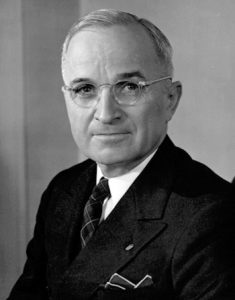
On the eve of the United States’ entry into World War II, the nation’s military-industrial apparatus struggled with severe, systemic shortages of vital raw materials. In February 1941, Senator Harry S. Truman stepped into the well of the Senate to propose the establishment of the Special Committee to Investigate the National Defense Program, which would rapidly come to be known as the Truman Committee. Unlike traditional congressional inquiries that futilely dug up “dead horses” after a war had already concluded, Truman’s committee worked in real-time to expose waste, inefficiency, and strategic deficiencies while the mobilization was actively underway. As the committee shifted its focus from military base construction to the broader and more complex domain of domestic defense production, it uncovered a shocking web of international cartel agreements that systematically undermined national security. The investigations revealed that some of the largest monopolies in the United States had entered into highly compromised patent-sharing alliances with German industrial conglomerates, sacrificing domestic production capacity and preparedness to protect private global market share.
The primary lightweight metal needed for the mass production of military aircraft was aluminum, but by late 1940 and early 1941, the American aviation program was dangerously dawdling. In November 1940, the Northrop Aircraft Company was forced to cut its working hours by 20 percent due to acute metal shortages, and by May 1941, work on bombers at Boeing had entirely ceased because of an inadequate aluminum supply. Despite these critical shortfalls on the assembly lines, the Aluminum Company of America (Alcoa)—which held a near-monopoly on domestic production—repeatedly insisted to federal planners that it could easily satisfy both domestic and defense requirements. The Truman Committee’s investigation pierced this corporate complacency to reveal that the production of magnesium, a crucial alloy element, was woefully deficient due to an interlocking cartel agreement between Alcoa and the German chemical giant I.G. Farben. Under this secret arrangement, Alcoa had agreed to actively restrict its own magnesium production in order to safeguard its lucrative domestic aluminum monopoly. Furthermore, Alcoa agreed to sell its existing magnesium stocks to the Germans at a discounted rate, with the catastrophic result that Nazi Germany commanded vastly superior magnesium reserves than the United States. This revelation provoked widespread political outrage; Senator Joseph O’Mahoney publicly attacked Alcoa for keeping supplies down in order to keep prices up, warning that international cartels had played a direct part in the rise of Adolf Hitler. Senator Robert La Follette Jr. went further, denouncing Alcoa as a Nazi collaborator that possessed “intimate and dangerous ties” to the fascist regime.
An even more egregious example of corporate obstruction came to light when the Truman Committee investigated the nation’s severe rubber deficit, a bottleneck that military planners warned would require a “miracle” to overcome. The committee discovered that Standard Oil of New Jersey had entered into a series of highly restrictive, bilateral patent-sharing agreements with I.G. Farben that intentionally delayed the development of synthetic rubber plants in the United States. Under the terms of this trans-Atlantic pact, Standard Oil agreed to grant the German firm complete control over chemical patents—including those governing synthetic rubber—in exchange for a guaranteed Standard Oil monopoly in the global petroleum market. Consequently, when independent American rubber manufacturers approached Standard Oil to secure licenses to produce synthetic rubber, they were flatly refused or offered licenses on highly unfavorable, prohibitive terms. Because I.G. Farben was a primary source of political funding for Hitler and its strategic positions were dictated directly by the German government, this corporate alliance effectively allowed the Nazi regime to sabotage American synthetic rubber readiness.
The public exposure of these corporate betrayals triggered a massive political and public backlash in Washington. Standard Oil of New Jersey, reeling from the public relations disaster, rushed to minimize the damage. Senator Harry Truman, acting with Brandeis-inspired populist conviction, used the explosive word “treason” to publicly hammer the Rockefeller-controlled Standard Oil concern. Under the threat of criminal prosecution, Standard Oil paid a nominal fine and quickly released its synthetic rubber patents to the public for unrestricted use. Across the broader economy, the Truman Committee’s aggressive spotlight forced numerous other American firms to rapidly dismantle their existing cartel agreements with German enterprises. In its official report, the Truman Committee concluded that these corporate giants lacked an “unpatriotic motive,” attributing the disaster instead to “big business playing the game according to the rules,” though it came at a heavy, dangerous price to be borne by the entire nation. Ultimately, the Truman Committee’s investigations, supported by parallel probes by Senators Homer Bone and Harley Kilgore, successfully shattered the monopolistic chokehold on the defense industrial base, ensuring that American factories could finally mobilize at the massive volume required to defeat global fascism.