

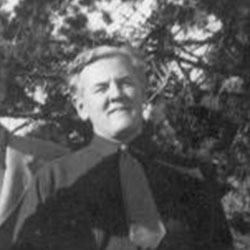
During the transition of the American presidency in 1945, the political landscape of Washington experienced a profound shift in power, bringing long-standing rivalries and administrative distrust to the forefront. At the center of this friction was Thomas Corcoran, widely known by his nickname “Tommy the Cork”. Corcoran was a gifted legal technician who had originally come to Washington under the aegis of Harvard law professor Felix Frankfurter. Frankfurter, whose pervasive influence throughout official Washington led him to treat the capital as his personal congregation, regarded Corcoran as one of his “boys” and actively worked to place him in strategic positions across the federal government. During the presidency of Franklin D. Roosevelt, Corcoran teamed with Benjamin Cohen to form an incredibly effective administrative partnership; while Cohen acted as the quiet “Mr. Inside,” the garrulous Corcoran served as “Mr. Outside,” utilizing his formidable lobbying skills to draft and pass vital New Deal legislation.
Following Roosevelt’s death and Harry S. Truman’s ascension to the presidency in 1945, Corcoran’s status in Washington changed from an elite administration insider to a suspected political adversary. Operating as a private Washington attorney, Corcoran was said to “know everyone of importance in town”. However, President Truman harbored a deep personal dislike and distrust of Corcoran, viewing him as a potential threat to the stability of his new administration. Specifically, White House officials suspected that Corcoran was actively working to undermine Truman’s leadership by systematically leaking denigrating material about the president to influential liberals and members of the press.
Recognizing the president’s intense hostility toward the former Roosevelt aide, Truman’s military aide, Harry Vaughan, decided to take direct action. Vaughan requested that the Federal Bureau of Investigation (FBI), directed by J. Edgar Hoover, place a phone tap on Corcoran’s lines to monitor his movements and communications. To shield the operation from public scrutiny, the official justification for the wiretap was framed under the broad guise of “White House security”. In reality, however, the operation was political surveillance pure and simple, designed to protect the president from internal opposition rather than to guard against national security threats.
The wiretap placed President Truman in a highly compromised position regarding his own stated principles on civil liberties and executive power. Truman held a strong, deep-seated dislike for the FBI and its director, J. Edgar Hoover. In contrast to Franklin Roosevelt, who enjoyed receiving the spicy secrets Hoover gathered about the private lives of important political figures, Truman strongly believed that the FBI was a direct threat to civil liberties, privately warning that the bureau was tending toward becoming an un-American “Gestapo”. Yet, when confronted with the opportunity to monitor Corcoran, Truman allowed his political anxieties to override his constitutional reservations. Bypassing his general disapproval of warrantless electronic surveillance, Truman gave his official consent to the FBI tap.
Despite the high-stakes political panic that prompted the wiretap, the surveillance proved to be a total failure. The FBI’s intercept operations failed to uncover any actionable evidence of subversion, conspiracy, or damaging leaks, ultimately producing nothing of consequence. The episode highlighted the growing tension within the early Truman administration as it struggled to balance the democratic preservation of civil liberties against the coercive, secretive mechanisms of domestic political intelligence.