

In the early spring of 1863, the military fortunes of the United States hung in a precarious balance on the banks of the Mississippi River. The protracted Vicksburg Campaign had bogged down into a grueling, seemingly endless stalemate, prompting widespread anxiety and intense political maneuvering in Washington. As public discontent mounted, a chorus of critics, political rivals, and hostile newspaper editors launched a savage campaign to discredit Major General Ulysses S. Grant. Reports flooded the capital depicting Grant as a “poor drunken imbecile” who was “idiotically drunk” during critical military operations, while his political nemesis, Major General John A. McClernand, actively utilized spies to gather details of Grant’s supposed benders. Even Lincoln’s trusted associates reported from the front that Grant was unfit for command, seemingly drifting without any coherent strategic plan. While President Abraham Lincoln stubbornly defended his general—famously declaring his intention to stand by the man who fought—the mounting pressure forced the administration to seek an independent, absolutely reliable assessment of Grant’s daily habits and military capacity.
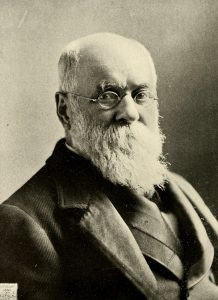
To pierce the fog of war and political gossip, Secretary of War Edwin M. Stanton devised a highly delicate, covert intelligence mission. On April 6, 1863, Stanton dispatched Charles A. Dana to Grant’s headquarters at Milliken’s Bend. Dana was a figure of formidable investigative talent and intellectual stature; he had lived in the utopian socialist community of Brook Farm and had served as the highly respected managing editor of Horace Greeley’s New York Tribune. To protect the secrecy of the mission and prevent administrative friction, Stanton provided Dana with a clever cover story. Officially, Dana was commissioned as a “special commissioner of the War Department to investigate and report upon the condition of the pay service in the Western Armies”. In reality, however, his explicit mandate was to act as the War Department’s eyes and ears, sending daily dispatches detailing Grant’s military performance and, most crucially, an honest evaluation of his rumored drinking habits.
The arrival of the “special commissioner” was initially met with deep suspicion in the Western camp. Because the true nature of Dana’s mission was an open secret among Grant’s inner circle, the presence of a suspected Washington spy was highly unpopular. As Captain Samuel H. Beckwith caustically recalled, “Dana was about as popular in camp as a case of measles”. Rather than freezing out the investigator or attempting to conceal his staff’s operations, Grant demonstrated exceptional political judgment. At their very first interview, Grant received Dana with disarming civility and immediately disclosed his secret, upcoming plans for capturing Vicksburg. This disarming candor completely won over the journalist. Before long, Dana confessed the true purpose of his presence, and Grant remained entirely unfazed, setting the stage for a warm and enduring friendship.
Dana’s early dispatches from the front lines provided a powerful, authoritative shield that rescued Grant from political assassination in Washington. Dana consistently sent glowing dispatches to the War Department, describing Grant’s transparent sincerity, unmatched mental resources, and unruffled composure under pressure. In his early reports, Dana delivered a categorical defense of the general’s sobriety, assuring Lincoln and Stanton that, from his own personal observation, Grant was entirely temperate. Crucially, Dana was welcomed into the absolute confidence of Grant’s staff. Grant’s fiercely protective chief of staff, John A. Rawlins, invited Dana to pitch his tent directly next to Grant’s, recognizing that attempting to hide their operations would only breed suspicion. Dana quickly observed the intense, familial bond between the two men, reporting to Stanton how Rawlins vigilantly watched over Grant day and night to enforce a strict pledge of total abstinence. These dispatches became highly prized reading in Washington, eagerly devoured by Stanton and Lincoln as they resisted congressional demands to remove the Western commander.
Despite Dana’s initial assurances of Grant’s perfect sobriety, his role as an objective observer was dramatically tested in June 1863 during a lull in the Vicksburg siege. Following a period of excruciating stress and a recurrence of debilitating migraine headaches, Grant succumbed to his chronic craving for alcohol. On June 6, 1863, Grant and Dana boarded the small transport steamer USS Diligence to reconnoiter Confederate movements along the Yazoo River near Satartia. During the journey, Grant became severely, “stupidly” intoxicated and fell asleep in his cabin. When the vessel encountered Union gunboats whose officers came aboard to warn of imminent enemy danger, Grant was in no condition to conduct an intelligent conversation. Recognizing the extreme hazard of the situation, the “special pay commissioner” quietly stepped into the vacuum of command, ordering the vessel to turn back to the safety of Haynes’ Bluff.
The Satartia bender transformed Charles A. Dana from an investigative reporter into an active, protective conspirator. Though he privately acknowledged that Grant had gotten “as stupidly drunk as the immortal nature of man would allow,” Dana witnessed the general wake up the next morning “as fresh as a rose,” displaying his typical, formidable composure and resuming his official duties without a trace of the spree. Much like John A. Rawlins, Dana concluded that Ulysses S. Grant’s military genius was absolutely indispensable to the survival of the Union. Realizing that exposing the lapse would trigger a catastrophic political explosion that would sweep Grant from power and doom the Vicksburg campaign, Dana chose to hide the truth from the public. In his official records, the bender was minimized, and Dana helped establish the internal staff protocol of shielding Grant’s rare, periodic binges. By demonstrating that Grant carefully confined his drinking to dull periods of inactivity when it would not imperil his army, Dana’s surveillance ultimately provided the Lincoln administration with the vital, nuanced reassurance required to maintain absolute faith in the savior of the republic.