

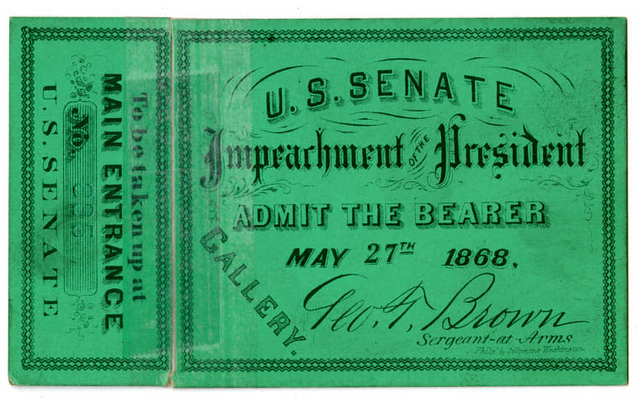
Indeed, our exploration of American history continues, and it is imperative that we maintain an unwavering commitment to truth as we delve into the significant, albeit rare, phenomenon of presidential impeachment. This constitutional mechanism, designed to hold the nation’s highest office accountable, has been invoked only a handful of times, each instance leaving a distinct mark on the American political landscape.
The framers of the Constitution intentionally made it a difficult process to remove a president from office. The journey begins in the House of Representatives with a formal impeachment inquiry. Should the House Judiciary Committee find sufficient grounds, it drafts and approves articles of impeachment, which then proceed to a full House vote. A simple majority in the House is all that is required for a formal impeachment. However, this does not mean the president is removed from office; the final stage is a Senate impeachment trial, where a two-thirds vote is necessary to convict and remove the president. No U.S. president has ever been removed from office through impeachment.
Let us examine each time a U.S. president has faced this profound constitutional challenge:
Andrew Johnson: The First Impeachment (1868)
Andrew Johnson holds the distinction of being the first U.S. president to be impeached by the House of Representatives. His impeachment in 1867 stemmed from his decision to fire Secretary of War Edwin Stanton, an act that violated a federal law prohibiting such removal. This incident arose from a broader context of “great consternation” after President Abraham Lincoln’s assassination, and Johnson’s subsequent clashes with Congress over Reconstruction-era policies.
The House impeached Johnson, but his Senate trial saw him “barely escap[e] a guilty verdict by one vote”. His case highlights the tension between the president’s authority to remove executive branch officials and Congress’s ability to limit that power by statute, particularly when an office’s independence from the president is deemed desirable. The principle that emerged, not clearly articulated in a single case but evolving from experiences like Johnson’s impeachment, is that a president generally may remove executive officials unless restricted by a statute that limits removal to instances of “good cause”.
Richard Nixon: Resignation Under Impeachment Threat (1974)
Richard Nixon, though he faced formal impeachment inquiries, ultimately resigned before a full House vote on impeachment. The Watergate scandal, which intensified throughout 1973 and culminated in 1974, involved a “web of ‘high crimes and misdemeanors'”. The House Judiciary Committee, after months of investigation, voted three articles of impeachment against him: obstruction of justice related to the Watergate cover-up, abuse of power involving the use of government agencies for political advantage, and failure to comply with subpoenas.
The crisis reached its peak on August 5, 1974, when the White House released the “smoking gun” tape, revealing Nixon, just days after the Watergate break-in, ordering the CIA to block the FBI’s inquiry. This revelation dissolved his remaining support. Recognizing that all but 15 senators would likely vote against him in an impeachment trial—more than enough to remove him—Nixon resigned on August 8, 1974, to avoid the indignity of being the first sitting president fired by Congress. The Judiciary Committee’s majority staff report in 1974, both then and in 1998, pointed out that crimes and impeachable offenses are distinct; an impeachable offense is a “grave and serious offense against the Constitution, against the structure and function of the government”. The second article of impeachment against Nixon, for instance, focused on his abuse of power for “personal political advantage” rather than “valid national political objective”.
Bill Clinton: Impeachment and Acquittal (1998-1999)
Bill Clinton was the second president to be impeached by the House of Representatives. His impeachment in 1998 followed a civil lawsuit (Clinton v. Jones) that allowed for a deposition where questions about his other sexual relationships were permitted. The House passed two articles of impeachment against President Clinton on December 19, 1998: one for perjury in his testimony to a grand jury and another for obstruction of justice in investigations related to Paula Jones and Monica Lewinsky.
The Senate then conducted a trial, presided over by the Chief Justice of the United States. Ultimately, neither article of impeachment garnered the two-thirds vote necessary for conviction, resulting in Clinton’s acquittal. During the proceedings, some argued that Clinton’s offenses were not impeachable because they primarily concerned private conduct, with one view being that it was “all about sex” and had “no bearing on his public duties”. Others countered that impeachment was reserved for “political” offenses or “abuses of public trust” that relate “to injuries done immediately to the society itself”. The impeachment in the House, however, altered precedents by approving impeachment over evidence of a crime “that had not yet even been discovered,” creating a novel constitutional theory that could allow future investigators to “roam far and wide looking for crimes”.
Donald Trump: The First Impeachment (2019-2020)
Donald Trump holds the unique distinction of being the only U.S. president to have been impeached twice. His first impeachment proceedings in 2019 primarily centered on a July 25, 2019, telephone call between President Trump and President Volodymyr Zelenskyy of Ukraine. During this call, Trump asked Ukraine to investigate a discredited theory that Ukraine, not Russia, interfered in the 2016 presidential election, and to investigate Hunter Biden’s involvement with a Ukrainian company. Simultaneously, the Trump Administration withheld $391 million in U.S. security aid to Ukraine, which had been appropriated by Congress.
House Speaker Nancy Pelosi announced a formal impeachment inquiry on September 24, 2019. The White House subsequently released a reconstructed transcript of the phone call, which many Democrats argued demonstrated a constitutional violation. The House of Representatives voted on December 18, 2019, to impeach President Trump on two articles: abuse of power and obstruction of Congress. These articles charged that Trump “abused the powers of the Presidency by ignoring and injuring national security and other vital national interests to obtain an improper personal political benefit” and “betrayed the Nation by abusing his high office to enlist a foreign power in corrupting democratic elections”. The second article alleged “unprecedented, categorical, and indiscriminate defiance of subpoenas” issued by the House in its impeachment inquiry. Notably, no Republicans voted in favor of either article of impeachment. The subsequent Senate trial, held from January 21-31, 2020, resulted in Trump’s acquittal on both charges on February 5, 2020, as the votes fell short of the two-thirds majority required for conviction.
Donald Trump: The Second Impeachment (2021)
President Trump was impeached a second time on January 13, 2021, just a week before his term concluded, making him the only president in history to face impeachment twice. This impeachment stemmed from his alleged role in inciting the January 6, 2021, attack on the U.S. Capitol Building. House Democrats introduced House Resolution 24 on January 11, 2021, impeaching him on a single article for “high crimes and misdemeanors,” specifically alleging he “incited an insurrection against the United States government”. This article cited his phone calls, speeches, and tweets as inciting the violent crowd.
Unlike his first impeachment, 10 Republicans joined House Democrats in voting to impeach Trump, though 197 Republicans voted against it. The Senate received the resolution on January 25, 2021, after President Biden had already been sworn into office. The second impeachment trial took place in the Senate from February 9-13, 2021. A significant question debated was the constitutionality of impeaching a president after they had left office, known as a “late impeachment”. The Senate voted affirmatively that Donald Trump was subject to the jurisdiction of a court of impeachment for acts committed while President, despite his term’s expiration. On February 13, 2021, the Senate voted on the single article, with 57 senators voting to convict, falling short of the two-thirds majority, resulting in Trump being found not guilty. This was the most bipartisan Senate impeachment vote in history, with seven Republican senators voting to convict.
Concerns Regarding Historical Representation at the Smithsonian
In the wake of these historic impeachments, concerns have been raised about how these events are represented in public institutions, specifically at the Smithsonian. As of August 1, 2025, the Smithsonian Institution removed a reference to President Donald Trump’s two impeachments from an exhibit at the National Museum of American History. The reference had been part of the “Limits of Presidential Power” section within “The American Presidency” exhibit, which also includes materials on Bill Clinton’s impeachment and the Watergate scandal leading to Nixon’s resignation.
A Smithsonian spokesperson stated that the removal was temporary, part of an overhaul needed because the section had not been updated since 2008. The spokesperson affirmed that a “future and updated exhibit will include all impeachments”. However, this action comes amidst broader efforts by the Trump administration, since its return to office in January, to influence the presentation of American history. The administration has reportedly cut funding, forced out officials, and demanded changes across various Washington cultural institutions, including the Smithsonian, Library of Congress, and Kennedy Center.
President Trump issued an executive order titled “Restoring Truth and Sanity to American History,” alleging that the Smithsonian was promoting a “divisive, race-centered ideology”. Vice President J.D. Vance has been tasked with ensuring that no federal funding goes to “exhibits or programs that degrade shared American values, divide Americans based on race, or promote programs or ideologies inconsistent with Federal law and policy”. Congressional Democrats have publicly criticized this as a “flagrant attempt to erase Black history”. This situation reflects a broader pattern of the administration’s “targeting interpretations of history”.
The history of presidential impeachments underscores the deep challenges and constitutional safeguards within American governance. Each instance reflects a moment of profound national reckoning, where the highest office is held to account, leaving a lasting legacy on the nation’s understanding of its foundational principles. The current debates surrounding the historical representation of these events at institutions like the Smithsonian highlight an ongoing tension in how America chooses to remember and interpret its past, particularly in times of significant political polarization.