

The “culture wars” are far from a fleeting phenomenon; they represent a persistent struggle for the very definition of American identity, deeply rooted in historical efforts to control narratives and suppress dissenting voices. In 2025, the proliferation of educational gag orders, legislation targeting LGBTQ+ content, and attempts to restrict critical perspectives on American history are not isolated incidents but rather an acceleration of a long-standing ideological conflict, directly challenging academic freedom and the integrity of knowledge itself.
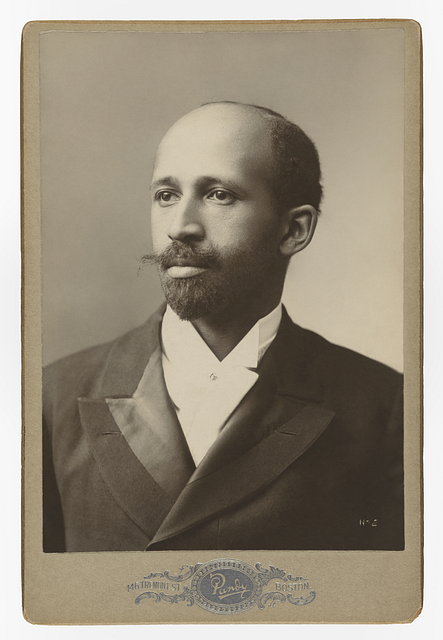
The practice of “erasing history” to serve political ends has deep roots in the United States. Following the Civil War, a powerful project of “Redemption,” also known as the “Lost Cause movement,” emerged to rewrite the conflict’s history, redeem the South, and restore white Confederates to power. This narrative denied the significance of slavery and racism, instead insisting the South fought for other causes. W.E.B. Du Bois, in his seminal 1935 work Black Reconstruction in America, famously denounced this as “The Propaganda of History”. He argued that academic historians knowingly promulgated a false history, twisting ideals of truth and narrative accuracy to serve dominance and power. Their aim was to comfort white Americans grappling with the aftermath of the Civil War by crafting a narrative that “covered over the stark moral differences between states,” effectively justifying the removal of even minimal protections for Black citizens. This supremacist nationalism glorified the deeds of white Europeans while erasing the contributions of Black and Indigenous Americans, portraying European arrival as a glorious “age of exploration” rather than an age of multiple genocides. Such historical omissions and distortions served to maintain racial hierarchies and prevent alliances among the working classes, particularly between poor whites and newly freed Black citizens, which threatened the interests of capital.
The mid-20th century saw these “culture wars” intensify, especially with right-wing attacks on academic freedom and concerted attempts to control narratives. The McCarthy era in the late 1940s and 1950s, a period of widespread anti-Communist purges, publicly humiliated leftists in academia and other fields, leading to many losing their jobs. While McCarthy and his allies primarily targeted individuals for their political affiliations, leaving their teaching and research ostensibly alone, a palpable chill descended upon the nation’s classrooms, producing a “silent generation” of students and faculty. This period was marked by an overarching effort to create a national consensus excluding radicals, centered around Cold War and anti-Communism policies. The entire culture was permeated with anti-Communism, encouraging conformity and discouraging dissent. The government actively worked to create a consensus for war, employing elaborate propaganda campaigns and harsh punishments for dissenters. Discussions about “propaganda” and “unreality” in political discourse became prominent, with works exploring how well-meaning people could unknowingly produce and consume propaganda.
In this intellectual landscape, the concept of the Cold War itself became a contested idea. While initially a term to describe the geopolitical standoff, it quickly morphed into a rubric that explained much about postwar American politics and culture, often serving as a tool to justify present actions by glorifying past ones. Historians of this period often fell into “triumphalist” narratives, overlooking aspects that might spoil the “victory bash” and simplifying complex interconnections into a morality play. There were persistent attempts at limiting legitimate fields of inquiry or defining “Cold War” in ways that only fit narrow research interests or political tendencies, often by “rescuing the ‘correct’ Right or Left discourses from the continuous innovations” in the historical field. This often involved selective appropriation of history, as seen in the reinterpretation of figures like Harry Truman and the Cuban Missile Crisis to serve contemporary political narratives. Social sciences, too, were shaped by these forces, with a “behavioral science” paradigm emerging that reduced social phenomena for ease of manipulation into favored Cold War postures, such as submissive workers or Americanized allies.
The core of this enduring conflict lies in how history is defined. While history is, fundamentally, “what happened,” it is just as importantly “how we think about what happened and what we unearth and choose to remember”. Authoritarian regimes consistently find history profoundly threatening because it provides multiple perspectives on the past. They seek to erase or conceal history to consolidate power, leaving students with the impression that the status quo has never been, and cannot be, challenged. This manipulation involves replacing the actual historical record with a glorious mythic past that diminishes or entirely extinguishes the nation’s past sins, weaponizing nostalgia and denying inconvenient realities.
Today’s educational gag orders directly reflect this historical pattern. They aim to restrict teaching, training, and learning, particularly discussions of race, gender, sexuality, and US history deemed unduly critical. Bills explicitly limit the use of the 1619 Project, forbid educators from presenting slavery and racism as anything other than “deviations from” American founding principles, and even prohibit teaching that America has “more culpability” for slavery than other nations. Such legislation seeks to enforce “compulsory patriotism” and shield American history from negative moral judgments. This “legislative war on education” is a full-frontal attack on academic freedom, threatening to silence vital societal discourse on racism and sexism. It attempts to undercut the very infrastructure of academic freedom, which distinguishes universities in democratic countries from those in authoritarian ones, where knowledge is controlled by a single political party. The danger of restricting knowledge is profound, as it impedes citizens’ ability to make informed choices and, ultimately, threatens the stability of democracy itself.
The current efforts to control what can be taught in schools are not merely disagreements over curriculum; they are a struggle for power, aimed at preserving white supremacy, patriarchy, and existing economic and political hierarchies. This historical battle, continually reshaped but fundamentally consistent, underscores the enduring importance of defending critical thinking, diverse perspectives, and the pursuit of an unvarnished truth about the past for the future of American democracy.