

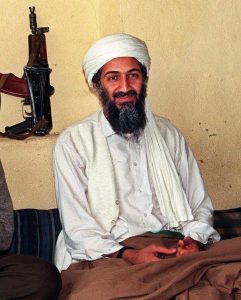
The intertwined history of the CIA, Afghanistan, and Osama bin Laden is a complex, decades-long narrative marked by shifting alliances, evolving threats, and, ultimately, devastating consequences for the United States. It’s a story that reveals the challenges inherent in confronting a determined, adaptable adversary within a dynamic geopolitical landscape, often constrained by policy choices and bureaucratic inertia.
The Genesis: Fueling the Anti-Soviet Jihad in the 1980s
Our journey begins in the late 1970s, as the Soviet invasion of Afghanistan prompted the United States to embark on one of its most significant covert operations. In early March 1979, the CIA sent initial proposals to the White House for secret support to the anticommunist Afghan rebels, aiming to tie down Soviet forces and potentially embarrass them, especially in the wake of upheaval in Iran. This was seen as an opportunity to divert the fire of the burgeoning Islamic rebellion away from the United States and towards the Soviet Union.
The operation fundamentally relied on Pakistan’s Inter-Services Intelligence (ISI) as the primary conduit for American aid. General Zia-ul-Haq, Pakistan’s dictator, was a crucial partner, though he harbored concerns about Soviet retaliation unless the U.S. committed to protecting Pakistan. The CIA’s annual budget for the Afghan program grew dramatically, soaring from approximately $30 million in fiscal 1981 to around $200 million by fiscal 1984. Notably, Saudi Arabia, seeking to solidify its anti-communist alliance with Washington, effectively doubled these amounts by matching the CIA’s aid dollar-for-dollar. This immense financial flow, however, paled in comparison to the Soviet Union’s aid to Kabul’s communists, which exceeded $1 billion in 1980 alone.
Internally, the CIA grappled with the implications of this expanding covert war. Some officials, like Deputy Director John McMahon, expressed continuous worry that the Afghan covert program would go “badly wrong” and the agency would face significant criticism. There was also debate about the very purpose of the war; while CIA analysts in the Soviet division initially doubted that any amount of aid would force a Soviet withdrawal, Director William Casey, a passionate anticommunist, insisted on confronting the Soviets where they were weakest, aiming not just to raise the cost of their involvement but to “restore independence to Afghanistan”. This ambition, however, went beyond the original presidential authority. The agency found itself supplying “dual use” weapons systems—those usable against military targets but also for terrorism or assassination—a practice that made the agency’s “secret-keepers uncomfortable” due to the difficulty of maintaining plausible deniability.
It was within this tumultuous environment that Osama bin Laden first appeared on the periphery of the CIA’s radar. He arrived in Peshawar, Pakistan, around the same time Milton Bearden became CIA station chief in Islamabad in July 1986. Bin Laden, described as a “wealthy young Saudi” with a passion for Islamic charities and construction, began organizing his own training facilities, such as “the Lion’s Den” or “al Ansar,” for Arab volunteers, separate from the ISI-backed groups. Early reports reaching the CIA’s Counterterrorist Center, launched in 1986, suggested he “certainly was not engaged in any fighting. He was not a warrior,” primarily noted for “throwing around money”. Indeed, CIA archives show no direct contact between a CIA officer and bin Laden during the 1980s. However, the substantial private Saudi and Arab funding, estimated by Bearden at up to $25 million a month, heavily tilted the field toward the Islamists and facilitated the growth of religious schools (madrassas) along the Pakistan-Afghanistan border, transforming ISI into a powerful institution with deep-pocketed patrons like Prince Turki and his Saudi General Intelligence Department. The CIA was content to let Pakistani intelligence take the lead in Afghan politics, even if it meant installing their client, Hekmatyar.
Disengagement, Sanctuary, and the Rise of a New Threat (Early-Mid 1990s)
With the Soviet withdrawal in 1989 and the formal dissolution of the Soviet Union by January 1992, American interest in Afghanistan rapidly waned. The CIA’s legal authority for covert action in Afghanistan effectively ended, and the country was largely ignored, with concerns about it becoming a “training ground and munitions dump for foreign terrorists” often gathering dust in the bureaucracy. President Bush himself seemed surprised that the Afghan war was “still going on”.
During this period of U.S. disengagement, Osama bin Laden transitioned to Sudan, where he continued to build his network. The CIA noted his payment for training Egyptian terrorists in Sudan in 1993, and the State Department detected his money aiding Yemeni terrorists who attempted to kill U.S. troops in Aden in 1992. CIA analysts still primarily described him as an “extremist financier,” not yet fully understanding his operational ambitions. However, Cofer Black, the CIA’s station chief in Khartoum, observed bin Laden’s growing network and multinational private army, even experiencing an assassination attempt by bin Laden’s men. At a 1995 White House briefing, CIA analysts characterized bin Laden’s Khartoum headquarters as “the Ford Foundation of Sunni Islamic terrorism,” a source of grants for violent operations.
The February 1993 bombing of the World Trade Center in New York served as a stark, if initially misunderstood, portent of the emerging threat. While a small group associated with Osama bin Laden and al-Qaeda was responsible, the trials of the perpetrators did not fully bring the Bin Laden network to the attention of the public or policymakers. The FBI’s investigation, though uncovering extensive details about Afghan training camps and al Qaeda, did not initially share crucial evidence with the CIA, even concerning Bin Laden’s name surfacing as a funder for a defendant’s lawyers. By mid-1995, however, both the FBI and CIA were developing a clearer picture of a “new generation of Sunni Islamic Terrorists” like Ramzi Yousef, describing them as autonomous and indigenous, with access to a worldwide network of support. Despite this, neither al Qaeda nor Bin Laden appeared on the initial list of twelve terrorist groups sanctioned by President Clinton in January 1995.
A significant turning point came in May 1996 when Sudanese officials, seeking to ease foreign pressure, offered to expel Bin Laden to Saudi Arabia. However, Saudi officials, who had already revoked his citizenship, refused to tolerate his presence, fearing that his execution or imprisonment would provoke an anti-government backlash. This refusal led to Bin Laden’s return to Afghanistan, an event that the chief of the CIA’s new Bin Laden unit, “Mike,” considered a “stroke of luck” due to reestablished contacts in the region. Bin Laden’s unchallenged flight was an “inauspicious beginning” for the CIA’s new virtual station dedicated to tracking him, and he soon declared that the “United States” was the “main enemy”.
Upon his return, Bin Laden settled comfortably in Afghanistan, deepening his relationship with the Taliban, which had seized power by 1994 and become an international pariah. He supported the Taliban with lavish construction projects and generous donations, and even built Mullah Omar an extravagant, unapproachable palace on Kandahar’s outskirts. This symbiotic relationship provided Bin Laden with a crucial sanctuary.
Escalation, Frustration, and Missed Opportunities (Late 1990s – Pre-9/11)
The CIA established a special unit, the “bin Laden Issue Station” (code-named “Alec”), in January 1996, comprised of about a dozen officers to analyze intelligence and plan operations against him. This “virtual station” was an experiment to address transnational targets like Bin Laden who operated across borders. Significant intelligence breakthroughs occurred, notably with the defection of Jamal al-Fadl in late 1996, who provided a “major breakthrough” on al Qaeda’s creation, character, and intentions, revealing that Bin Laden “had planned multiple terrorist operations and aspired to more”.
By late 1997, the CIA’s Counterterrorist Center began to develop formal plans to capture Bin Laden, including an elaborate scheme to ambush him at Tarnak Farms, a compound near Kandahar, using Afghan tribal agents who had previously hunted Mir Amal Kasi. These agents were well-equipped with CIA-supplied vehicles, weapons, and secure communications. However, the White House exhibited caution. While President Clinton’s aides approved the concept, they worried about the risks, including potential civilian casualties near mosques, and insisted on a “reasonable effort to capture bin Laden alive” to avoid legal problems, though the exact legal nuances were a source of frustration for field officers. The plan presumed a federal grand jury indictment or an agreement from Egypt or Saudi Arabia to accept him for trial, neither of which materialized in a timely manner.
The urgency of the threat became tragically apparent on August 7, 1998, with the simultaneous bombings of the U.S. embassies in Nairobi, Kenya, and Dar es Salaam, Tanzania, killing 223 people and injuring over 4,000. Suspicion quickly focused on Bin Laden, and U.S. intelligence, leveraging year-long monitoring of al Qaeda’s Nairobi cell, firmly fixed responsibility on him. In response, President Clinton authorized Tomahawk cruise missile strikes against terrorist camps in Afghanistan, including Bin Laden’s compound at Tarnak Farms, and a chemical factory in Sudan believed to be linked to Bin Laden. Clinton also signed a Top Secret “Memorandum of Notification” authorizing the CIA to use lethal force, if necessary, to capture Bin Laden and his top lieutenants for trial. While U.S. law permitted killing Bin Laden as a military target or in preemptive self-defense, the detailed instructions often “zigzagged” on the issue of lethal force, with the initial authorization for tribal agents only allowing lethal force in self-defense during a capture operation. This complexity and ambiguity demoralized field officers.
Despite the missile strikes, the physical impact was limited, and Bin Laden’s reputation in the Islamic world was arguably enhanced as he had been shot at by a superpower and missed. The incident highlighted a persistent challenge: the “primitive nature of the facilities” meant that such strikes often had minimal strategic effect.
Pakistan’s role remained complex and often frustrating for the U.S.. Pakistani intelligence (ISI) maintained extensive links with the Taliban and other Islamist militants operating from Afghanistan, coordinating access to training camps for fighters headed to Kashmir and against the Northern Alliance. While Pakistan would sometimes cooperate on lower-level al Qaeda arrests to gain “credits” with the U.S., U.S. officials frequently doubted ISI’s willingness to betray Bin Laden, believing they easily could if they had the will. ISI was seen as “unreliable”, and the CIA station chief found himself struggling to even get monthly meetings with the new ISI chief, Mahmoud Ahmed.
Warnings about Bin Laden’s intentions continued to intensify. Intelligence reports in late 1998 highlighted al Qaeda’s interest in using aircraft to launch attacks, including flying an explosive-laden plane into an American airport or as a “suicide hijacker”. Concerns also grew about Bin Laden’s clear intention to strike inside the United States. However, despite this intelligence, no “special emphasis” was placed on the civil aviation threat, with weapons of mass destruction (WMD) being a higher priority for Clinton and his aides.
Ahmed Shah Massoud, the leader of the Northern Alliance, consistently warned American officials about the myopia of their strategy, arguing that focusing solely on Bin Laden was “doomed to fail” if it ignored the broader context of the Taliban and Pakistani intelligence. Massoud believed that al Qaeda was much larger than Bin Laden alone and that their Afghan sanctuary allowed for increasingly ambitious operations. His aides expressed irritation that the U.S. was “talking about this very small piece of it: bin Laden” while a nation suffered. Massoud sought significant U.S. military and political support, or at least a clear promise that action against Bin Laden would lead to a new American policy recognizing the Northern Alliance. But the CIA could offer no such promise, leading to mutual frustration. The U.S. viewed Massoud’s forces as too small and too discredited by past atrocities to overthrow the Taliban or unite the country, and worried about destabilizing Pakistan by backing him.
The bombing of the USS Cole in October 2000, killing seventeen U.S. sailors, further underscored the evolving threat. While U.S. intelligence agencies quickly linked the attack to al Qaeda operatives, President Clinton felt he lacked “conclusive information on external command and control” from Bin Laden to publicly justify further military action. This led to a “renewed consideration of what could be done,” but also highlighted the challenges of political action without definitive, public-ready evidence.
Crucially, a “single most important unforced error” by the CIA was its failure to watchlist Nawaf al Hazmi and Khalid al Mihdhar, two known al Qaeda operatives with U.S. visas, or to notify the FBI when they traveled to Los Angeles in January 2000. This information was not shared with the FBI, and no further action was taken to track them until January 2001, effectively losing their trail.
The Final Countdown: The Bush Administration and 9/11
As the Bush administration took office in January 2001, George W. Bush and his principal advisers received briefings on terrorism, including Bin Laden. CIA Director George Tenet, aiming to establish new relationships, described al Qaeda as one of the gravest threats to the country. Bush asked if killing Bin Laden would end the problem, to which Tenet and others replied it would have an impact but not stop the threat, adding that eliminating al Qaeda’s Afghan sanctuary was the only long-term solution. However, Bush’s foreign policy focus was on missile defense, military reform, China, and Iraq; terrorism was not a top priority. Richard Clarke, Clinton’s counterterrorism director who continued in the Bush administration, described the al Qaeda threat as “existential,” believing they sought “mass American fatalities” and WMD.
The administration slowly began a policy review, with the Deputies Committee, chaired by Stephen Hadley, prioritizing the destruction of al Qaeda by April 2001. However, proposals for increased covert aid to Massoud and the Uzbeks were initially postponed, and there was ongoing reluctance to make a “major commitment” to the Northern Alliance, fearing it would undermine relations with Pakistan.
The debate about deploying an armed Predator drone against Bin Laden persisted. Cofer Black and the Bin Laden unit strongly advocated for it, seeing it as a “clean shot” for positive identification and lethal action, while others at the Directorate of Operations worried about the CIA directly engaging in “assassination,” which could expose agents to retaliation and political criticism. These discussions over lethal authority were part of the “narrow and unimaginative menu of options” offered to both President Clinton and President Bush.
Throughout spring and summer 2001, intelligence warnings surged to unprecedented levels. Reports mentioned al Qaeda’s plans for “multiple operations,” a “spectacular” attack, and recruitment for missions in the United States. Cofer Black was convinced al Qaeda was about to “strike hard,” potentially with WMD, and warned that “many Americans are going to die”.
The culmination of these warnings was the President’s Daily Brief on August 6, 2001, titled “Bin Ladin Determined to Strike in US,” which explicitly mentioned the possibility of al Qaeda operatives attempting to hijack airplanes. Despite Tenet’s later assertion that “the system was blinking red,” Bush reportedly interpreted this briefing as “essentially ‘historical’ in nature, and thought it contained nothing new,” and there’s no evidence of high-level discussions about al Qaeda or terrorism between this briefing and September 11.
In a tragic, final act just two days before 9/11, Ahmed Shah Massoud, who had consistently warned the West about the growing threat, was assassinated on September 9, 2001, by al Qaeda operatives posing as journalists. His death removed a key figure who could have rallied opposition to the Taliban and al Qaeda in Afghanistan, further underscoring the severe consequences of the West’s fragmented and often hesitant approach.
In retrospect, the CIA’s efforts against Bin Laden were energetic and worldwide, but they faced significant limitations. Despite growing intelligence on Bin Laden’s network, the CIA often lacked “conclusive evidence” about his personal involvement in attacks for public justification of retaliation. Bureaucratic turf wars, compartmented information, a reluctance to fully engage militarily without clear legal authority, and a persistent overestimation of Pakistani and Saudi cooperation ultimately hampered efforts to dismantle al Qaeda’s sanctuary. The result was a fragmented response to a determined, evolving enemy, which allowed al Qaeda to execute its devastating attacks on American soil.