

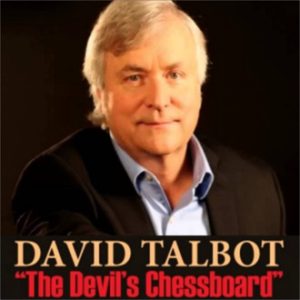
It is with a profound sense of historical continuity that I turn my gaze now to David Talbot’s The Devil’s Chessboard: Allen Dulles, the CIA, and the Rise of America’s Secret Government. This work offers a gripping, and at times unsettling, narrative that delves into the origins of what has become known as the national security state and, in doing so, compels us to reflect upon a continuous “battle for America’s soul.” Understanding this past, particularly in the context of recent events such as Donald Trump’s second presidential term and the Supreme Court’s immunity ruling, is not merely an academic exercise; it is essential for the informed engagement that underpins a thriving democracy.
Talbot casts Allen Dulles, the long-serving director of the CIA, as a central, formidable figure in this historical drama. Dulles, a man whose intellect was respected even by figures like Talleyrand who ranked him among the greatest of his epoch, operated with a distinct philosophy of power. From his early days on Wall Street, alongside his brother John Foster Dulles, they believed that democracy was “an enterprise that had to be carefully managed by the right men, not simply left to elected officials as a public trust”. This perspective, fundamentally at odds with the vision of self-governance held by the Founding Fathers, would shape the trajectory of America’s intelligence apparatus. While the Founders designed a republic to guard against unchecked power and the arbitrary rule of a king, Dulles and his circle embodied a different ethos: “Democracy works only if the so-called intelligent people make it work”. This was not a call for public education or civic virtue, but rather an assertion that a select few should be the true seat of power, quietly dominating national decision-making.
Under Allen Dulles’s leadership, the CIA expanded its role far beyond mere intelligence coordination. It transformed into what Talbot describes as a “super agency”, often operating “untethered from the checks and balances of democracy”. The agency engaged in a wide array of activities that would have sent shivers down the spines of those who drafted our Constitution. This included direct covert actions to overthrow nationalist governments, such as those in Iran and Guatemala, which Dulles considered among the greatest triumphs of his career. The tools employed were ruthless and included assassination, torture, and extraordinary rendition—practices that Dulles himself, an “assassination enthusiast”, saw as justified because, in his view, “there were no rules in war” when facing an “implacable enemy”. This echoes the “polarizing habit of mind” that demonizes the enemy, making “normal diplomatic relations” impossible and leading to the view of “antagonists as beyond the pale”. Such actions directly contradict the Founders’ insistence on due process and the rule of law, which apply even when facing accusations of “treasonous behavior”.
The Devil’s Chessboard illuminates how Dulles and his associates deeply engaged in a “war of ideas,” believing that “ideas mattered” and floated “like seeds on the wind”. This led to extensive propaganda campaigns and a willingness to manipulate public perception. The book details how leading newspapers, including The New York Times, were often “accommodating to Dulles”, agreeing to screen articles and presenting sanitized accounts of covert operations. Dulles himself authored books and articles, relying on “CIA employees and media assets” to craft narratives that portrayed the spy’s role as that of a “new-model musketeer”—a dashing hero, rather than a “sneaky and socially unacceptable figure”. This systematic effort to control information and perception resonates with the broader concerns about “propaganda” and “unreality” that can distort public discourse, making it difficult for “sincere, well-meaning people” to discern truth. The Founders, while not foreseeing modern media, understood the vital role of a free and robust press for an informed citizenry [previous essay].
Talbot’s account starkly reveals the erosion of democratic norms and institutions under Dulles. His disdain for Washington bureaucracy and “governmental oversight that comes with a functioning democratic system” is palpable. James Jesus Angleton, Dulles’s counterintelligence chief, famously stated, “It is inconceivable that a secret intelligence arm of the government has to comply with all the overt orders of the government”. This sentiment reflects a dangerous belief in operating “above the law”, a direct challenge to the very concept of a government accountable to its people, rather than its “masters”. This historical pattern of undermining civil service protections and prioritizing political loyalty over merit, as seen in the purging of independent inspectors general and federal workers, directly mirrors contemporary concerns about efforts to dismantle such safeguards, as outlined in Project 2025.
The “battle for America’s soul” is, therefore, not a new conflict. Talbot’s work demonstrates how the “implacable brutality to power”, unchecked by democratic norms and accountability, became deeply embedded within the U.S. government. Dulles’s legacy is described as one that “darkens the land,” providing a “template for Bush regent Dick Cheney’s executive absolutism and extreme security measures”. The chilling assertion by Angleton that the “founding fathers of U.S. intelligence were liars,” who were “motivated by a desire for absolute power”, underscores the profound moral compromise that Talbot argues took root. The Supreme Court’s recent ruling granting immunity for a president’s “illegal actions”, particularly those falling under “core presidential powers” like “investigative and prosecutorial functions”, can be seen as the apotheosis of the unitary executive theory—a concept that, in practice, risks creating an “elective monarchy” operating “above the law”. This judicial embrace of executive unaccountability, alongside attacks on media and universities, would undoubtedly be recognized by the Founding Fathers as precisely the path toward tyranny they fought to prevent.
In this light, Talbot’s The Devil’s Chessboard serves not only as a meticulous historical accounting but also as a powerful warning. It forces us to confront how a nation, founded on principles of liberty and limited government, can gradually drift towards systems of unchecked power, where the “thin tissue of convention” that safeguards democracy is stretched and torn. For participants in American democracy, this history is a call to vigilance: to scrutinize assertions of executive power, to defend independent institutions like the judiciary and the press, and to resist the normalization of actions that, in any other context, would be seen as an affront to the very soul of the republic.