
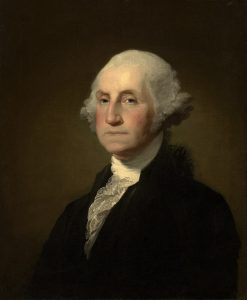
The Imperial Prelude and the Commission In late 1753, the territorial ambitions of the British and French empires clashed decisively over their overlapping claims to the fertile, strategically vital Ohio Country. Virginia’s Lieutenant Governor Robert Dinwiddie, a portly Scot and a major investor in the land-speculating Ohio Company, sought to secure British trade interests and defend English claims by delivering a solemn ultimatum to the French forces occupying the region. To deliver this high-stakes message, Dinwiddie turned to a remarkably young and inexperienced representative: twenty-one-year-old George Washington, who received his formal commission as a special envoy on October 31, 1753. Eager to prove himself, Washington departed Williamsburg the very same day. Along his route, he recruited a Dutch fencing instructor, Jacob Van Braam, to act as his French translator, and enlisted Christopher Gist, a highly experienced backcountry guide and surveyor.
The Clandestine Mandate and Frontier Espionage While Washington’s public role was that of a formal diplomatic messenger carrying King George II’s demand for a peaceful French withdrawal, his instructions contained a critical, unavowed mandate of military reconnaissance. Washington was directed to establish contact with local Native American leaders—particularly the sachems of the Iroquois Six Nations—to extract intelligence from them regarding French operations. He met with Chief Shingas of the Delawares and convened a parley at the village of Logstown. There, Washington successfully negotiated with Tanacharison, the Half King, a native chief who harbored a visceral hatred of the French. Though Washington had to employ careful diplomatic evasion to obscure the true nature of his mission, he gathered crucial early intelligence by interviewing French deserters, confirming that France intended to encircle the British colonies by uniting their Canadian and Louisiana territories.
Pushing northward, Washington’s party stopped at the French trading post of Venango, where French officers under Captain Philippe Thomas de Joncaire drank heavily and indiscreetly boasted about their plans to seize the Ohio Valley. While the Frenchmen attempted to delay the mission by getting Washington’s Indian escorts drunk, Washington maintained strict self-control and recorded their disclosures. Pushing forward from Venango through forty miles of swampy, freezing wilderness, the weather turned intolerably cold. To hasten their arrival, Washington and Gist left the rest of their party behind to trek on foot and horseback through the snow-encrusted landscape.
The Reconnaissance of Fort Le Boeuf On the night of December 11, 1753, Washington and Gist finally arrived at Fort Le Boeuf, a French military outpost situated just south of Lake Erie. Emerging from the dark, Washington observed a crude, bark-and-plank structure comprising four primary buildings. The next morning, Washington was formally received by the fort’s commander, Captain Jacques Legardeur de St. Pierre, a silver-haired, one-eyed military veteran whom Washington described as an “elderly gentleman” with “much the air of a soldier”.
Washington presented the formal British summons demanding a French departure, which St. Pierre politely received and requested several days to review and answer. This administrative delay presented Washington with a golden opportunity to execute his secret military mission. Under the guise of a polite, visiting diplomat, Washington spent his days actively reconnoitering the military installation. He systematically evaluated the fort’s defenses and took detailed, covert notes on its military specifications.
Most significantly, Washington conducted a meticulous physical inventory of French transport and assault equipment. Along the banks of the adjacent creek, he counted exactly 220 birch and pine canoes. Washington recognized that this massive fleet was being actively assembled by the French to launch upcoming, large-scale military operations down the waterways of the Ohio Country. While St. Pierre attempted to play a polite host—even stocking Washington’s canoes with provisions for his return journey—he simultaneously launched a counter-espionage effort, attempting to bribe Washington’s Indian escorts with guns and liquor to abandon the British envoy. Washington confronted the Half King, successfully keeping his native guides from falling into the French trap.
The Strategic Legacy and Global Consequences After a perilous return journey that pushed his physical endurance to its absolute limits, Washington returned to Williamsburg on January 16, 1754. He delivered St. Pierre’s formal refusal to Governor Dinwiddie. Crucially, he also handed over a hand-drawn map of Fort Le Boeuf’s military specifications and his precise estimates of French troop strength.
Dinwiddie was so impressed by Washington’s intelligence collection that he ordered him to transcribe his rough notes into a coherent report. This document was rapidly published throughout the American colonies and in London as The Journal of Major George Washington. The detailed intelligence Washington gathered during his secret reconnaissance of Fort Le Boeuf exposed the imminent French threat, providing the British Empire with the strategic justification to mobilize for war. Ultimately, the young envoy’s covert survey of 220 canoes and bark barracks served as the direct catalyst for the French and Indian War, a global conflict that would fundamentally reshape the balance of power in North America.