

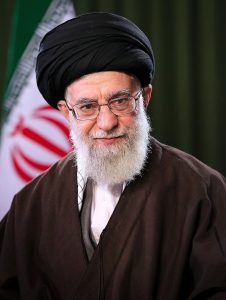
The Catalyst: Operation Epic Fury and the Assassination of the Supreme Leader
On February 28, 2026, the fragile geopolitical balance of the Middle East was shattered when the United States and Israel launched a massive, coordinated surprise aerial assault against the Islamic Republic of Iran. Initiated under the US code name Operation Epic Fury and designated Operation Roaring Lion by the Israeli military, the strikes targeted key military installations, government facilities, and communication networks. Critically, the attack took place during active negotiations between Washington and Tehran regarding Iran’s nuclear program.
The primary strategic objective of the US-Israeli campaign was the decapitation of Iran’s political and military command structure. During the opening hours of the bombardment, Israeli fighter jets and US missiles struck Tehran’s highly secure Pasteur Street district, hitting the presidential palace and the Supreme National Security Council. The centerpiece of the assault was the assassination of Iran’s Supreme Leader, Ayatollah Ali Khamenei, who was killed in a precision Israeli airstrike. The strike also claimed the lives of several members of his family, including his daughter, son-in-law, grandchild, and daughter-in-law Zahra Haddad-Adel. In total, the initial wave of attacks killed or wounded dozens of high-ranking Iranian military and intelligence officials, decimating the state’s senior command.
The IRGC Strikes Back: Launching Operation True Promise IV
In immediate response to the assassination of Ayatollah Khamenei and the destruction of its command centers, the Islamic Revolutionary Guard Corps (IRGC) mobilized its forces to execute a massive, multi-front retaliatory campaign. Codenamed Operation True Promise IV by Tehran, and referred to by Iranian state media as the “Ramadan War” due to its occurrence during the holy month of Islamic fasting, the operation was designed to inflict maximum symmetrical damage on Israeli targets and the vast network of United States military bases in the Persian Gulf.
Within hours of the initial Western strikes, the IRGC unleashed a massive barrage of hundreds of one-way attack Shahed drones and advanced ballistic missiles. This complex retaliatory action targeted both the Israeli homeland and key logistics hubs belonging to the United States and its regional allies.
Homeland Strikes: Targeting Tel Aviv and Haifa
The first vector of Operation True Promise IV was directed at the Israeli mainland, specifically targeting major economic and urban centers. The IRGC launched dense salvos of missiles and drones aimed at the coastal cities of Tel Aviv and Haifa.
In Tel Aviv, the sudden influx of Iranian munitions bypassed portions of Israel’s air defense network, resulting in a direct hit on a residential building that killed an Israeli woman and injured twenty-two others. Sirens wailed across central Israel as citizens were forced to seek shelter in converted underground light rail stations and fortified safe rooms. The strikes also targeted Haifa’s critical infrastructure, including the BAZAN Group oil refineries, sparking fires and causing significant economic disruption. In the West Bank, falling debris and errant interceptors resulted in casualties among Palestinian civilians, illustrating the wide-reaching dangers of the aerial duel.
Asymmetrical Warfare: The Assault on US Bases in West Asia
While striking the Israeli homeland, the core tactical focus of Operation True Promise IV was the systematic targeting of the United States’ military footprint in the Persian Gulf. The IRGC aimed to paralyze the aerial and naval platforms from which the US had launched and supported the decapitation strikes.
Iranian state-controlled media reported direct, successful hits on several premier US installations. The targets of these precision missile and drone attacks included:
- Al Udeid Air Base in Qatar, a primary hub for US air operations in the region.
- Ali Al Salem Air Base in Kuwait, where the strikes resulted in substantial localized damage.
- Al Dhafra Air Base in the United Arab Emirates, which faced intensive drone swarms.
- The US Navy Fifth Fleet Headquarters in Bahrain, located in the capital of Manama, where explosions and rising smoke were documented near the harbor.
Additionally, the IRGC struck the US Consulate General and the Erbil International Airport in the Kurdistan Region of Iraq, using dozens of drones to disrupt US intelligence and diplomatic operations on Iran’s immediate western border.
Neutralizing the Shield: Blinding the US Air Defense Network
One of the most strategically significant successes of Operation True Promise IV occurred in the days immediately following the opening salvo. On March 1 and 2, 2026, the IRGC launched highly targeted drone and missile strikes designed specifically to blind the United States’ advanced radar and air defense networks.
These strikes successfully targeted the highly sensitive radar installations of the US Terminal High Altitude Area Defense (THAAD) and Patriot missile defense systems across Jordan, Saudi Arabia, and the UAE. Satellite imagery subsequently confirmed that a vital US THAAD radar battery in Jordan had been completely destroyed. Furthermore, the IRGC utilized low-cost, low-altitude FPV and Shahed drones to destroy or severely damage several key US radar systems, including:
- The AN/FPS-132 Solid State Phased Array Radar in Qatar, a critical component of global US missile warning capabilities.
- The AN/TPS-59 tactical radar in Bahrain, which was taken completely offline.
- An AN/FPS-117 radar system in Saudi Arabia.
By knocking out these multi-million-dollar surveillance systems using cheap, mass-produced drones, the IRGC demonstrated a highly effective asymmetrical tactical doctrine. The high cost of utilizing PATRIOT and THAAD interceptor missiles—ranging from $4 million to $12 million per shot—to neutralize $50,000 Shahed drones rapidly depleted US defensive stockpiles and created critical blind spots in the region’s air defense coverage.
Regional Escalation and the Dual Blockade
The execution of Operation True Promise IV rapidly expanded the conflict into a wider regional war. Several US-allied Arab states, including Kuwait, Saudi Arabia, Bahrain, and the UAE, faced falling missile debris and direct retaliatory strikes after permitting the US and Israel to utilize their airspace or bases for offensive operations. In Kuwait, a residential building was struck by an Iranian drone, injuring civilians, while six key power lines were reported to have gone out of service. In Saudi Arabia, a projectile fell on a residential compound in Al-Kharj, killing two people.
To cement its military resistance, the IRGC officially closed the Strait of Hormuz, laying sea mines, warning off commercial vessels, and seizing cargo ships. This blockade immediately brought 25 percent of the world’s seaborne oil trade and 20 percent of its liquefied natural gas shipments to a complete standstill, triggering a severe global energy crisis. In response, the US Navy initiated a counter-blockade of Iranian ports, establishing a tense “dual blockade” in the Persian Gulf.
Conclusion and Legacy
Operation True Promise IV stands as a watershed moment in the history of modern warfare, illustrating the terrifying speed with which localized clandestine strikes can escalate into open, unrestricted regional conflict. By launching a massive, immediate barrage against Israel and US bases, the IRGC successfully demonstrated its resilience and signaled that the assassination of its Supreme Leader would not result in the immediate collapse of the regime. Although the US-led coalition claimed that the strikes had severely degraded Iran’s offensive capabilities, the asymmetrical successes of Operation True Promise IV—specifically the blinding of advanced US radar networks and the closure of the Strait of Hormuz—shattered the illusion of absolute Western military dominance, leaving the region locked in a dangerous, unresolved stalemate.