

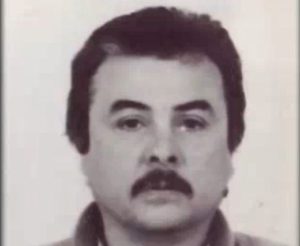
In the mid-1980s, the intersection of United States foreign policy and the War on Drugs became deeply entangled in the jungles of Central America and the street corners of Los Angeles. While the Reagan administration publicly championed a fierce, punitive campaign against drug abuse, its covert agencies aggressively prioritized the preservation of the Nicaraguan Contras—a counterrevolutionary paramilitary force fighting to overthrow Nicaragua’s left-wing Sandinista government. Among the most influential and prolific drug traffickers operating in Southern California during this turbulent era was Oscar Danilo Blandón, a wealthy Nicaraguan exile who began importing massive quantities of cocaine into Los Angeles’s black neighborhoods in the early 1980s. Blandón had been recruited into the drug trade by Norwin Meneses, a legendary Central American kingpin with deep ties to the military dictatorship of Anastasio Somoza. Together, under the direction of FDN military commander Enrique Bermúdez, Meneses and Blandón established a highly lucrative cocaine pipeline, funneling their illicit profits directly into the coffers of the CIA-backed counterrevolution. By the time the federal government began mobilizing a multi-agency task force to investigate the ring in late 1986, the explosive potential of this Contra-drug link threatened to completely derail U.S. foreign policy in Central America.
In late 1986, as the Iran-Contra scandal erupted into public view and threatened to expose the clandestine activities of the White House, the U.S. intelligence and drug enforcement apparatus took extraordinary measures to manage the impending crisis. On December 21, 1986, without obtaining official DEA approval, Norwin Meneses and his new partner, a longtime CIA contract agent known as “Roberto,” departed Costa Rica and flew directly to the United States. Officially, they were deployed on a highly sensitive penetration mission for the Costa Rican DEA to infiltrate Blandón’s booming drug organization under the codename “Operation Perico”. In reality, however, a series of much more complex, non-disclosed factors prompted this sudden, off-the-books deployment. First, the operation was designed to shield Meneses from imminent arrest by Costa Rican authorities, who had begun investigating his extensive drug trafficking network. Second, and more critically, U.S. officials utilized the operation to gather intelligence on exactly what the impending federal Organized Crime Drug Enforcement Task Force (OCDETF) investigation in Los Angeles could expose if investigators delved too deeply into the Contra-cocaine pipeline.
Shortly after the new year in early 1987, Meneses and the CIA agent “Roberto” established contact with Blandón’s organization in Southern California, initiating a series of strange, clandestine parleys. The meetings brought together Blandón, Meneses, the CIA’s “Roberto,” and a top FDN official named Ivan Torres—the brother of Colombian-connected traffickers Jacinto and Edgar “The Trees” Torres, and Blandón’s chief assistant for L.A. cocaine operations. The subsequent debriefing reports filed by “Roberto” regarding these meetings “chilled the CIA and DEA to the bone”. Ivan Torres boasted that his brothers were actively distributing up to 1,000 kilograms of cocaine on a monthly basis in Los Angeles. Furthermore, Torres openly claimed that he maintained direct contact with FBI and CIA representatives as a result of his leadership within the FDN, and asserted that he had been personally trained by the CIA in San Bernardino in a simulated environment designed to resemble Nicaraguan terrain. Most alarmingly, Torres stated that CIA representatives were fully aware of his massive drug-related activities and “didn’t mind”. According to Torres, the CIA actively encouraged cocaine trafficking by members of the Contras because they recognized it as an exceptionally lucrative source of income, some of which was systematically funneled into numbered bank accounts in Europe and Panama. Torres also proudly noted that recent law enforcement raids in Los Angeles had not interfered with their sales to black street gangs, having merely prompted minor management restructurings while Blandón kept a low profile and utilized intermediaries.
The execution of Operation Perico exposed a profound, highly dysfunctional conflict between U.S. law enforcement and national security agencies. While the Costa Rican DEA office secretly brought the FBI’s prime suspect into the country and sent him directly into Blandón’s active drug ring, they completely withheld this critical information from FBI Agent Douglas Aukland, who was actively leading the domestic investigation in California. Aukland, who had been conducting daily surveillance of Blandón’s Guerra Auto Sales dealership in Fontana, watched for eight straight days as an “unidentified male Latin” left the car lot every morning with FDN official Ivan Torres. Aukland only later learned that this mystery man was none other than the fugitive kingpin Norwin Meneses. When the truth finally emerged, Aukland was particularly incensed that he had been denied the opportunity to debrief Meneses and had received only last-minute notice to speak with the CIA agent Roberto. In San Francisco, FBI Agent Gordon Gibler read the subsequent cable traffic and reacted with intense surprise and anger that the DEA had entirely bypassed the FBI. In response, the San Francisco FBI issued immediate arrest warrants for both Roberto and Meneses on suspicion of conducting unauthorized drug deals, forcing the two operatives to hastily beat feet back to Costa Rica. This sudden, frantic retreat left other DEA offices questioning the sanity of the Costa Rican station’s actions, raising concerns about whether a domestic indictment of Meneses would trigger severe national security complications with other federal agencies.
Following Meneses’s and Roberto’s hasty departure, the domestic investigation in California was left completely compromised and stalled. In March 1987, Riverside DEA Agent Tom Schrettner called the Costa Rican station chief, Sandy Gonzalez, in a desperate bid to send Roberto back to California to continue the infiltration. However, Gonzalez reported that Meneses and Roberto refused to return due to the active FBI interest, and shortly thereafter, Gonzalez claimed he had severed ties with Meneses due to his uncontrollable behavior. In May 1987, federal prosecutor Crossan Andersen made a final attempt to secure Roberto’s presence for a debriefing, but Gonzalez reported that Roberto would not come without Meneses, and announced that he himself was being transferred to Bolivia. After months of intense pressure from headquarters, Roberto finally agreed to travel to Los Angeles, but he made it clear to Schrettner and Aukland that he would provide no further information regarding the Contras. Recognizing that the case was dead, Crossan Andersen officially pulled the plug on the Organized Crime Drug Enforcement Task Force (OCDETF) investigation on July 17, 1987. Ultimately, the short-lived, seven-month probe accomplished nothing of value, serving merely as a convenient diplomatic shield that allowed Meneses and his CIA partner to visit the United States, survey the task force’s reach, and return to Costa Rica completely unmolested. Once the case was safely shelved and the threat of public exposure averted, Meneses miraculously reemerged on the U.S. payroll, as the DEA rehired him as an active informant and issued him fresh visas to continue his travels.