

During the height of the Cold War, the streets of Moscow served as a deceptive, closely monitored stage where foreign visitors were systematically subjected to one of the most sophisticated surveillance and compromise networks in history. Operating under the Second Chief Directorate of the KGB, the Tourist Division ran a highly coordinated program designed to identify, trap, and blackmail visiting Western diplomats, journalists, and intellectuals. To the Soviet leadership, personal vulnerabilities—specifically homosexuality—offered a highly lucrative channel for securing critical intelligence leverage over foreign adversaries. The operational details of this program, which remained a closely guarded state secret, were ultimately exposed to Western intelligence in the early 1960s by a high-ranking KGB defector, shattering the illusion of diplomatic security in the Soviet capital.
The Infrastructure of Moscow’s Tourist Surveillance
During the mid-twentieth century, the Soviet Union maintained absolute control over the physical and social movements of all foreigners within its borders. A Westerner could not visit the USSR without obtaining an official visa and purchasing a preset package tour. This restrictive travel protocol ensured that every single foreign visitor remained in continuous, structured contact with the state-run tourist agency, Intourist.
In reality, Intourist functioned as a direct front for Soviet intelligence. The organization was composed entirely of KGB informants or active agents, ranging from personal tour guides to hotel desk clerks. Within the main tourist hotels, each floor was overseen by a dedicated clerk, known as a dezhurnaya. Whenever a foreign guest left their room, they were legally required to surrender their key to the dezhurnaya for safekeeping. Because these clerks were active KGB informants, this key exchange allowed technical teams to enter empty rooms, search personal baggage, and install hidden surveillance technologies without the guest’s knowledge.
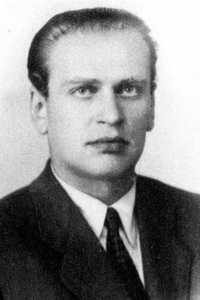
The administrative mastermind behind this localized, tourist-focused dragnet was Yuriy Nosenko, who served as the deputy chief of the KGB’s Tourist Division within the Second Chief Directorate. Nosenko’s specific operational mandate was to monitor foreign arrivals, analyze hotel informant dispatches, and coordinate the active compromise of targeted Westerners.
The Homosexual Trap and the Exploitation of Western Homophobia
The KGB’s strategy of compromising foreign visitors relied heavily on exploiting the severe legal and social penalties associated with homosexuality in the West. During the mid-twentieth century, Western societies—including the United States and Canada—treated gay and lesbian individuals as social pariahs. In the United States, the “Lavender Scare” prompted aggressive Senate investigations into government employees suspected of being “sex perverts”, culminating in an executive order by President Dwight D. Eisenhower that systematically fired all gay people from federal employment.
Western security agencies officially classified homosexuals as extreme “security risks”. Government manuals of the era warned that a homosexual’s “lack of emotional stability and weakness of moral fiber” made them uniquely susceptible to the blandishments and blackmail of foreign agents. Furthermore, until the 1960s, nearly all U.S. states maintained strict sodomy bans that criminalized same-sex intimacy, with some laws carrying devastating life sentences.
The KGB’s Tourist Division recognized that this climate of intense Western fear and legal criminalization created a perfect operational vulnerability. By deploying attractive undercover operatives, or “honey traps,” to seduce closeted Western visitors, the KGB could easily capture highly damaging photographic or electronic evidence of same-sex encounters. Confronted with the prospect of public exposure, criminal prosecution, and the immediate destruction of their professional careers back home, many compromised targets felt they had no choice but to surrender to Soviet demands, providing the KGB with critical intelligence leverage.
The Exposure of Watkins and Alsop
The inner workings of this compromise pipeline were laid bare in June 1962, when Yuriy Nosenko secretly approached an American diplomat in Geneva, offering to trade classified Soviet secrets for money. Following Nosenko’s initial contact, the CIA dispatched case officers Tennant “Pete” Bagley and George Kisevalter to conduct a series of highly sensitive debriefings at a safehouse near Geneva’s center.
During these meetings, Nosenko delivered a trove of high-level intelligence dispatches that startled his American interlocutors. Most notably, Nosenko revealed that the KGB’s Tourist Division had successfully targeted and compromised two prominent Western figures visiting Moscow: John Watkins, the Canadian Ambassador to the Soviet Union, and Joe Alsop, a highly influential and politically connected U.S. newspaper columnist. Both Watkins and Alsop were homosexuals who had been actively monitored, trapped, and compromised by the KGB during their travels to the Soviet capital. By exposing these operations, Nosenko proved that the KGB’s exploitation of private sexual conduct was not an occasional tactical maneuver, but a highly organized, systemic component of Soviet counterintelligence statecraft.
The Legacy of the Moscow Honeypots
Nosenko’s dramatic revelations had a profound and highly destabilizing impact on the American intelligence community. When Nosenko formally defected to the United States in January 1964—just two months after the assassination of President John F. Kennedy—his arrival triggered a fierce, historic civil war within the CIA. While the FBI and several CIA divisions believed Nosenko’s information to be entirely genuine, the CIA’s legendary counterintelligence chief, James Jesus Angleton, was deeply convinced that Nosenko was a sophisticated KGB “plant”. Primed by previous high-profile British penetrations such as Kim Philby, Angleton hypothesized that the Soviets had sent Nosenko to deliver “stale” or “disposable” intelligence—such as the compromise of Watkins and Alsop—specifically to deflect Western attention away from a high-ranking Soviet “mole” operating deep within the CIA.
Angleton’s obsessive, twenty-year hunt for this phantom mole ultimately divided the CIA, ruined the careers of many talented officers, and led to the brutal, three-year solitary confinement and hostile interrogation of Nosenko himself. Despite this climate of deep-seated Western paranoia, subsequent defections and internal reviews ultimately validated Nosenko’s information, confirming his status as one of the most valuable KGB defectors to reach the West. Ultimately, the tragic record of the Moscow tourist traps demonstrated that in the global chessboard of the Cold War, the private lives and personal secrets of Western visitors were treated as valuable strategic assets, ruthlessly mined by the Soviet state to subvert the diplomatic and national security apparatus of the West.