

The Inception of the Covert Program
Almost immediately upon taking office in early 1961, President John F. Kennedy approved a highly classified plan for various military and intelligence actions in Southeast Asia. According to the once-secret Pentagon Papers, this plan authorized the “dispatch of agents to North Vietnam” to engage in “sabotage and light harassment” against the Communist government. This initiative marked the formal beginning of a deeply deniable, sub rosa war that the United States, through the Central Intelligence Agency (CIA), waged against the Democratic Republic of Vietnam (North Vietnam) throughout the early 1960s. The primary strategic objectives of these infiltration missions were twofold: to gather actionable intelligence on North Vietnamese military capabilities and to sow domestic rebellion against the Communist regime in Hanoi.
Lansdale’s Psychological Warfare and Terror Operations
The psychological warfare portion of the infiltration program was heavily shaped by the CIA’s Brigadier General Edward Lansdale, who deployed covert agents directly into North Vietnam. Under Lansdale’s guidance, these agents executed highly deceptive campaigns designed to sow terror and panic among the North Vietnamese populace.
The CIA’s psychological warfare teams systematically broadcast and distributed false reports to destabilize public confidence in the Hanoi government. These fabrications included terrifying warnings that Chinese troops were crossing the northern border to rape and pillage, highly detailed rumors of brutal forced-labor camps being established by Ho Chi Minh, and false alerts concerning U.S. intentions to drop nuclear weapons on North Vietnam. To encourage the mass migration of North Vietnamese Roman Catholics to the South, the CIA even manufactured and distributed religious propaganda claiming that the Virgin Mary herself had moved to South Vietnam.
Maritime Raids and the Radar Mapping Mission
Beyond psychological manipulation, the CIA’s secret war utilized tactical Special Forces and commando teams to strike directly at North Vietnamese infrastructure. Starting in 1961, the United States utilized fast-moving Swift boats to transport South Vietnamese commandos directly to the coast of North Vietnam to execute sudden sabotage raids. These commandos engaged in direct combat operations, shelling and machine-gunning coastal targets, and occasionally slipping ashore under the cover of darkness to blow up key logistical and military installations.
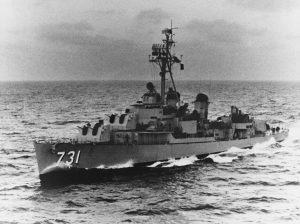
These coastal attacks were closely monitored and supported by larger U.S. Navy vessels. U.S. destroyers, such as the Maddox, sailed deep into the Gulf of Tonkin on special electronic spying missions to track these raids from farther out at sea. A critical, hidden objective of these joint commando raids and electronic spying missions was to deliberately provoke the North Vietnamese military to activate its defensive radar systems. Once activated, the radar signatures were intercepted and mapped by U.S. intelligence, providing a comprehensive targeting database for potential future American bombing campaigns. These covert, provocative operations directly established the volatile physical and political environment that culminated in the Gulf of Tonkin incident of August 1964.
The Total Failure and Lethal Legacy of the Infiltrations
Despite the immense resources and high-tech equipment poured into the program by the CIA, the commando infiltration missions were a complete and devastating failure. North Vietnam’s internal security and counterintelligence networks proved virtually impossible to penetrate. Every single commando team dispatched into the North was swiftly compromised.
The commandos were either killed in firefights immediately upon landing, captured and thrown into North Vietnamese prisons, or forced to work as double agents for the Hanoi government to feed false information back to their American handlers. By the time the highly sensitive program was finally shut down, approximately seven hundred South Vietnamese commandos had been lost or sacrificed in the field. For decades, successive presidential administrations kept these operations strictly classified to preserve “plausible deniability” and prevent the American public from learning that the United States had actively provoked the very coastal conflicts it used to justify the escalation of the Vietnam War.