

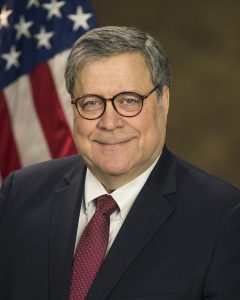
The governance norms established in the post-Watergate era aimed to insulate Department of Justice (DOJ) criminal adjudications from political interference, maintaining that prosecutorial independence is essential to the rule of law. However, the expansion of unitary executive theory under Attorney General William Barr reopened debate over the boundaries of presidential authority under Article II. During Barr’s tenure, direct political intervention in high-profile criminal cases involving presidential allies severely undermined career line prosecutors and tested post-Watergate institutional guardrails. By overriding standard sentencing recommendations and penalizing career public servants, these actions sparked significant pushback from the federal bench and highlighted the risks that executive pressure poses to judicial integrity.
Overriding Career Line Prosecutors in High-Profile Adjudications
The breakdown of traditional prosecutorial independence became glaringly evident in the criminal proceedings involving presidential allies Michael Flynn and Roger Stone. In both matters, career prosecutors and investigative agents had assembled comprehensive evidence, regarding the cases against both men as thoroughly locked down. Flynn had previously admitted twice to FBI investigators that he lied about his contacts, while Stone faced evidence that he had actively attempted to extort a witness to prevent their testimony. Despite these facts, political appointees at Main Justice acting under Attorney General Barr directly intervened to redirect the prosecutions. Overriding the line prosecutors who had spent months handling the cases, political leadership cast aside the nine-year prison recommendation calculated under federal sentencing guidelines for Stone, demanding a significantly reduced penalty.
The Retaliatory Removal of Protective Filings
The effort to shield political allies was accompanied by severe internal pressure directed at line attorneys within the Department of Justice and the local U.S. Attorney’s Office. When political appointees decided to drop the criminal case against Flynn entirely, they presented career prosecutors with a court filing stating that the prosecution lacked proper justification. The draft document originally included protective language certifying that the career prosecutors had committed no wrongdoing when initially bringing the case. When line prosecutors refused to sign off on the dismissal, political appointees under Barr edited the filing to strip out those protective assurances. By removing these crucial safeguards, political leadership deliberately exposed career government attorneys to potential civil lawsuits and internal ethics investigations regarding their professional conduct.
Judicial Resistance and the Chief Judge’s Confrontation
This unprecedented politicization of criminal adjudications provoked widespread outrage and horror across the federal bench. Federal judges expressed deep anger over Attorney General Barr forcing line prosecutors to depart from standard Department rules and guidelines. This tension reached a dramatic turning point in a private confrontation involving the chief judge of the district court. The chief judge met directly with Acting U.S. Attorney Timothy Shea, who had been installed under Barr to oversee the reduction of Stone’s sentence and the termination of the Flynn case. In that meeting, the chief judge explicitly informed Shea that her bench could no longer support him as the district’s chief prosecutor, ultimately forcing his retreat.
Constitutional Implications for Article II and Equal Justice
Direct executive intervention in DOJ sentencing recommendations and dismissals fundamentally subverts the principle of equal justice under law. When executive power is wielded to bestow preferential treatment on political allies while exposing career public servants to legal liability, the structural independence of the Justice Department is eroded. Under Article II, the President’s constitutional duty to ensure that laws are faithfully executed is subverted when prosecutorial discretion becomes an instrument of political favor. Furthermore, such interference compromises judicial integrity by forcing federal courts to adjudicate politically manipulated filings. Ultimately, the erosion of prosecutorial independence signals to both domestic citizens and global observers that U.S. legal mechanisms can be compromised by executive decree, dismantling public trust in the fair administration of justice.