

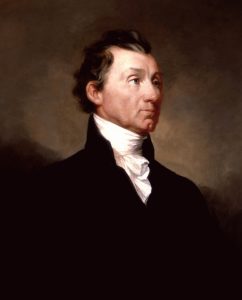
If George Washington established the dignity of the executive, John Adams demonstrated its vulnerability, Thomas Jefferson embodied its ideological contradictions, and James Madison engineered its political machinery, James Monroe fundamentally altered the physical and military reality of the United States. Today, as the American public grapples with an out-of-control military-industrial complex, a president who unilaterally launches foreign strikes without congressional approval, and the weaponization of American power to impose our will globally, we must look to the fifth president. Monroe is widely remembered as the last of the “Virginia dynasty” and the namesake of a famous doctrine, but his true historical significance is far more profound: James Monroe was America’s first “national security” president.
To understand how the United States transitioned from a fragile, experimental republic into a continental empire, we must understand the soldier who orchestrated that shift.
The Soldier and the Standing Army Unlike Jefferson, the dazzling polymath, or Madison, the genius political theorist, Monroe was primarily a man of action. He was the last veteran of the American Revolution to serve as president; as a teenage lieutenant, he charged Hessian cannons at the Battle of Trenton and nearly died after taking a musket ball that severed an artery in his shoulder. That lingering smell of gunpowder shaped his entire worldview. He viewed the survival of the young republic exclusively through the lens of what we would today call national security, prioritizing the defense of the nation’s borders and the expansion of its territories over rigid ideological purity.
This pragmatism led Monroe to execute a breathtaking break with classic republican orthodoxy. Since the days of the Greek city-states and the Roman Republic, orthodox republican theory warned that maintaining a professional, standing army in peacetime was a fatal danger to liberty, serving as a ready instrument for a would-be tyrant. Jefferson and Madison clung to this belief, starving the military and relying instead on citizen-soldier militias. But Monroe had witnessed the horrific consequences of this ideology firsthand during the War of 1812, when a small force of British regulars easily routed American militias and burned Washington, D.C., to the ground.
When Monroe assumed the presidency, he boldly declared that the United States could no longer rely on two oceans and untrained citizens for its defense. He pushed for a larger standing army, an oceangoing navy, and an extensive network of coastal and inland fortifications. In an 1815 report to the Senate, he stated: “By the war we have acquired a character and rank among other nations… We cannot go back. The spirit of the nation forbids it”. In doing so, Monroe laid the ideological and institutional groundwork for the massive professional military forces and “power projections” that dominate the modern American state.
Executive Restraint and Rogue Generals Monroe’s presidency also provides a vital historical contrast to the modern crisis of the imperial presidency. Today, we see an executive branch that routinely bypasses Congress to wage war—such as the current administration’s unilateral strikes on Iran—and generals who act with terrifying impunity. Monroe faced his own rogue general in Andrew Jackson.
In 1818, General Jackson was dispatched to the southern border to deal with marauding pirates and Seminole uprisings. On his own initiative, Jackson crossed into Spanish-occupied Florida, attacked military posts, and deposed the Spanish governor. Jackson had long wanted to seize Florida and essentially dared the Monroe administration to stop him, writing to the President that he had acted on his own “judgment” and that sound policy dictated holding the territory as long as America remained a republic.
Monroe was placed in a diplomatic nightmare, caught between an insubordinate military hero who had violated the Constitution’s war-making clause and the strategic benefit of capturing Florida. Demonstrating supreme executive tact, Monroe walked a tightrope: he avoided a domestic rupture by refusing to publicly repudiate the wildly popular Jackson, yet he formally returned the captured forts to Spain while noting that Jackson had transcended his orders. Monroe brilliantly used the incident to prove to Spain that it could no longer defend its territory, ultimately forcing the Spanish to cede Florida to the United States. However, he maintained his respect for the constitutional separation of powers, a restraint that is glaringly absent in today’s executive branch.
The Monroe Doctrine and the Corruption of a Principle The most enduring, and most wildly misunderstood, legacy of Monroe’s presidency is the Monroe Doctrine. Promulgated in his 1823 annual message to Congress—and heavily shaped by his brilliant Secretary of State, John Quincy Adams—the doctrine declared that the American continents were no longer subject to future colonization by European powers. Furthermore, any attempt by European monarchies to extend their political systems to the Western Hemisphere would be viewed as a hostile act.
To understand the modern abuse of this doctrine, one must understand its original intent. For Monroe and his contemporaries, this declaration was purely defensive and reciprocal. It sought to quarantine the newly independent South American republics from the corrupting, monarchical forces of the Old World. Crucially, Monroe also promised that the United States would strictly refrain from interfering in the internal affairs and wars of Europe. As Monroe’s biographer notes, the declaration had only a moral character; “it was not an assertion of imperial mission”. Monroe’s principle was simple: we will resist hegemony without seeking hegemony.
Today, the Monroe Doctrine has been inverted to justify the exact opposite of its creator’s intent. In the 21st century, politicians—from George W. Bush to Donald Trump—have twisted the doctrine to justify American global hegemony and “democratic imperialism”. When the current administration invokes the Monroe Doctrine to threaten military invasions in Venezuela or to dictate the internal politics of sovereign nations globally, they are standing Monroe’s vision on its head. James Monroe would be the first to warn us that “America as empire is no longer America as republic”.
Compromise and the Fragility of the Republic Finally, Monroe’s presidency offers a sobering lesson about the fragility of national unity. He presided over the so-called “Era of Good Feelings,” a brief period when hyperpartisanship seemingly vanished following the collapse of the Federalist party. Yet, beneath this surface calm, the nation was tearing itself apart over the issue of slavery.
When Missouri applied for statehood, the nation was thrown into an existential crisis over whether the new state would permit human bondage. Though he was a slave-owning Virginian, Monroe signed the Missouri Compromise of 1820, which allowed Missouri in as a slave state but banned slavery in future northern territories. Monroe’s decision was largely political, driven by a desperate desire to save the Union from immediate collapse. He successfully bought the nation nearly four decades of relative harmony to grow and strengthen before the crisis finally erupted into the Civil War.
Monroe’s life serves as a stark reminder of the sacrifices required by public service. Despite vastly expanding the nation’s borders and securing its standing in the world, he was never wealthy, struggled constantly with debt, and spent his retirement humiliatingly petitioning Congress to reimburse him for the personal expenses he incurred while serving his country abroad. He died virtually destitute in New York City, five years to the day after his mentors Jefferson and Madison.
James Monroe transformed the United States from a vulnerable experiment into a secure, continental nation. Yet his legacy stands today as a warning: the national security apparatus he deemed necessary to protect the republic has now grown so vast, and the interpretation of his defensive doctrine so imperial, that they threaten to destroy the very republican liberties he bled to defend at Trenton.