
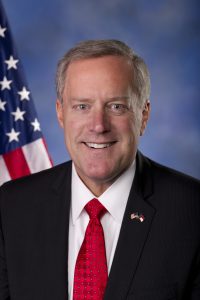
The blueprint for what would become the “Electors Whip Operation” was formalized in early December 2020 as senior Trump Campaign officials and White House staff sought to organize a slate of unrecognized, fake electors to challenge the certified results of the presidential election. On December 6, White House Chief of Staff Mark Meadows forwarded Kenneth Chesebro’s November 18 legal memo to Jason Miller, highlighting the urgent need to coordinate these state-level electors. Meadows’s office closely tracked this effort, keeping a detailed spreadsheet containing contact information for nearly all 79 Republican nominees to the Electoral College in the battleground states of Arizona, Georgia, Michigan, Nevada, Pennsylvania, and Wisconsin. Special Assistant to the President Cassidy Hutchinson later confirmed that Meadows was heavily involved in this project, participating in dozens of meetings and phone calls.
This parallel track was directly approved and driven by Donald Trump, who personally called RNC Chairwoman Ronna Romney McDaniel days before the vote to enlist the RNC’s organizational assistance. However, after the U.S. Supreme Court rejected a high-profile Texas lawsuit on December 11, the campaign’s senior legal team—including General Counsel Matthew Morgan, Deputy Campaign Manager Justin Clark, and Associate General Counsel Joshua Findlay—backed out of the effort, believing that the invalid elector slates had no legal value without official state-certified certificates of ascertainment. Despite the legal team’s withdrawal, Trump directed that the project proceed under the sole leadership of Rudolph Giuliani. On December 11, the legal handoff was made to Kenneth Chesebro as the document point person, while Michael Roman, the Trump Campaign’s Director of Election Day Operations (EDO), was tapped to oversee the actual execution of the voting scheduled for Monday, December 14.
To execute this highly complex logistical campaign on short notice, Roman mobilized his EDO staff, Giuliani’s team, and RNC staffers to launch an improvised, nationwide “Electors Whip Operation”. On December 12, Roman instructed his designated “WHIP TEAM” to populate a central tracker to monitor the 79 Republican elector nominees across the battleground states. This whip team was tasked with detailing whether the nominees had been contacted, whether they agreed to attend on December 14, and identifying viable “substitute electors” who could quickly step in to replace anyone who refused to participate.
The whip team immediately encountered significant resistance and anxiety from the recruited Republican activists. EDO Associate General Counsel Findlay noted that electors in almost every state raised urgent questions and concerns about participating. In Pennsylvania, the state Republican Party’s general counsel sent a warning email to the Trump Campaign on December 13, noting that they were being inundated with calls from concerned electors demanding legal indemnification and formal legal opinions, particularly because Chesebro’s own memo openly described the Pennsylvania plan as “dicey”. In Wisconsin, Republican Party Chairman Andrew Hitt texted a colleague on December 12, warning that “These guys are up to no good and its gonna fail miserably”.
Due to these mounting legal and ethical concerns, 14 of the original Republican elector nominees refused to participate. High-profile dropouts included former Representative Tom Marino and State Chairman Lawrence Tabas in Pennsylvania, alongside former Michigan Secretary of State Terri Lynn Land, who stated she was uncomfortable with the process. To circumvent these defections, Roman’s whip team scrambled to find and install adequate substitutes to sign the invalid certificates on December 14. To execute the signing ceremonies without public interference, the Trump team and fake electors resorted to active subterfuge. In Georgia, campaign staff emailed participants demanding “complete secrecy,” instructing them to sneak into the state capitol building by telling guards they were merely attending an “education meeting”. In Michigan, the fake electors gathered in the state Republican headquarters under strict orders to leave their cellular phones outside.
Ultimately, these fake slates met and voted on December 14 in seven states won by Joe Biden. In Arizona, Georgia, Michigan, Nevada, and Wisconsin, the fake electors signed documents that falsely declared them to be “the duly elected and qualified Electors” from their respective states. On the afternoon of December 14, campaign staffer Robert Sinners sent a whip update email to Roman confirming: “All votes cast, paperwork complete, being mailed now. Ran pretty smoothly”. That evening, McDaniel forwarded an “Elector Recap” to the White House, prompting Trump’s executive assistant to place it directly in front of the president with the note: “It’s in front of him!”. These invalid certificates were mailed to the National Archives and Vice President Mike Pence’s office in an effort to provide a false legal pretext for Pence to unilaterally derail the joint session of Congress on January 6.