
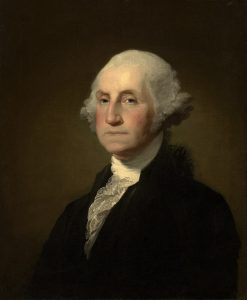
On the cold afternoon of January 2, 1777, the Continental Army stood on the precipice of absolute disaster at Trenton, New Jersey. Having scored a miraculous surprise victory over the Hessians on Christmas night, General George Washington had re-crossed the Delaware River to mount a second, highly ambitious New Jersey offensive. Now, toward sundown, Washington spotted the vanguard of Lieutenant General Charles Cornwallis, who had marched from Princeton with a formidable army of 5,500 British and Hessian troops. Washington arrayed his men on a secure slope behind Assunpink Creek, a narrow, fast-moving creek at the southern end of Trenton, setting the stage for a perilous confrontation. As the enemy advance units hurtled down King and Queen streets, American snipers and artillery engaged them. The British launched three courageous attempts to storm the stone bridge over the creek, but each time, concentrated American artillery fire repulsed them, leaving the bridge red with blood and littering the area with casualties.
As night fell, the fighting subsided, but the American position remained extremely vulnerable. Heavily outnumbered and lacking a clear escape strategy, Washington and his generals faced a harrowing dilemma. A retreat back across the Delaware River was virtually impossible, as the waterway was choked with heavy, moving masses of floating ice. Cornwallis, confident of an easy victory the following day, overruled his officer, Sir William Erskine, who warned that Washington would slip away before dawn. “We’ve got the old fox safe now,” Cornwallis famously boasted to his staff. “We’ll go over and bag him in the morning.”
Bypassing the threat of entrapment, Washington convened his generals in a council of war to devise a daring, unorthodox plan. Rather than risking a disastrous retreat or a hopeless defensive battle, they decided to covertly slip away during the night. By circling around the left flank of Cornwallis’s army and marching north along unfrequented back roads, they would strike the British garrison at Princeton. This bold maneuver possessed a crucial political advantage: it transformed a desperate withdrawal into an offensive stroke, avoiding the defeatist appearance of a retreat.
To execute this silent extraction directly under the noses of the sleeping British army, Washington deployed a sophisticated suite of strategic camouflage and tactical deceptions. To foster the perfect illusion of a settled camp preparing for a morning battle, the Americans kept bright campfires burning along their lines through the night. To muffle the noise of their movement, the wheels of the army’s artillery carriages were meticulously wrapped in rags. Furthermore, Washington ordered men to work conspicuously near the enemy lines with entrenching tools, broadcasting loud digging noises to convince British sentries that the Americans were actively digging in to receive a violent assault the next day. The ruse was maintained with such artful secrecy and stealth that the army’s own rear guard and several of Washington’s sentinels never realized the main force had departed.
After midnight, the main body of the Continental Army stole away into the dark, embarking on a grueling twelve-mile march to Princeton. The journey pushed the long-suffering, sleep-deprived soldiers almost beyond the limits of human endurance. Padding against biting winter winds, the men marched in a numb trance down rough country lanes congealed with thick ice, occasionally falling asleep on their feet whenever the column halted.
The army arrived at Princeton shortly after an exceptionally clear, beautiful, and freezing dawn, immediately splitting into parallel divisions to advance on the town. The deception culminated in a fierce, sudden clash in a broad meadow south of Princeton, where American forces unexpectedly collided with British regiments under Lieutenant Colonel Charles Mawhood. Though the initial British bayonet charge mortally wounded the gallant General Hugh Mercer and sent the American militia into a panic, Washington personally rode into the thick of the chaos to stem the retreat. With unbelievable bravery, Washington exposed himself directly to enemy fire, reining in his horse and shouting to his men, “Parade with us, my brave fellows! There is but a handful of the enemy, and we will have them directly.” His resolute, godlike composure steadied the ranks, enabling the Americans to overpower the British and secure an undisputed victory over imperial regulars.
The strategic blowback of Washington’s brilliant deception was felt immediately by Cornwallis. When the British commander awoke at Trenton to find the Assunpink trenches entirely empty, he realized he had been completely outwitted. Rushing his troops back toward Princeton in what Henry Knox gleefully described as “a most infernal sweat, running, puffing and blowing and swearing at being so outwitted,” Cornwallis arrived only to find that the Continental Army had already deserted the town.
For the modern reader, the Assunpink camouflage stands as a masterpiece of asymmetric warfare and military deception. By leveraging simple decoy fires, muffled wheels, and manufactured noise, George Washington transformed a looming tactical trap into a historic, strategic triumph. The back-to-back victories at Trenton and Princeton dramatically reversed the psychology of the Revolutionary War, forcing the British to abandon most of New Jersey and demonstrating that a highly mobile, intelligently led army of citizens could outwit and defeat the finest professional forces of the British Empire.