

The seizure of the United States Embassy in Tehran on November 4, 1979, by radical Iranian student militants threw the administration of President Jimmy Carter into an agonizing, 444-day international crisis. Triggered by Carter’s fateful decision to permit the deposed, cancer-stricken Shah of Iran to enter the United States for medical treatment, the siege saw fifty-two American diplomats and embassy employees held captive under hostile conditions in the sprawling compound. For months, the crisis dominated American television screens, fueling a domestic sense of impotence, national decline, and a rising political hysteria. In Washington, President Carter exacerbated this media frenzy by adopting a self-limiting “Rose Garden strategy”—announcing he would not actively campaign for reelection until the crisis was resolved—which ultimately left him looking like a hostage to the situation himself. As diplomatic channels repeatedly hit dead ends, National Security Advisor Zbigniew Brzezinski took charge of the White House’s crisis management and relentlessly pressured the president to authorize a decisive, clandestine military intervention.
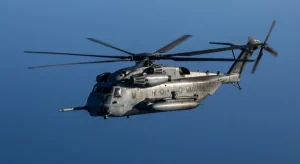
By early 1980, the Pentagon had formulated Operation Eagle Claw, a highly intricate, multi-layered rescue plan with no margin for error. Under this operational blueprint, the first staging area was a remote, dry lake bed in the Iranian desert located roughly 200 miles southeast of Tehran, designated Desert One. On the night of April 24, 1980, the operation commenced. The tactical plan required eight RH-53 Sea Stallion heavy helicopters to lift off from the aircraft carrier USS Nimitz in the Persian Gulf and fly six hundred miles to Desert One, where they were scheduled to rendezvous with six C-130 cargo planes carrying fresh fuel, supplies, and 135 commandos from the newly formed Delta Force hostage-rescue team. Once refueled, the helicopters were to transport the Delta commandos to a secondary mountain hideout, Desert Two, just fifty miles outside Tehran. From there, the commandos—assisted by a secret team of covert CIA operatives smuggled into the country—were to drive heavy trucks in darkness into the heart of crowded downtown Tehran, scale the embassy walls, neutralize the guards, and rescue the hostages before evacuating via helicopters from an adjacent soccer field.
The logistical feasibility of this audacious gamble had been verified earlier in April when Carter reluctantly authorized a high-risk, covert CIA reconnaissance flight. A three-man crew flew a small Otter aircraft clandestinely to the isolated desert site to inspect the desert floor, reporting back that the salt flats were indeed firm enough to bear the immense weight of the heavily laden C-130 cargo planes. Despite this preliminary success, the mission was plagued by severe warnings of a potential catastrophe. A highly classified CIA assessment dated March 16 had warned that up to 45 percent of the Delta Force could be lost during the embassy assault, and 60 percent of the hostages might be killed in the crossfire. Although CIA Director Stansfield Turner was briefed on these staggering projections, there is no historical evidence that he ever shared the report with the president.
The plan also provoked a fierce, ideological civil war within Carter’s cabinet. Secretary of State Cyrus Vance stood as the sole, passionate dissenter, arguing that the mission was unworkable, that it would inevitably result in the deaths of numerous hostages and rescuers, and that it would prompt the Iranians to retaliate against remaining American citizens in Tehran. Brzezinski countered vehemently, arguing that the United States needed to “lance the boil” with a military strike, warning that a failure to act would signal global weakness and drive Iran into the hands of the Soviet Union. Ultimately, an exhausted and impatient Carter sided with Brzezinski, declaring, “I will stick with the decisions I made”. In protest of this reckless gamble, Vance drafted a formal letter of resignation, which he quietly submitted to the president on the eve of the operation, agreeing to keep it confidential until the rescue was completed.
On the night of the operation, the complex plan immediately disintegrated in the face of environmental and mechanical failures. While crossing the Iranian wilderness, the helicopters ran into a massive, blinding sandstorm—known locally as a haboob—which severely disabled the aircraft’s critical systems. Three of the eight helicopters malfunctioned; one was forced to land in the desert, while another turned back to the aircraft carrier due to a malfunctioning safety light. Only six helicopters successfully limped into the Desert One staging area. When a third helicopter suffered a hydraulic failure on the ground, leaving only five operational aircraft, the mission’s field commander, Colonel Charlie Beckwith, determined that they lacked the minimum transport capacity required to proceed and recommended an immediate abort. Carter, monitoring the agonizing developments from the White House, calmly approved the recommendation.
The tactical retreat, however, quickly dissolved into a horrific disaster on the ground. In the dark, dusty chaos of the evacuation, one of the RH-53 helicopters attempted to lift off to refuel but crashed directly into a C-130 cargo plane parked on the desert floor, igniting a catastrophic, fuel-soaked inferno. The resulting explosion killed eight American service members—five Air Force airmen in the C-130 cockpit and three Marine helicopter crewmen—while severely burning and maiming several others. An Iranian agent serving as a translator for the mission was also killed in the wreckage. With fires raging and ammunition detonating, the commandos were forced to evacuate on the remaining C-130s, leaving behind the helicopters, secure codebooks, and the charred, unrecoverable remains of their fallen comrades in the desert.
The geopolitical blowback of the “Debacle in the Desert” was immediate and devastating. In the White House, a devastated Carter appeared as if he had been physically stabbed, his face etched with pure pain. In a bitter, final exchange, he asked the resigning Vance to draft the official public address explaining the rationale of the failed mission, forcing Vance to justify the very operation he had sacrificed his career to stop. The failed raid cemented the public’s perception of the Carter administration’s absolute ineffectuality, destroyed his remaining leverage, and guaranteed his landslide defeat to Ronald Reagan in the 1980 presidential election. For the United States military, the tragedy at Desert One served as a profound humiliation that exposed systemic, inter-service dysfunctions, directly driving the landmark Goldwater-Nichols military reforms of 1986. Ultimately, the charred wreckage of Desert One remained a vivid, cautionary symbol for a generation of military planners, joining “Black Hawk down” as a defining code phrase for the extreme hazards of launching complex, low-preparational covert actions in hostile territory.