

In the anxious months following the outbreak of the American Civil War, the state of Maryland occupied a position of paramount strategic vulnerability. Bordering the District of Columbia on three sides, the state’s political alignment was quite literally a matter of life or death for the federal government. In April 1861, Washington had been temporarily cut off from the North following the bloody Baltimore riots, during which Governor Thomas H. Hicks and Mayor George W. Brown frantically implored President Abraham Lincoln to detour Union troops around the state. In this environment of extreme panic, Massachusetts General Benjamin F. Butler aggressively urged Lincoln “to bag the whole nest of traitorous Maryland Legislators and bring them in triumph” to Washington before they could organize.
Initially, Lincoln resisted such draconian measures. Writing to General Winfield Scott on April 25, 1861, the President concluded that a preemptive arrest or dispersion of the state legislature was legally unjustifiable and practically inefficient. Lincoln argued that the lawmakers had a clear legal right to assemble, that the administration could not presume their actions would be unlawful, and that even if arrested, they would eventually be liberated, reassemble, and execute their plans.
The September Secession Crisis
By the late summer of 1861, however, the political calculus in Washington shifted dramatically. The Lincoln administration received highly alarming intelligence indicating that the Maryland General Assembly, which had relocated its sessions to the Unionist stronghold of Frederick to escape federal forces, was preparing to take decisive action. Specifically, federal authorities feared that the legislature was scheduled to meet in September 1861 to formally adopt an ordinance of secession.
Compounding this constitutional threat was a severe military danger. Rumors swamped the War Department that Maryland disunionists were planning a coordinated coup de main, actively plotting to join forces with Confederate rebels in Virginia to seize control of the state. Faced with the imminent prospect of Washington being entirely encircled by hostile territory, Lincoln decided that the luxury of constitutional forbearance could no longer be sustained.
The Clandestine Operation
To neutralize the legislative threat before the General Assembly could convene, President Lincoln and Secretary of State William H. Seward bypassed standard civil processes and arranged a highly coordinated, clandestine military-intelligence operation. They enlisted a formidable triumvirate of Union generals to execute the plan: Major General George B. McClellan (commanding the Army of the Potomac), Major General John A. Dix, and Major General Nathaniel P. Banks.
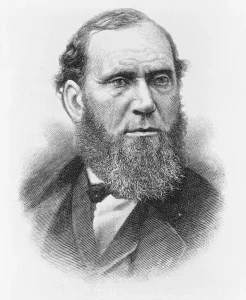
The delicate, highly sensitive task of tracking and apprehending the targeted lawmakers was entrusted to Allan Pinkerton, the detective who had previously uncovered the Baltimore assassination plot against Lincoln on the eve of his inauguration. Operating with extraordinary secrecy, Pinkerton and his agents tracked the movements of suspected disunionists as they traveled toward the legislative session. In September 1861, the dragnet was sprung. Pinkerton and federal military units successfully detained fourteen pro-secession Maryland legislators along with other prominent secessionist sympathizers, such as Baltimore Mayor George W. Brown, before they could reach Frederick.
The Civil Liberties Backlash and the “Plea of Necessity”
The sudden, warrantless arrest and indefinite military detention of sitting state legislators triggered an immediate outcry from civil libertarians, who denounced the action as an unconstitutional assault on representative democracy and a flagrant violation of civil law. This controversial action occurred in the shadow of the celebrated Ex Parte Merryman ruling of May 1861, in which Chief Justice Roger B. Taney had vigorously ruled that the President had no constitutional authority to suspend the writ of habeas corpus.
Lincoln stubbornly ignored Taney’s judicial edicts, and the administration aggressively defended the September detentions. In a public reply, Lincoln argued that the “public safety renders it necessary that the grounds of these arrests should at present be withheld”. He insisted that the government did not act on mere suspicion or partisan animosity, but possessed “tangible and unmistakable evidence” of the detainees’ direct complicity with armed rebellion.
Privately, the military officers who executed the arrests made no attempt to dress the action in standard legal garments. General John A. Dix frankly acknowledged to a New York Democratic leader that he had acted strictly on the “plea of necessity” alone. In a candid, striking reflection on the suspension of civil liberties, Dix wrote:
“I have not had the time to look into the Constitution since I came.—‘Inter arma silent leges!’ [In times of war, the laws fall silent] Alas that it should be so!”
Dix admitted that he had received no specific, detailed instructions from the administration regarding the legal mechanics of the operation, but insisted that his overriding, fixed purpose was to ensure that Maryland did not secede. General McClellan enthusiastically lauded Dix’s swiftness, having previously authorized him to make preemptive arrests “even where there is want of positive proof of their guilt” to pacify the region.
The Strategic Legacy
The controversial, extrajudicial detention of the pro-secession legislators proved to be a decisive turning point in the struggle for the Border States. By physically preventing the secessionist faction of the General Assembly from organizing, Pinkerton and the military successfully decapitated the disunionist movement in Maryland and guaranteed that the state remained in the Union.
The strategic stabilization of the state was officially sealed in November 1861, when Maryland voters went to the polls under the watchful eye of federal forces. The election resulted in the landslide victory of a pro-Union governor, Augustus Bradford, alongside a lopsided Unionist majority in the state legislature. For modern historians, the September 1861 dragnet stands as one of the most aggressive and constitutionally fraught displays of federal executive power in American history, illustrating the extreme, coercive measures the Lincoln administration was willing to deploy to preserve the geographical integrity of the Union.