
The Strategic Gambit and the Bern Listening Post
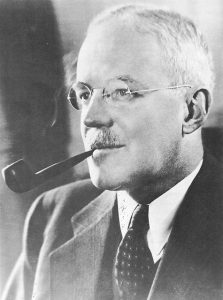
In the closing months of World War II, as the Allied armies closed in on Nazi Germany from both East and West, the Swiss capital of Bern became a hotbed of clandestine diplomacy and geopolitical maneuvering. Operating from his Office of Strategic Services (OSS) command post at 23 Herrengasse, Allen Dulles observed the rapid advance of the Soviet Red Army with growing alarm. While President Franklin D. Roosevelt and Soviet Premier Joseph Stalin remained officially committed to their alliance forged in blood, Dulles harbored a deep-seated conviction that the Soviet Union was America’s true long-term enemy. Dulles’s primary geopolitical ambition in Europe was to block the advance of the Red Army into northern Italy and Austria, preventing the strategically vital region from falling into the Soviet orbit after the war. To achieve this, Dulles was willing to bypass official channels, ignore presidential policy, and negotiate directly with high-ranking Nazi officials.
The Secret Negotiations and the SS Alliance
In late February 1945, Dulles and his intelligence colleagues initiated secret meetings in Switzerland with SS General Karl Wolff, the commander of Nazi security forces and military police in Italy. Christened Operation Sunrise by Dulles, this covert peace project sought to negotiate a separate, premature surrender of German forces on the Italian front.
The negotiations represented a complex web of mutual self-interest and unauthorized diplomacy. For Wolff, cooperating with the OSS was a desperate bid to save his neck and those of his fellow SS officers from war crimes prosecution. For Dulles, the operation was a bold career move to secure personal glory and safeguard Western corporate interests. During his wartime service in Switzerland, Dulles had continued to look out for the European interests of his Wall Street law firm, Sullivan and Cromwell. A key priority for Dulles was to stop the war before industrial northern Italy was devastated. Under the terms of the Sunrise discussions, Wolff specifically agreed to protect the region’s infrastructure, promising not to blow up the hydroelectric plants owned by the J.P. Morgan-financed multinational holding company, the Italian Superpower Corporation.
To keep these high-stakes negotiations alive, Dulles went to extraordinary lengths to rehabilitate Wolff’s image. In reports to OSS headquarters, Dulles described the ruthless SS commander—who was deeply complicit in partisan reprisal killings, civilian massacres, and the deportation of Jews—as a “moderate” and “probably the most dynamic German personality in North Italy”. In doing so, Dulles actively violated President Roosevelt’s emphatic, public policy of unconditional surrender, which strictly forbade separate peace deals with Nazi leaders. Even after Washington explicitly ordered Dulles to cease all contacts with Wolff in April 1945, the spymaster chose to ignore the directive and continue the backroom talks.
The Dramatic Rescue at Villa Locatelli
The fragility of Operation Sunrise was laid bare in the early morning hours of April 26, 1945. Wolff found himself trapped and surrounded by well-armed Italian partisans at his SS command post at the luxurious Villa Locatelli on the shores of Lake Como. Facing imminent capture and likely summary execution by the resistance, Wolff’s predicament threatened to destroy the secret peace channel.
Upon receiving an urgent alert from Swiss intelligence, Dulles sprang into action to orchestrate a highly unorthodox, joint U.S.-German rescue mission. To shield himself from charges of blatant insubordination, Dulles remained in Bern and dispatched his trusted aide, Gero von Schulze-Gaevernitz, to coordinate the operation. Gaevernitz, accompanied by Swiss agent Max Waibel and an OSS operative named Don Jones (known to the local partisans as “Scotti”), crossed the Italian border. Traveling in a convoy that included Italian partisans and recruited SS officials, the rescue party braved partisan gunfire and grenade attacks to reach the Villa Locatelli. They successfully retrieved General Wolff in full SS uniform, slipping him across the border to the safety of Switzerland under the cover of night.
The Icy Dawn of the Cold War
General Wolff’s maneuvers eventually culminated in the surrender of German forces on the Italian front at Caserta on May 2, 1945. However, this separate peace took place just six days before the final, unconditional capitulation of all German forces in Europe, meaning Operation Sunrise ultimately saved very few lives and had almost no impact on the military outcome of the war.
Instead, the primary legacy of the secret negotiations was a severe escalation of international distrust. The Dulles-Wolff maneuvers deeply aggravated Joseph Stalin’s paranoia. Stalin sent a stinging, furious cable to Roosevelt, accusing his Western allies of conspiring behind his back to broker a separate peace that would allow German divisions to shift to the Eastern Front. Though Roosevelt managed to temper Stalin’s rage before his death, the deep suspicion sown by the secret surrender at Caserta created the first icy fissures of the Cold War. Roosevelt’s successor, Harry S. Truman, harbored a deeply critical view of the operation, noting in his memoirs that Dulles’s unauthorized, back-channel diplomacy had stirred up a tempest of administrative and diplomatic trouble during his first days in the Oval Office.
The Post-War Shield and the Evasion of Justice
Following the war, Karl Wolff was arrested by American military police, but he confidently expected the “honorable treatment” and immunity he claimed Allen Dulles had promised him. To protect their secret bargain and prevent a sensational public trial that would expose the unauthorized mechanics of Operation Sunrise, Dulles and Gaevernitz actively intervened to shield Wolff from the dock. Dulles went so far as to bury a highly incriminating OSS report that documented Wolff’s complicity in the wholesale slaughter of Italian civilians and the torture of OSS agents.
When Wolff played his trump card in 1947 by writing directly to President Truman to demand his release, Dulles and Lemnitzer collaborated to manage the crisis. Dulles provided a glowing affidavit for Wolff’s defense team during a highly sanitized denazification hearing in 1948, while Gaevernitz appeared in person as a character witness. Ultimately, the Sunrise conspiracy successfully subverted justice; while other SS commanders went to the gallows at Nuremberg, Karl Wolff shimmied free from his cage, enjoying decades of comfortable retirement in West Germany as a direct result of the protective shield constructed by his American patrons.