
At the outbreak of World War I, Great Britain established an immediate and decisive advantage in the information war by cutting Germany’s transatlantic undersea telegraph cables. This tactical action forced the German Empire to rely on highly vulnerable, alternate communication routes—including the wireless networks of neutral nations—which exposed their diplomatic secrets to aggressive British surveillance. The center of this British code-breaking campaign was Room 40, a highly secretive intelligence division operating within the British Admiralty. Between 1916 and 1917, Room 40 did not merely target German communications; it actively intercepted and analyzed global signals, including the encrypted cables of its nominal friend, the United States, to secure a strategic advantage and carefully monitor international peace negotiations.
Tapping the Neutral Line
Throughout 1916, President Woodrow Wilson and his personal adviser, Colonel Edward M. House, sought to mediate an end to the European conflict, utilizing back-channel diplomacy to push the belligerents toward a compromise. To facilitate these peace feelers, Washington granted Germany the extraordinary courtesy of transmitting encrypted diplomatic messages directly over the American transatlantic cable network. Unbeknownst to the Americans, the cryptanalysts of Room 40 were actively tapping the American embassy’s cables.
Room 40 successfully broke both the standard United States diplomatic codes and the “amateurish” private cipher that Colonel House and President Wilson used to communicate. As a result, when Colonel House embarked on secret mediation missions to European capitals, the British Admiralty read his daily reports in real time. This intelligence revealed that House was representing the American diplomatic position differently to his hosts in London and Paris than he was to President Wilson in Washington. Armed with this knowledge, British Foreign Secretary Sir Edward Grey and his colleagues knew that House was playing a weak hand and did not have the definitive backing of his president. This complete transparency allowed British negotiators to comfortably reject American mediation proposals, such as the House-Grey Memorandum, because they could read their opponent’s cards before he even played them.
The Zimmermann Intercept
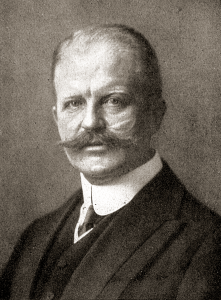
The defining triumph of Room 40’s silent surveillance occurred in early 1917. On January 16, German Foreign Secretary Arthur Zimmermann sent a coded telegram to the German minister in Mexico City, instructing him to offer a military alliance to Mexican President Venustiano Carranza. In exchange for attacking the United States, Germany promised to help Mexico “reconquer” its lost territories in Texas, New Mexico, and Arizona. To transmit this explosive proposal, Zimmermann abused the diplomatic cable courtesy previously extended to him by the American government.
Within hours of transmission, the message was intercepted and decoded by Room 40. Beyond the proposed Mexican alliance, the telegram contained another critical piece of intelligence: Zimmermann explicitly stated that Germany would commence unrestricted submarine warfare on February 1, 1917.
The deciphered telegram was immediately delivered to the Director of Naval Intelligence, Captain William Reginald Hall. Hall recognized that the document was a political bombshell that could successfully drag the United States into the war on the Allied side. However, utilizing the intelligence posed a massive operational risk. If the British simply handed the decoded text to the Americans, they would expose the fact that Room 40 was systematically tapping U.S. diplomatic cables and reading Washington’s mail.
To protect his code-breaking operation, Hall chose to temporarily withhold the telegram. This extreme secrecy was kept so tight that even senior members of the British government were left in the dark. Armed with the knowledge that Germany was about to launch all-out U-boat warfare, British leaders recognized that they did not need to take President Wilson’s concurrent “peace without victory” mediation proposals seriously, knowing that German escalation would soon force the United States’ hand.
Covering the Tracks
By late February 1917, Germany had formally unleashed its U-boats, sinking hundreds of thousands of tons of Allied shipping and pushing relations with Washington to the breaking point. To safely leak the Zimmermann Telegram to the Americans, British spymasters executed an ingenious deception scheme. They instructed their intelligence operatives in Mexico to steal a decoded copy of the telegram directly from the German embassy in Mexico City. Because the stolen embassy copy had been transmitted locally from Washington to Mexico City, its wording and formatting varied slightly from the transatlantic cable intercepted by Room 40. This clever physical discrepancy completely removed any evidence of Room 40’s cable-tapping operations.
On February 24, 1917, British Foreign Minister Arthur Balfour formally turned the “prize” over to U.S. Ambassador Walter Hines Page, who immediately cabled the text to President Wilson. Wilson, seething with anger at the German betrayal, released the Zimmermann Telegram to the American press on March 1. The public exposure of the German conspiracy galvanized anti-German sentiment across the United States, shattering any remaining support for neutrality. Ultimately, Room 40’s sophisticated interception network and calculated dissemination of the Zimmermann Telegram bypassed traditional diplomacy, successfully drawing the United States into the global conflict and altering the entire course of the twentieth century.