

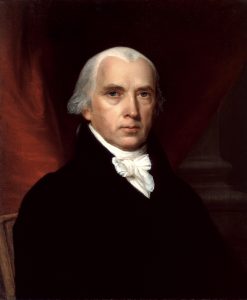
For centuries of political thought prior to the American founding, it was an accepted axiom that stable, self-governing republics could only survive on a small scale. Theoretical writers, most notably the French philosopher Montesquieu, argued that popular governments were inherently fragile and must remain restricted to a limited territory. This conventional wisdom was heavily supported by historical models ranging from the ancient Greek city-states to Renaissance Venice, both of which had collapsed or transformed into oligarchies after attempting to expand beyond their local boundaries. James Madison, however, engineered a profound intellectual departure from this historical consensus by introducing the concept of the “extended republic” as the core innovation of the United States Constitution. Madison dismissed the theoretical warnings of earlier writers, maintaining instead that a popular government, in order to successfully protect individual liberties and remain safe from the dangers of domestic faction, had to operate within an extensive territorial sphere.
The central mechanism of Madison’s extended republic, as outlined in Federalist no. 10 and his pre-convention essay “Vices of the Political System of the United States,” was the strategic proliferation and balancing of factions. In a small republic, a single dominant interest group—such as debtors, creditors, or a specific religious sect—can easily form a homogenous majority, capture the state, and tyrannize the minority. In contrast, Madison argued that expanding the territorial and demographic sphere breaks society into a vast variety of competing economic, geographical, religious, and social groups. Because this diversity makes it highly improbable that a majority of the whole will share a common majoritarian motive to invade the rights of other citizens, no single faction is able to seize absolute control. Instead, the different interests are forced to check, bargain, and compromise with one another in a robust political process, producing common-ground solutions that work for the entire community. Crucially, this system did not rely on the moral virtue of citizens or politicians; rather, it leveraged human selfishness, setting “opposite and rival interests” against one another to preserve liberty.
This theoretical defense of an extensive sphere was enthusiastically adopted by subsequent generations of American statesmen, who transformed Madison’s constitutional theory into an active, aggressive policy of territorial expansion. Thomas Jefferson enthusiastically championed the concept, declaring in 1801 that Montesquieu’s doctrine was false and that if the United States territory had been restricted to a fraction of its size, the union would have collapsed. Jefferson envisioned an “empire for liberty” where continuous physical expansion into the vacant western hinterland would act as a safety valve, preserving both agrarian self-government and national stability. This expansionist dogma was echoed by President James Monroe in his 1823 annual message, in which he proudly declared that enlarging the basis of the federal system strengthened the Union and made both central consolidation and regional disunion impracticable. Decades later, antebellum disciples of the Virginia school, including John Tyler and James K. Polk, continued to view territorial expansion as the primary mechanism to cement the Union and generate national prosperity. During his presidency, Tyler placed the annexation of Texas at the forefront of his agenda, relying on the Madisonian belief that the federative system allowed for the greatest expansion in safety. Similarly, Polk used his inaugural address to reiterate that as the nation’s boundaries expanded, the Union was strengthened and cemented.
Despite the geopolitical success of territorial expansion, the theory of the extended republic harbored deep, structural contradictions that eventually destabilized the nation. Anti-Federalist critics had warned from the beginning that an extended republic was a fallacy, predicting that a distant federal government would eventually lose touch with its citizens and decay into an oligarchic or tyrannical state. More fatally, the Madisonian formula of balancing diverse factions proved entirely incompatible with a deeply anti-republican institution like chattel slavery. While John Tyler and other southern expansionists believed that “extending the sphere” of slavery into new territories would diffuse the slave population and safely preserve a slaveholding republic, this strategy instead intensified sectional polarization and paved the path to civil war. In his final years, Madison himself privately recognized this tragic failure, observing that a republican system of government could not survive when the primary demand of a powerful faction was the systematic, permanent suppression of another group. Furthermore, modern political analysts note that Madison’s faith in the stabilizing power of a large republic may have been overoptimistic, as geographical scale has historically fostered regional polarization, citizen distrust, and disengagement. Indeed, Madison himself recognized the practical dangers of scale, noting in his essay “Public Opinion” that a large republic requires active public investments—such as subsidized newspaper distribution—to ensure that a distant government remains connected to an informed and vigilant citizenry.