

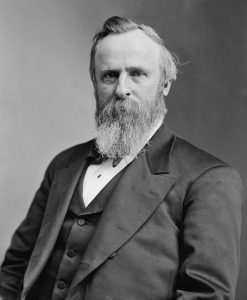
Rutherford B. Hayes assumed the presidency in 1877 following one of the most volatile and bitterly contested elections in the history of the United States. The peaceful resolution of the 1876 election dispute, mediated by a specially appointed bipartisan Electoral Commission, had relied heavily on structured legal arguments and the pivotal, casting vote of Supreme Court Justice Joseph P. Bradley. As president, Hayes faced the monumental task of reconciling a fractured nation while navigating the intense, often corrupt patronage demands of Gilded Age politics. One of his most enduring and historically significant avenues of influence lay in his nominations to the federal judiciary—specifically his appointments to the Supreme Court, which occurred at a critical historical junction when the post-Civil War amendments were beginning to face narrow interpretations by a conservative-leaning legal establishment.
The Political Rise and Constitutional Legacy of John Marshall Harlan
The most celebrated judicial nomination of the Hayes presidency was undoubtedly that of John Marshall Harlan of Kentucky. Harlan’s elevation to the nation’s highest tribunal was deeply intertwined with the back-channel compromises of Gilded Age party conventions. During the 1876 Republican National Convention, Hayes’s supporters secured the presidential nomination in part through a confidential political deal with the floor managers of rival candidate Benjamin Bristow; this agreement was finalized with the explicit proffer of a Supreme Court nomination for Bristow’s floor manager, John M. Harlan.
Initially, President Hayes desired to install Harlan in his cabinet as Attorney General, but this plan was abandoned due to fierce opposition from Senator Oliver Morton of Indiana. In October 1877, Hayes successfully submitted Harlan’s name to the Senate to fill the Supreme Court vacancy created by the resignation of Associate Justice David Davis. Prior to his confirmation, Harlan possessed an extraordinarily diverse and localized political pedigree, having been actively involved in at least six different political parties over his career, including the Whigs, the Know Nothings, the Kentucky Opposition Party, the Union Party, the Democratic Party, and finally the Republican Party.
Once confirmed, Harlan embarked on a notable, decades-long career that permanently reshaped American constitutional law. He became famously characterized as a lonely, courageous voice on a Court that was increasingly dominated by a pro-corporate, segregationist alliance of northern industrialists and southern business-planters. While all four of the Supreme Court justices appointed by Hayes’s successor-once-removed, Grover Cleveland, eventually voted to codify racial segregation in the infamous 1896 case of Plessy v. Ferguson, Harlan stood as the sole, militant dissenter, fighting a hostile judicial tide to defend the original promises of the Reconstruction amendments.
The Polarizing Saga of Stanley Matthews
While Harlan’s nomination eventually yielded a legendary constitutional legacy, Hayes’s persistent attempts to elevate his close personal friend and political ally, Stanley Matthews, provoked a turgid and protracted confirmation battle. Matthews, a prominent Ohio lawyer, prosecutor, and judge, had served as one of the principal, highly successful legal advocates representing Hayes’s interests before the Electoral Commission during the 1876 post-election crisis.
When Justice David Davis retired from the bench to accept an Illinois seat in the United States Senate, Hayes was anxious to reward Matthews with the open Supreme Court seat. However, the nomination immediately ran into severe political headwinds. Senators from both parties fiercely targeted Matthews’s prewar record as a prosecutor, focusing specifically on his controversial prosecution of W. B. Connelly, an Ohio man who had attempted to assist two fugitive slaves in their escape. Furthermore, Matthews was heavily criticized by reformers for his extensive corporate ties, specifically his long-standing work as a prominent attorney representing major railroad corporations. Due to this intense opposition, the Senate declined to sustain his nomination during Hayes’s term.
Undeterred by this initial defeat, Hayes made a second attempt to place Matthews on the Supreme Court following the retirement of Associate Justice Noah Swayne. When the Senate adjourned before it could vote on the confirmation, Hayes prevailed upon incoming President James A. Garfield to renew the appointment. Garfield complied with his predecessor’s request, and after a grueling, highly public political struggle, the Senate finally confirmed Matthews to the Supreme Court by a single vote.
The Historical Weight of the Hayes Judiciary
The judges appointed to the federal bench during the presidencies of Lincoln, Grant, Hayes, Garfield, and Arthur held a uniquely intimate relationship with the constitutional transformation of the post-Civil War United States. Having lived through the existential trauma of the Civil War and the legislative battles of early Reconstruction, these jurists possessed direct, personal familiarity with the historical context and original intent surrounding the adoption of the Fourteenth Amendment.
However, as the Hayes presidency successfully completed the “pacification” and withdrawal of federal forces from the South, the federal courts began to transition toward a new era of Gilded Age jurisprudence. Hayes’s Supreme Court nominations stood at the very center of this transition, illustrating how the intense pressures of party patronage, corporate expansion, and sectional reconciliation quietly reshaped the constitutional guardrails of the American republic.