

One must approach the historical record with an unwavering commitment to truth, recognizing that the year 1937 in the United States marked a pivotal moment in the ongoing constitutional struggle surrounding President Franklin D. Roosevelt’s New Deal, while simultaneously revealing the burgeoning federal reach into social policy through aggressive propaganda and legislation. It was a year defined by profound clashes between the judiciary and the executive, ultimately reshaping the landscape of American governance.
In February 1937, amidst the heated debate over the Supreme Court’s staunch opposition to New Deal legislation, a Gallup poll revealed significant public sentiment regarding judicial reform. The poll showed a two-to-one support for a constitutional amendment requiring justices to retire at a certain age, specifically between seventy and seventy-five years old. This particular reform proposal was, in fact, “far more popular than the Court plan” that President Roosevelt had just unveiled. This public opinion reflected a widespread concern about the “superannuation” of the justices; indeed, the Hughes Court of 1937 was historically the oldest, with an average age of seventy-one, and five of the nine justices aged seventy-four or older. The idea of linking judicial pensions to retirement had been debated, with the fear among justices that Congress might cut off their pensions making them reluctant to retire, thus “tinker[ing] with the Judges’ retirement allowance”. This poll underscored a public desire for a more age-appropriate judiciary, separate from the more controversial specifics of Roosevelt’s “court-packing” proposal.
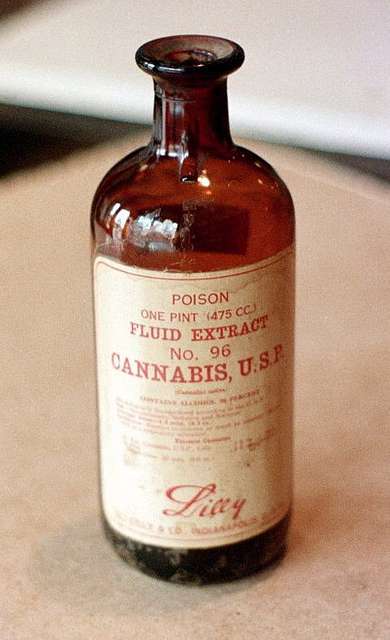
Simultaneously, 1937 saw a significant expansion of federal power into social policy with the unofficial banning of marijuana under the Marihuana Tax Act. This act imposed a strict, high-cost transfer tax stamp for every sale of marijuana, stamps which were “rarely issued by the federal government”. Prior to this federal legislation, the growth and use of marijuana had been legal under federal law, and states had not widely banned it until after 1937, when all states subsequently made the possession of marijuana illegal.
This shift in drug policy was heavily influenced by Commissioner Harry Anslinger, the first commissioner of the Federal Bureau of Narcotics (FBN), who launched a concerted propaganda campaign in the 1930s. Anslinger, a “master inciter of anti-drug moral panics,” made “personal appeals to civic groups and legislators” and successfully “pushed for, and received, editorial support in newspapers” which maintained a “steady stream of anti-marijuana propaganda”. His rhetoric was particularly alarming, claiming that marijuana “incited violent and insane behavior” and was an “assassin of youth”. He famously detailed gruesome acts committed by alleged cannabis users, such as a “Florida youth who murdered his family with an ax” and an “Ohio juvenile gang that committed thirty-eight armed robberies,” presenting these as evidence of marijuana’s deadly perils. While popular narratives often tied these laws to racism against Mexican Americans, the historical record indicates a more complex picture, including the drug’s popularization by “African American jazz musicians in New Orleans”. This intense campaign of public persuasion directly contributed to the widespread criminalization of cannabis across the nation.
These developments in 1937 occurred against the backdrop of the intense conflict between the White House and the Supreme Court, famously dubbed the “constitutional crisis” of the New Deal era. Roosevelt, fresh off a “smashing election of 1936”, felt emboldened to tackle the judiciary, which he perceived as thwarting his agenda. His administration was acutely aware of the “atmosphere of crisis” that had been created by the Court’s previous rulings, such as the unanimous striking down of the National Industrial Recovery Act (NIRA) in A.L.A. Schechter Poultry Corp. v. United States in 1935. It is important to understand that these earlier decisions, perceived by Roosevelt as creating a “‘no-man’s-land’ where no government—state or federal—can function”, directly fueled the President’s determination for judicial reform in 1937.
However, the year 1937 also brought a significant shift in the Court’s jurisprudence. On March 29, 1937, in the landmark case of West Coast Hotel Co. v. Parrish, the Supreme Court upheld Washington State’s minimum wage law. This ruling, often called “the switch in time that saved nine”, reversed the Court’s prior precedents, including its decision in Morehead v. New York ex rel. Tipaldo (1936) which had invalidated New York’s minimum wage law. Justice Owen Roberts, who had previously joined the conservative majority in striking down such laws, now voted with the liberal wing of the Court (Chief Justice Hughes, Justices Brandeis, and Cardozo) to affirm the minimum wage. While Justice Roberts later insisted his decision was not influenced by political pressure and had been made before the Court-packing plan was announced, the timing, just weeks after Roosevelt introduced his judicial reorganization bill, was widely seen as a direct consequence of the political climate. This decision signaled a new willingness by the Court to accept New Deal legislation and expanded federal power.
Furthermore, Chief Justice Charles Evans Hughes played a critical role in opposing Roosevelt’s Court-packing plan. On March 21, 1937, Hughes sent a letter to Senator Burton K. Wheeler, a key opponent of the plan, effectively refuting the administration’s claims that the Court was behind in its work. This letter, which articulated the Court’s efficiency and ability to handle its caseload, was “explosive” and proved to be a significant blow to Roosevelt’s legislative strategy, contributing to the ultimate defeat of the Court-packing bill in July 1937. While the Court-packing plan itself failed, many historians and contemporaries acknowledged that it succeeded in its broader aim: the Court’s judicial philosophy shifted, leading to a period where it “bent before the storm” and upheld key New Deal measures.
In sum, 1937 was a year of profound transformation in American governance. The public’s desire for judicial reform, the strategic and propagandistic efforts to implement federal social policies like marijuana prohibition, and the dramatic shift in the Supreme Court’s interpretations of federal power all converged to redefine the balance between the branches of government and lay the groundwork for a more interventionist state.