

President Trump’s revival of the “America First” slogan for his administration’s policies, including new tariffs, directly reflects a contemporary focus on nationalist priorities and transactional diplomacy. Yet, to truly understand the current moment, we must turn to the past, for the phrase “America First” is not new; it carries a complex and often contradictory history, having served a multitude of political agendas over more than a century.
From Neutrality to Exclusion: The Early Meanings of “America First”
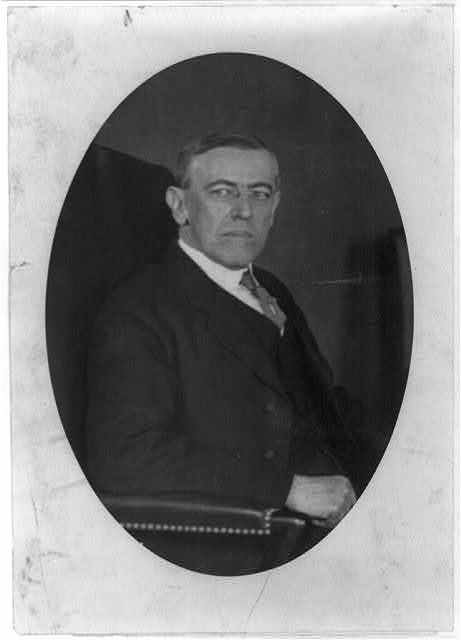
The phrase “America First” has deep roots in American political discourse, emerging prominently around World War I. Woodrow Wilson, then president, utilized the motto in April 1915, signifying a focus on U.S. neutrality and the importance of an “adequate national defense”. His unselfish message was twofold: Americans should unite for their country, preventing old national or ethnic ties from dividing the Union, and America needed to remain neutral to serve as “Europe’s friend when the day of tested friendship comes”. This “new type of neutrality” aimed to help the world overcome its “old, militant order”. Wilson’s use, however, reflected a long-standing tension in American foreign policy: a desire to advance national ideals, particularly political liberty, intertwined with the pursuit of national interests.
Beyond Wilson, the “America First” movement emerged more broadly in the early 20th century to actively oppose “internationalism and immigration”. This sentiment found voice in figures like Calvin Coolidge, who, in a 1921 essay, asserted that the United States had become “a dumping ground” and needed to limit immigration to “the right kind”—explicitly identifying “Northern European whites”. This strain of nationalism, in its earliest American days, arose as a “brutal form of supremacist nationalism” to justify the country’s “deepest sins,” including chattel slavery and indigenous dispossession. It has persisted through historical narratives that “glorify the deeds of white Europeans while erasing the contributions of Black and Indigenous Americans”. This “American exceptionalism,” whether racial or otherwise, has historically “glow[ed] with the animus of greed and self-aggrandizement,” justifying not only wars but also the nation’s “massively disproportionate use of the world’s resources”. This widespread devotion leaves the U.S. “keenly susceptible to the advances of a disciplined and informed fascist movement of its own”.
Cold War Reinterpretations and the Illusion of Invulnerability
Following World War II, America assumed the role of “leader of the free world” with a mix of “self-interest, calculation, and idealism”. The Cold War era saw the pervasive belief in “American exceptionalism,” a “fervent faith” that the United States was a “unique force for good in the world,” superior in its military and economic power, the quality of its government and institutions, and the “character and morality of its people”. This faith became the “nation’s most agreed-upon religion of the 1950s”. This era also cemented what William Appleman Williams termed an American “imperialism” pursued through “economic expansionism”.
The “end of history” thesis, positing liberal democracy as the final form of human government after the Cold War, fostered a “political optimism” that led to dangerous complacency. This narrative suggested that the U.S. had “solved” the problems of tyranny and oligarchy, failing to recognize that “there is no such thing as a ship that can’t sink”. Despite its apparent victory over communism, this triumphalism often distorted the past, overlooking “American militarism and the Pentagon’s massive incursions against the federal budget” and promoting a “Manichaean approach to the rest of the world”.
Subsequent administrations adopted different rhetorical frameworks. President George W. Bush declared a “Global War on Terror” and a “Freedom Agenda”. President Barack Obama, reflecting a mood of retrenchment, turned to “don’t do stupid stuff” and a reliance on the “arc of history”. However, these overarching strategies still often masked underlying economic and geopolitical interests. For instance, the “War on Terror” was, for some, a means for “conservatives… to articulate, without embarrassment, the vision of imperial American power they have been quietly nourishing for years”. This vision, often cloaked in claims of “benign, even beneficial” global purpose, sought to prevent “any other power ever aris[ing] to challenge the United States”.
Nixon’s Economic Nationalism: A Precedent for Today
Richard Nixon’s presidency offered a potent illustration of how “America First” principles could be woven into economic policy. Coming into office amid the Vietnam War and significant domestic challenges, Nixon sought to lessen the burden on the United States to lead and manage so much of the “free world’s affairs”. His “Nixon Doctrine,” announced in 1969, signaled a major shift in U.S. foreign policy, stating that America would no longer provide troops to allies for internal or external wars (with exceptions for treaty allies or nuclear attacks), but rather offer financial and technical support. This represented a scaling back of America’s global commitments.
By 1971, facing inflation, unemployment, balance-of-payments deficits, and currency gyrations, Nixon implemented the “New Economic Policy” (NEP), which included a wage and price freeze and an import tax. This was framed as defending the dollar against “international speculators” and asserting U.S. leadership in monetary affairs. Nixon, though not always an ideologue, was willing to use a “big political club against the United States’ economic rivals”. He sought to portray these drastic actions as necessary to make “the product of American labor… more competitive” and remove the “unfair edge” that foreign competitors had. While denying the administration was protectionist, these actions challenged the “global framework for trade and investment” and were seen by other countries as a “unilateral power play”. Nixon and his advisors were confident in their ability to “call the shots,” believing other nations “can’t afford” a trade war.
The administration’s rhetoric skillfully presented these actions as serving the common good and a renewed national prosperity. This tactical approach involved emphasizing the “sheer scope of the actions” and their interconnectedness to make them harder to attack piecemeal, while also offering “something for everyone” – wage and price controls for liberals, investment incentives for business, and a “cheaper dollar” for broader employment. This demonstrated Nixon’s “penchant for big ideas and bold responses” and his desire to show the American people that he was “aware of [their] economic problems” and “willing to do things differently”.
Why This Matters Now: Beyond the Slogan
The contemporary revival of “America First” under President Trump in 2025 echoes these historical patterns. His administration has actively pursued policies such as new tariffs and immigration restrictions, which align with the historical use of the slogan to prioritize domestic interests, often at the expense of international cooperation or existing norms. The current situation, with concerns about mass deportations and purges at federal agencies, raises fundamental questions about the fragility of democracy and whether the U.S. is drifting towards a fascist state.
This historical lens allows for a critical examination of how the “America First” slogan, and similar nationalist rhetoric, has been deployed throughout history: sometimes to promote neutrality, sometimes to justify xenophobia and isolationism, and sometimes to frame aggressive economic or foreign policies as defensive measures. It provides a potent warning against complacency, urging readers to recognize that the gradual “erosion of democratic norms” is a historical pattern where “what starts to matter is not what is concealed but what has been normalized”.
The danger lies not just in the words themselves, but in their capacity to conceal political agendas that prioritize the interests of “particular elites” over “the common good”. The call for “national greatness” or “Make America Great Again” can stoke grievances among dominant groups, eliminate contradictory narratives, diminish past sins, and present a mythological history that hides uncomfortable truths.
In a society increasingly fragmented by information silos, where algorithms feed people “information that most closely aligns with their political preferences” and trust in institutions erodes, understanding the historical manipulation of such powerful rhetoric is paramount. Applying historical “litmus tests” to contemporary events encourages critical scrutiny of “would-be autocrats” and their shared strategies, allowing citizens to distinguish between genuine national interest and veiled power grabs. The “illusion of control” is dispelled only through a clear-eyed commitment to truth, vigilance, and the recognition that democratic institutions are not impervious to collapse.