

Alright, let us delve into the pivotal year of 1946 and the profound impact of George F. Kennan’s “Long Telegram,” an event widely considered to be the inauguration of the United States’ approach to the Cold War.
In the immediate aftermath of World War II, the global landscape was shifting dramatically, and the United States was grappling with how to define its role in a world no longer dominated by the conflict against the Axis powers but shadowed by emerging tensions with the Soviet Union. President Harry S. Truman, who had limited foreign policy experience and was initially kept out of the loop by FDR on critical international matters, even confessed to a friend that his knowledge of foreign policy came primarily from newspapers. This created a vacuum for a clear, cohesive strategy regarding the USSR.
It was into this uncertain environment that George F. Kennan, then a counselor at the U.S. embassy in Moscow and America’s foremost Sovietologist, stepped forward. On February 9, 1946, Soviet leader Joseph Stalin delivered an “election speech” in the Bolshoi Theater, which Kennan perceived as a reassertion of Marxist-Leninist ideology, warning of capitalism’s inevitable conflicts and the Soviet Union’s need to prepare for its “violent demise”. Washington, already concerned by the Soviets’ rejection of the Bretton Woods system, their espionage activities, and Stalin’s maneuvering for advantage in the Middle East, sought an “interpretive analysis” from Kennan.
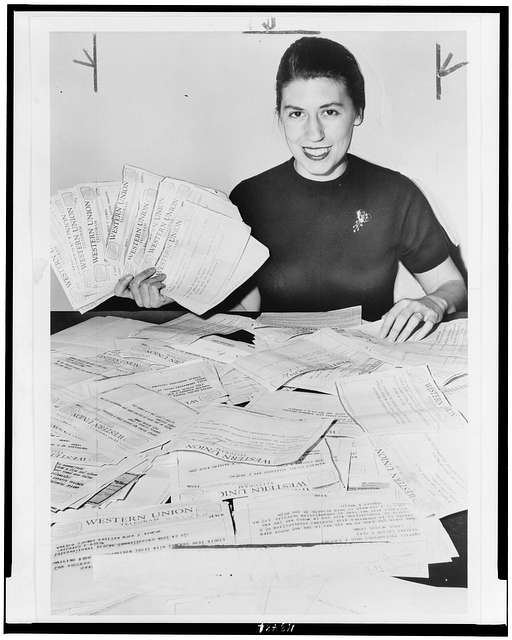
Kennan’s response was the more than five-thousand-word “Long Telegram”. In this seminal document, he articulated that Russia’s historical and geographical insecurities, amplified by Marxist-Leninist ideology, propelled it towards seeking ever-greater military power and a direct confrontation with the capitalist West. He contended that the Soviets aimed for the “total destruction of rival power” and were “impervious to the logic of reason,” yet “highly sensitive to the logic of force”. Furthermore, Kennan warned that Moscow would use Communist parties and other groups globally to “disrupt national self-confidence, to hamstring measures of national defense, to increase social and industrial unrest, to stimulate all forms of disunity”. He portrayed the Soviets as both “neurotic” and “insecure,” concluding that traditional diplomatic channels would be ineffective; instead, they needed to be “handled firmly to keep them contained inside their sphere”.
The “Long Telegram” “hit Washington at just the right moment,” providing a clear and unflinching explanation for the confusing and worrying international circumstances without offering alternatives. It quickly became a mandatory read for Washington insiders, crystallizing their understanding of the Soviet threat. Kennan was subsequently recalled from Moscow to advise policymakers, eventually heading the State Department’s Policy Planning Staff, where he was tasked with refining America’s foreign policy of containment.
Indeed, the policy of containment is most often attributed to Kennan. His analysis became foundational, establishing the Soviet Union as a “fanatical force committed to the destruction of the West” and therefore immune to traditional diplomacy. This perspective framed the Cold War as a “US project,” a “war short of actual war” allegedly initiated by “International Communism” that justified global American engagement. This effectively put the United States squarely into the world stage on a global scale, a role it played to great advantage for many years. While the Truman administration had already undertaken actions resembling containment on occasion, Kennan’s conceptual framework profoundly reshaped how American foreign policy experts perceived the Soviet Union in the post-war era.
It is important to understand that while Kennan’s telegram was immensely influential, its interpretations and long-term implications drew subsequent critique and nuance, even from Kennan himself. He later reflected that he saw his telegram as a “primer” intended to awaken the citizenry, acknowledging that it did not, in itself, offer a specific plan of action. Interestingly, he later expressed concern that the “Truman Doctrine”—a policy heavily influenced by his ideas—risked becoming a “blank check” for economic and military aid driven by anti-Communism rather than sound economic reasoning, and he even attempted to “rewrite” parts of it.
Historians and analysts have since noted a crucial discrepancy: the portrayal of the war-ravaged Soviet Union as a truly symmetrical “superpower” bent on global conquest was, in many ways, a “chimera”. The actual economic, technological, and overall military gap between the U.S. and the USSR was immense. Critics of the “triumphalist” narrative of the Cold War suggest that the U.S. narrative, which demonized the Soviets as a “congenitally aggressive and expansionist totalitarian behemoth,” served to justify America’s own global expansion and reshape the global economy, even obscuring the extent of Soviet devastation and their limited aims after WWII. This “willed amnesia” about Russia’s immense suffering and role in World War II became a constitutive element of the U.S. Cold War narrative.
Kennan himself, despite initiating the “hard-line policy,” later came to question some of the interpretations of his work. He wrote a never-sent letter in April 1948 stating, “The Russians do not want to invade anyone. It is not in their tradition”. He spent the latter half of his career disputing the “chilling implications” of his earlier call to use “heavy weapons for what seem…to be minor matters”. He was “dumbfounded” to realize that the “errors” of containment, as he perceived them, paradoxically proved “extraordinarily successful” for advancing U.S. interests globally. While his powerful, often “noir” descriptive style could sometimes overshadow the nuances of his arguments, it undoubtedly contributed to the telegram’s forceful impact on policymakers’ perceptions.
In essence, George Kennan’s “Long Telegram” in 1946 was a seminal intellectual moment that powerfully articulated the Soviet threat, shaping the subsequent U.S. policy of containment and fundamentally defining America’s role in the emerging Cold War for decades to come. It was a catalyst for a worldview that, while later debated and re-evaluated, undeniably set the trajectory for U.S. foreign policy.