

Alright, let’s step back into the final moments of the last century and the dawn of a new millennium. As a historian, I find few periods as quietly consequential as the year 2000 in America. It was a time often characterized by a sense of “the end of history,” a prevailing belief that liberal democracy had triumphed and reached its final form, leading to a certain complacency. Yet, beneath this veneer of peace and prosperity, significant undercurrents were at play, shaping the trajectory of the nation in ways few fully grasped at the time.
The Peculiar Contest of 2000: An Election of Disconnect
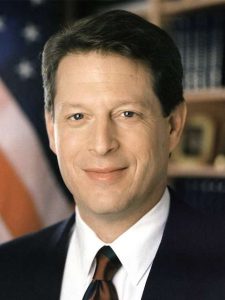
The presidential election of November 2000 stands as a truly bizarre and defining moment, reflecting a curious disconnect between the political establishment and the American populace. On one side, we had Vice President Al Gore, a party insider who had served faithfully for eight years under Bill Clinton. On the other, Texas Governor George W. Bush, Jr., known for his ties to oil interests and a significant record of prisoner executions during his governorship.
Neither candidate, it must be stated, proposed the kind of “bold changes in the social and economic structure” that many deeply rooted problems of the time might have demanded. There was no plan for universal health care, for widespread low-cost housing, or for truly dramatic shifts in environmental controls. Both candidates largely supported the death penalty, the expansion of prisons, and maintained a robust military establishment, even backing the use of sanctions against the people of Cuba and Iraq. This ideological convergence on core issues, alongside the formidable barriers erected against any third-party contenders like Ralph Nader—who, despite offering a sharply different program emphasizing healthcare, education, and the environment, was excluded from nationally televised debates—led to a predictable outcome: widespread public apathy.
Indeed, voter enthusiasm was distinctly lacking in 2000, mirroring a trend of declining participation that had been evident for decades. Roughly half of the eligible voting population, particularly those at lower-income levels, simply chose not to participate. Many felt that politicians, regardless of party, “didn’t care about people like them” and that their lives wouldn’t change, regardless of who won. This widespread non-participation, rather than expressing a specific policy preference, demonstrated a deep alienation from the political system itself.
And then, of course, came the unprecedented electoral outcome. Al Gore garnered hundreds of thousands more popular votes than George W. Bush, yet the presidency was ultimately decided by the Electoral College, hinging on a contentious 36-day legal battle over Florida’s electoral votes. It was an outcome that, for all its legal machinations, underscored the fundamental design of the American system, which can serve the interests of a wealthy elite while still maintaining a broad, if often unenthusiastic, base of support among other segments of the population.
The Unseen Threat: Terrorism on the Periphery
While the nation was consumed by the election’s drama, another, far more insidious narrative was quietly unfolding—one that, despite clear signals, remained largely outside the public and political spotlight. In the decade leading up to 9/11, presidential discussions, congressional attention, and public discourse on national security were often dominated by other foreign policy issues, with terrorism only infrequently taking center stage. When it did, the focus tended to be on terrorists’ tactics, such as chemical or biological threats, rather than the organizations themselves.
However, the year 2000 saw several critical events that, in retrospect, serve as chilling precursors to the cataclysm of 2001. On October 12, 2000, the USS Cole, a United States Navy destroyer, was attacked by suicide bombers in the Yemeni port of Aden, resulting in the tragic deaths of seventeen American sailors and injuries to thirty-five. Immediate suspicion for this brazen assault centered on Osama bin Laden. Later that same year, intelligence reports indicated that Hamdan al Shalawi was training in camps, learning techniques for “Khobar Towers”-type attacks, referencing a previous major terrorist incident. Furthermore, earlier in the year, on October 20, 2000, a significant development in the intelligence world occurred: Ali Mohamed’s statement in support of a change of plea in United States v. Ali Mohamed was recorded.
Yet, despite the gravity of the USS Cole attack and other intelligence indicators, Bin Laden, al Qaeda, or even the broader subject of terrorism simply were “not an important topic in the 2000 presidential campaign”. Neither Congress nor the media called much attention to it. It’s true that the period surrounding the millennium, specifically late 1999 and early 2000, was a “Millennium Exception” where there was a remarkably wide and abundant flow of information about terrorism, even reaching local airport managers and police departments who wouldn’t see such information again until 9/11. High officials in the executive branch and congressional leaders gave it frequent attention during this brief window. However, this focused concern seemed to wane, and by the general election year, the broader national security conversation had reverted, with the subject of terrorism not even warranting a question in major national surveys.
The Calm Before the Storm
This era, particularly the 1990s, was widely perceived as a period of “easygoing prosperity,” but this affluence, for some, created a society lacking “difficulty and adversity,” leading to “a loss of social depth and political meaning”. Conservative thinkers, in particular, often yearned for a return to a more “martial spirit,” finding the era’s focus on “domestic comfort” and “pleasure” to be a sign of “weakened moral fiber”. The dominance of the “end of history” narrative, suggesting that ideological evolution had reached its peak with liberal democracy, may have fostered a collective blind spot, making it harder for the nation to recognize or seriously contend with emergent, non-traditional threats.
It’s a stark truth that for all the internal political maneuvering and public disengagement of 2000, the events of the year were quietly laying the groundwork for monumental change. The failure to make terrorism a central issue, despite escalating attacks and intelligence warnings, would be profoundly reevaluated just nine months later. The “cataclysmic event” of September 11, 2001, would abruptly push all other issues into the background, forcing a dramatic and immediate shift in America’s national security priorities and ushering in what President George W. Bush would immediately declare as a “war on terrorism”. The illusion of a world without significant enemies, so prevalent in 2000, would be shattered, and the nation would commit “enormous resources” to countering terrorism, a shift occurring with the “full support of the Congress, both major political parties, the media, and the American people”. But that, as they say, is a story for another time.