

 It’s important to lay out the truth of events as they unfolded, especially concerning pivotal moments in our nation’s history. Let’s delve into the details of November 2002 and March 2002, drawing directly from the sources to provide a clear, accurate picture.
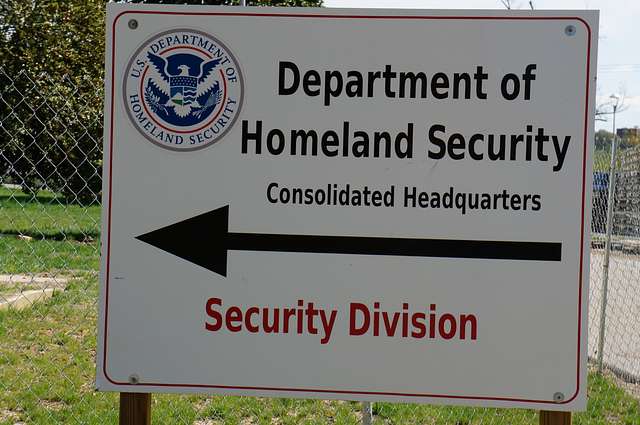
First, regarding November 2002, when President Bush signed a bill creating the Department of Homeland Security (DHS), touted as the biggest reorganization of federal government in over 50 years:
This was indeed a monumental shift in how the U.S. government approached domestic security. Born out of the critical need identified after the tragic events of September 11, 2001, the creation of the Department of Homeland Security in November 2002 marked a fundamental change in the national defense posture. Before 9/11, no single executive department had the primary mission of defending America from domestic attacks. The 9/11 Commission itself, established by Congress and the President on November 27, 2002, was tasked with investigating all facts and circumstances relating to the terrorist attacks, which included assessing issues related to law enforcement, immigration, border control, and aviation, among other relevant areas.
The new Department of Homeland Security was given lead responsibility for crucial areas such as protecting borders, securing transportation systems, and safeguarding other vital infrastructure, as well as organizing emergency assistance and collaborating with the private sector to evaluate vulnerabilities. To accomplish this, DHS consolidated several existing agencies, including the Immigration and Naturalization Service (INS), the Customs Service, the Coast Guard, the Secret Service, and the Transportation Security Administration (TSA). In fact, the Aviation and Transportation Security Act, passed in November 2001, had already established the TSA, which then became part of this new, larger Department of Homeland Security when the Homeland Security Act and the Maritime Transportation Security Act followed in November 2002.
This move was, without question, the most significant reorganization of the federal government in over half a century, underscoring a profound shift in priorities towards national preparedness and domestic defense in the post-9/11 era.
Next, let’s address March 2002 (Late), where horrific bloodshed in Israel and the Occupied Territories led to accusations against Bush and questions about the Iraq invasion:
In late March 2002, there was indeed intense violence in Israel and the Occupied Territories, and this crisis played a significant role in shaping the political landscape surrounding the Bush administration’s foreign policy, particularly concerning Iraq. The situation in the Middle East was already a complex challenge for the Bush administration, with the Middle East peace process having collapsed earlier in its first months.
During this period of escalating violence, even some of the administration’s own defenders began to question the immediate focus on Iraq, suggesting that an invasion might need to be postponed indefinitely. Critiques arose, highlighting what some perceived as a misplaced focus. As one former high-level national security aide from the Reagan era articulated, it was supremely ironic that the world’s greatest power seemed “incapable of managing a regional crisis” like the one unfolding in the Middle East, while simultaneously being “maniacally focused on either Afghanistan or Iraq”. This sentiment suggested that the administration’s concentration on these “key outposts of imperial confrontation” while the broader Middle East “was going up in flames” reflected either “appalling arrogance or ignorance”.
The administration, however, was concurrently building its case for the Iraq war. Key figures like Cheney, Rumsfeld, and neoconservatives were convinced that Saddam Hussein’s regime was a constant source of instability and a direct threat to U.S. interests and allies in the region, including Israel. They envisioned a quick removal of Saddam and his replacement with a secular democratic regime, believing this would be a “cakewalk” that would not require a major long-term American military commitment.
In the wake of the September 11 attacks, the Bush administration made a deliberate effort to link the attacks to the Iraqi regime, a connection that sources indicate was false or at least highly questionable. This tactic was employed to mobilize public sentiment and to “squelch dissent” against the idea of overthrowing Saddam Hussein. The public was, in effect, “shocked and awed” into accepting the government’s stance, leading to support for a war against Iraq even as questions about its true goals remained unclear and confused.
Thus, the mounting bloodshed in Israel and the Occupied Territories in March 2002 brought into sharp relief the criticisms and questions surrounding the Bush administration’s singular focus on Iraq and its overall approach to managing global crises.