
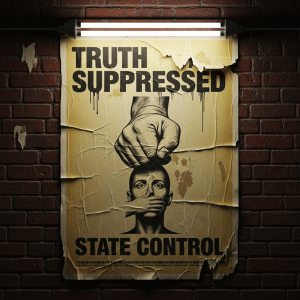
The truth of the situation regarding educational gag orders in the United States, as of May 2023, reveals a continued and alarming escalation of efforts to control curriculum and classroom discussions. By this time, a stark reality had materialized: 26 educational gag order bills had become law in 17 states, with 3 additional states enacting similar policies via executive order or other government action. This meant that nearly one-third of the US population resided in states with one or more such orders in force. This is not merely an increase in numbers; it represents a deepening commitment to ideological control over American education.
To truly grasp the gravity of this situation, it is crucial to understand the trajectory that led to May 2023. The “legislative war on education” began gaining serious momentum in the 2021 legislative session, with 54 bills introduced in 22 states, 12 of which became law. By 2022, the intensity had undeniably escalated, with 137 gag order bills introduced in 36 different states, a 250 percent increase over 2021. While only seven new gag order bills became law in 2022, they were notably among the “most censorious” to date, reflecting a heightened inclination towards state-imposed censorship. The figures for May 2023 demonstrate that this legislative momentum has certainly continued to solidify into enacted law, expanding the geographical reach and the population affected by these restrictions.
A particularly concerning aspect of this trend is the expanding scope of institutions targeted. While K-12 schools remained the primary focus, appearing in 96 percent of bills introduced in 2022, public colleges and universities faced increasingly frequent legislative attacks. The data for 2022 showed a significant shift: 39 percent of all bills targeted higher education, up from 30 percent in 2021. Moreover, a striking 57 percent of the educational gag order laws passed in 2022 were aimed at higher education institutions, a substantial increase from just 25 percent the previous year. This marked a notable reversal for many Republican lawmakers who, just a few years prior, had advocated for “Campus Free Speech Acts”. Laws like Florida’s HB 7 and Tennessee’s HB 2670 exemplify this, imposing restrictions on “divisive concepts” in both K-12 and higher education, with significant penalties. South Dakota’s HB 1012, enacted in 2022, focused exclusively on higher education, prohibiting public colleges and universities from compelling students to adopt or affirm certain “divisive concepts”. Furthermore, there was a sharp increase in 2022 in bills targeting nonpublic educational institutions, signifying a broader push for control beyond publicly funded schools.
The content these bills sought to suppress also evolved, becoming more comprehensive and punitive. While issues of race, sex, and gender continued to be the most common targets, 2022 saw a sharp increase in bills specifically targeting LGBTQ+ identities. Florida’s HB 1557, widely known as the “Don’t Say Gay” bill, became law, restricting instruction on sexual orientation and gender identity in early grades and establishing a private right of action for violations. This surge in anti-LGBTQ+ legislation often framed discussions of LGBTQ+ topics as “left-wing indoctrination,” directly aligning with the “anti-critical race theory” campaign.
Beyond specific identities, a major priority for lawmakers in 2022 was shielding American history and society from what they deemed “negative moral judgments”. This included explicit attempts to limit the use of The New York Times‘s “1619 Project” through at least 14 bills. South Carolina’s H 4392, for example, would have forbidden instructional material suggesting that “slavery and racism are anything other than deviations from, betrayals of, or failures to live up to the authentic founding principles of the United States”. Such legislation, as the sources clearly state, risks suppressing historical perspectives that explore the deep roots of racial discrimination.
The types of prohibitions found within these gag orders broadly fall into three categories:
- Prohibitions on compulsion aim to prevent schools or universities from forcing individuals to adopt specific ideas. While seemingly aligned with free speech principles, these laws are often interpreted broadly, creating a “chilling effect” where educators avoid discussing topics entirely to prevent accusations of compulsion.
- Prohibitions on promotion forbid the promotion, endorsement, or inculcation of particular ideas. The vague language used in such provisions makes it difficult for teachers to discern what constitutes “promotion” versus objective discussion, leading to self-censorship.
- Prohibitions on inclusion are the “most censorious” type, banning educators from even discussing certain topics, regardless of how objectively they are presented. North Dakota’s HB 1508, for instance, makes it illegal for public K-12 teachers to include instruction suggesting “racism is systemically embedded in American society”.
The punitive nature of these bills intensified in 2022, with 55 percent of proposed bills including explicit punishments, a notable increase from 44 percent in 2021. These penalties range from heavy fines, loss of state funding, and professional discipline (including termination or loss of teaching licenses). Some unsuccessful bills even proposed criminal penalties. A significant development has been the proliferation of “private rights of action,” an enforcement mechanism that allows students, parents, or even unrelated members of the public to sue educational institutions for alleged violations. This broadens the threat significantly, allowing individuals with no direct connection to a school to hold districts “hostage to their political views”.
Beyond direct gag orders, a broader legislative campaign of educational censorship emerged. This includes “curriculum transparency” bills, which mandate the public posting of course materials, and in some extreme cases, have proposed cameras in classrooms or live-streaming instruction, effectively creating a “surveillance of teachers”. There have also been efforts to legalize book banning, such as Florida’s HB 1467, which streamlines the process for challenging and removing library content. In 2022, Missouri’s SB 775, though not classified as an educational gag order, led to the removal of hundreds of books from school libraries, including the Pulitzer Prize-winning Maus, due to fears of criminal penalties for distributing “material harmful to minors”. Lawmakers are also increasingly seeking to undermine academic freedom, shared governance, and faculty tenure, with measures weakening tenure adopted in Mississippi and Florida in 2022, and similar efforts underway in Texas and Louisiana.
Despite this aggressive campaign, educators and their allies are not yielding. The truth is, there’s a powerful and growing resistance. As early as February and March 2022, reports from The Washington Post and Salon highlighted that college faculty were actively fighting back against state bills on Critical Race Theory. Organizations like the African American Policy Forum (AAPF), in collaboration with the American Association of University Professors (AAUP) and PEN America, launched a faculty senate resolution campaign to “defend academic freedom to teach about race and gender justice and critical race theory”. These resolutions, far from being symbolic, reassert academic autonomy and challenge partisan political interference, demonstrating a critical commitment to the truth and the recognition that attacks on one area of academic freedom threaten all. Legal challenges have been filed against these gag orders in various states, including Florida, Oklahoma, New Hampshire, and Ohio. However, it is also true that the “divisive concepts” campaign has achieved greater media penetration, indicating the significant challenge facing counter-narrative efforts.
In essence, the landscape in May 2023 was one of profound contestation: a relentless expansion of legislative and executive efforts to control and censor education, met by a determined, if sometimes outmatched, resistance from those committed to academic freedom and the pursuit of truth. The phrase “educational authoritarianism” captures this strategy, where politicians aim to restrict knowledge to intimidate educators into spreading an anti-democratic ideology. The impact extends beyond the classroom, hindering citizens’ ability to make informed decisions and undermining the very foundations of a healthy democracy. The battle continues, and the integrity of American education hangs in the balance.