

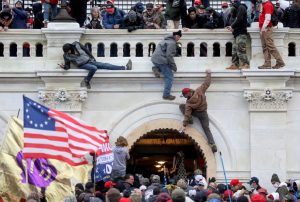
The event of January 6, 2021, stands as a profound and grievous moment in American history. What began as a political rally near the White House culminated in a violent assault on the United States Capitol, seeking to disrupt the formal certification of the 2020 presidential election results. This unprecedented attack on the heart of American governance was widely characterized by law enforcement and politicians alike as domestic terrorism, an insurrection, or even an attempted coup.
To fully grasp the magnitude of January 6th, we must examine the context that fueled it, the role of political leadership in instigating it, the failure of institutions to prevent it, and the deep historical echoes it carries concerning threats to democracy and state control.
The Foundation of the Insurrection: The Big Lie
The attack was the culmination of months of false claims—often referred to as the “big lie”—by then-President Donald Trump, asserting widespread fraud had stolen the 2020 election. Despite over 60 federal and state courts rejecting efforts to reverse the outcome, and states certifying their results for Joe Biden, the lie persisted. This campaign to overturn the election has been described by some historians and political scientists as an attempted “self-coup” orchestrated by the sitting president. The explicit aim of the mob that gathered was to block the peaceful transfer of power.
The former President used his influence to push federal institutions, including the Department of Justice (DOJ) and election officials, to endorse fraudulent claims, prompting a severe political crisis. The attempt to nullify the outcome of the democratic process risks deepening divisions and creating long-lasting rifts in the body politic.
Mobilization and the Forewarned Danger
The call to action that led thousands to Washington, D.C., was unequivocal. On December 19, 2020, President Trump tweeted, advocating for a massive protest: “Big protest in D.C. on January 6th. Be there, will be wild!”. This statement immediately catalyzed a significant surge in violent online rhetoric aimed at Congress and law enforcement.
Remarkably, multiple government agencies were keenly aware of the brewing danger. Intelligence showed that individuals traveling to the rally were armed and that the target was the Capitol itself.
- The FBI received internal emails and warnings detailing plans for a domestic terror attack, including discussions about individuals bringing guns and staging them.
- The Secret Service forwarded warnings that demonstrators were urged to “occupy federal building[s]” and “march into the capital building [sic] and make them quake in their shoes”.
- A January 3, 2021, assessment from the Capitol Police intelligence unit explicitly warned that, unlike previous protests, “Congress itself is the target on the 6th” and that a “sense of desperation and disappointment may lead to more of an incentive to become violent”.
Despite these multiple alerts and warnings of a domestic terror attack, the FBI was criticized for being reticent to believe and investigate all the clues, a reaction described as “gobsmacking”. The entities responsible for securing the Capitol Complex were ultimately unprepared for a large-scale attack, having assessed the event as similar to previous, less violent rallies.
An Attack on the Republic and its Defenders
On January 6th, after President Trump encouraged the crowd to march to the Capitol and urged them to “fight like hell,” the assembly quickly transformed into a violent mob. The ensuing violence injured approximately 140 members of law enforcement, many of whom were mercilessly clubbed and assaulted. Rioters successfully breached security barriers and occupied the Capitol building, where they ransacked offices and interrupted the joint session of Congress.
Extremist and anti-government groups played a key role in the violence, including the Proud Boys, Oath Keepers, and QAnon adherents, many of whom framed the day as a new “1776”. The violence and chaos were palpable; rioters chanted about murdering Vice President Mike Pence, who was evacuated to safety.
Crucially, the subsequent investigations revealed the President’s alleged dereliction of duty during the violence, failing to immediately intervene. President Trump was reportedly upset that Mike Pence had been whisked away to safety during the riot and, according to accounts, even indicated support for the chants about hanging Pence.
Historical Context and American Exceptionalism
The attack on January 6th forces us to confront uncomfortable historical precedents, both foreign and domestic.
Echoes of Past Conflicts
- Assault on the Capitol: The assault marks the most significant breach of a government institution since the British burned the Capitol in 1814 during the War of 1812. This comparison highlights how rarely the core institutions of American democracy have been so physically violated.
- Propaganda and Reality Tunnels: The fact that thousands of Americans willingly participated in an insurrection driven by fabricated claims of fraud speaks to the modern challenges of disinformation. This phenomenon aligns with historical patterns where political polarization is exacerbated by “asymmetric media systems” and the proliferation of “propaganda,” leading to a society where “sincere, well-meaning people… can unknowingly produce and consume propaganda”.
- The Double Standard of Justice: Observers immediately pointed out the “glaring double standard” in the police response on January 6th compared to the heavy-handed treatment of previous Black Lives Matter protestors. Critics, including Vice President Kamala Harris, noted that had the mob been composed of racial justice protestors, they “wouldn’t have been treated very, very differently”. This differential treatment echoes a “centuries-old pattern” in the policing of racial dissent versus white political protest in the U.S..
- Insurrection and State Power: The use of the Insurrection Act has historical resonance. Historically, the Insurrection Act has been discussed, as exemplified by President Lincoln’s suspension of habeas corpus to suppress a Northern insurrection, enabling the imprisonment of critics without formal charges or trial. More recently, in 2020, President Trump considered invoking the Insurrection Act to disperse protests following the murder of George Floyd, illustrating the ongoing tension regarding the deployment of military force domestically.
Challenging the Myth of Exceptionalism
The January 6th attack fundamentally shattered the notion of “American exceptionalism”—the belief that democratic backsliding or tyranny could happen elsewhere, but not here. As historian Douglas Brinkley noted, the event cemented January 6th as a “dark day” that Americans will always have to remember.
The attack revealed the “fragility of our Democracy” and underscored that if those seeking power accept only the election results they win, the American democracy “comes tumbling down”. The lessons learned from the struggle against authoritarian shifts in countries like Poland demonstrate that democratic institutions—media, universities, and courts—are essential guardrails.
The Ongoing Battle for Accountability and Memory
In the aftermath, the U.S. government undertook massive efforts toward accountability, including a large-scale criminal investigation that resulted in thousands of charges. Furthermore, the House of Representatives impeached Donald Trump for the second time for Incitement of an Insurrection. The Select Committee investigating the attack stressed the need for accountability for those who violated their oaths and betrayed their trust. Measures were recommended, such as invoking Section 3 of the Fourteenth Amendment, to potentially disqualify individuals who engaged in insurrection from holding future office.
However, the historical narrative remains contested. President Trump has engaged in a public campaign to “rewrite the history of the insurrection,” frequently referring to the rioters as “patriots” or “hostages” and repeatedly promising clemency. Following his second election, he granted broad clemency to nearly 1,600 individuals convicted or awaiting trial for offenses related to January 6th, commuting sentences for Oath Keepers and Proud Boys members. This attempt to normalize the event and celebrate the participants directly clashes with the view of constitutional defenders and law enforcement who faced the violence.
The meaning of January 6th for Americans hinges on this contestation. It serves as a stark warning, articulated at the nation’s founding by Benjamin Franklin, that the Republic must be actively kept. The attack underscored the immediate threat posed by those whose desire for authority supersedes their commitment to American democracy and the Constitution. To safeguard the future, citizens must remain an “informed and active citizenry” against ongoing threats.