

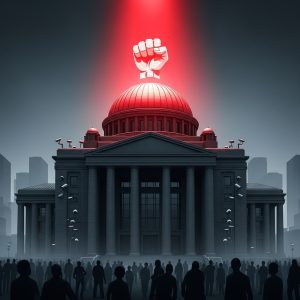
It is indeed fascinating to delve deeper into Project 2025, especially after our previous discussion about Executive Order 13950, “Combating Race and Sex Stereotyping.” While the executive order, since rescinded, revealed a specific intent to shape national discourse around race and gender, Project 2025 is a far more extensive and ambitious blueprint, representing a broad, concerted effort to fundamentally reshape the U.S. federal government and society at large. It’s a striking document, laying out a comprehensive vision for a potential future administration, particularly one led by Donald Trump.
Let’s unpack this crucial initiative.
The Genesis and Grand Vision Project 2025, officially titled “Mandate for Leadership: The Conservative Promise,” is the brainchild of conservative think tanks, most notably the Heritage Foundation, in collaboration with other right-wing partners. Its architects include figures like Kevin Roberts, president of the Heritage Foundation, and Russ Vought, former head of the Office of Management and Budget in the Trump White House. The sheer scale of it is remarkable: a nearly 900-page document that aims to prevent the “chaos and disorder” that supposedly hindered Trump’s more extreme ambitions during his first term, serving as a detailed plan for the next presidential administration. It’s designed to ensure that a future conservative president can “hit the ground running”.
The core mission, as articulated by its proponents, is to “institutionalize Trumpism” and reorder society according to conservative values. This isn’t merely a set of policy recommendations; it’s a strategic framework for asserting “political control over everything”.
Key Pillars of Project 2025’s Agenda
Project 2025 proposes radical changes across virtually every major federal agency within the executive branch. Many of its proposals are designed to centralize presidential power and dismantle existing structures, echoing sentiments of “laissez-nous-faire” where arguments for reduced government involvement often translate into strategies for elites to secure greater control.
- Reshaping the Federal Bureaucracy: A central theme is replacing tens of thousands of civil service workers with political appointees loyal to the president. This would effectively eliminate long-standing protections for career government employees who cannot currently be fired for perceived disloyalty. This mirrors a pattern seen in some authoritarian systems, where loyalty supersedes expertise. The plan also explicitly seeks to “gut the U.S. government,” including every major agency.
- Seizing Congressional Spending Power (Impoundment): One of the “most important” and “draconian” proposals is to empower the president to unilaterally refuse to spend money allocated by Congress, a concept called impoundment. While historically the Supreme Court has ruled against presidents attempting this, Project 2025’s “mastermind” Russ Vought believes the court might now greenlight such an action, providing a workaround to legislative processes. This would allow a president to defund social programs, withhold education funds, penalize institutions, and sever contracts without needing new laws.
- Culture Wars: Targeting Race, Sex, and Identity: Project 2025 is deeply entrenched in what are known as “culture wars,” expanding significantly on the themes seen in Executive Order 13950.
- Abortion and Birth Control: The document explicitly mentions abortion 199 times and seeks to use federal authority to promote “life and health of women” in a manner that restricts access to abortion. This includes reversing FDA authorization of mifepristone (despite its approval in the U.S. in 2000 and use in France since the 1980s). It also aims to ban mailing mifepristone and other contraception across state lines by reviving the Comstock Act of 1873, an old statute that made it illegal to send “obscenity” and birth control through the mail. Planned Parenthood and similar organizations would see federal funding cut. The plan even discourages “abortion tourism,” aiming to stop women from traveling to other states for care.
- LGBTQ+ Erasure: Project 2025 aims to “erase LGBTQ+ people from public life entirely”. This includes banning transgender women from competing in women’s sports and classifying discussions of transgender issues as “pornographic”. It proposes cutting gender-affirming care and transferring trans women prisoners to men’s prisons.
- Diversity, Equity, and Inclusion (DEI): Consistent with the backlash against “critical race theory”, Project 2025 is “broadly critical” of DEI programs, defining them as “illegal and immoral discrimination”. It calls for their elimination from federal agencies, and also seeks to use federal contracts and grants to push back against “woke policies” in corporate America and universities. This campaign, fueled by figures like Christopher Rufo, aligns with a broader movement to silence anti-racism advocates and exert “political control” over education.
- Education Reform: The project envisions significant overhauls to education, including eliminating Head Start, a program subsidizing childcare for poor children. It also seeks to cut back on federally subsidized school meals. For higher education, it proposes ending federally subsidized student loans, treating them as economic investments rather than investments in the population’s education, and aims to roll back loan forgiveness. The Department of Education itself is considered a “convenient one-stop shop for the woke education cartel” and its abolition is a goal.
- Labor and Industry: Project 2025 plans to repeal Hazard Order regulations, which currently bar teenagers from risky jobs in factories and mines, arguing that some young adults show interest in “inherently dangerous jobs”.
- Immigration: The plan seeks to “gut the U.S. government” including every major agency, with particular attention to immigration. It calls for repealing Section 235 of the William Wilberforce Trafficking Victims Protection Reauthorization Act of 2008 (TVPRA), which provides immigration benefits to unaccompanied alien children, and cancelling temporary protected status for refugees, including thousands of Ukrainians. The intent is to allow the president to “do whatever you want” by claiming lost control of the border.
- Environmental Policy: The project demands the removal of all mentions of climate change, climate justice, global warming, and the environment from federal regulations. It’s even open to eliminating agencies like the National Oceanic and Atmospheric Administration (NOAA) and the National Weather Service.
- Tariffs: While it includes a “normie Republican economist” advocating free market approaches to tariffs, it also features Trump’s former trade adviser Peter Navarro, who champions reciprocal tariffs. The latter position appears to be the one favored by the administration.
The “Truth” and “Reality” of its Implementation
Despite Donald Trump’s public statements that he knows “nothing about Project 2025” and that “some of the things they’re saying are absolutely ridiculous and abysmal”, sources reveal that many of its authors are former Trump administration officials, and a significant percentage of those who wrote the document are expected to be “foot soldiers” in a potential second Trump administration. In fact, it has been observed that nearly two-thirds of Trump’s executive actions four days into a hypothetical second term “mirrored or partially mirrored” Project 2025’s proposals. As one commentator put it, “it’s been Project 2025 all the way down”.
The project’s intent to reshape the country by asserting centralized political control and imposing a specific cultural agenda is clear. This is deeply unsettling to many, with some describing it as a “hellish legal vision”. The attempts to restrict academic freedom and control curriculum, as well as the broad attack on what is deemed “woke” ideology, reflect a continuing escalation of the “culture wars” that have been intensifying in recent years. The “anti–critical race theory” campaign, for instance, aligns with broader social conservative efforts against LGBTQ+ identities, creating a “broad chilling effect” on educators and public discourse.
The document’s claims, such as there being “no link between abortion and breast cancer, and there’s no link between abortion and depression,” and that science works by starting with a preferred policy and then creating studies to back it up, illustrate a concerning approach to evidence and truth. Such statements highlight a willingness to disregard established facts in pursuit of ideological goals, echoing the use of rhetoric to attack opponents and delegitimize institutions, a pattern consistent with the previous administration’s approach.
Project 2025, therefore, is not merely a policy paper; it’s a profound declaration of intent. It seeks to redefine the relationship between the federal government and individual liberties, reshape the economy through specific ideological lenses, and fundamentally alter the social fabric of the United States. Its detailed plans, combined with the stated loyalty of its contributors to a potential future administration, make it a critical document for understanding the trajectory of conservative political ambition in the U.S.. The ongoing legal challenges and the concerns raised about its constitutionality and potential for authoritarianism demonstrate that this comprehensive vision is, rightfully, a subject of intense scrutiny and debate.