

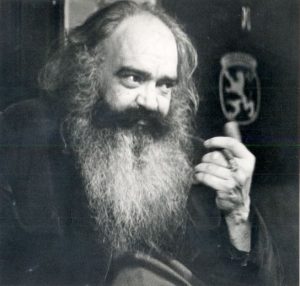
Stafford Beer was a figure whose intellectual journey truly embodies the very essence of understanding complex systems, be they biological, industrial, or societal. To truly grasp who he was and the enduring power of his ideas, we must delve into his life and the profound concepts he championed. He was, in essence, a pioneer who refused to be constrained by traditional disciplinary boundaries, always seeking to uncover the fundamental principles that govern how things actually work, rather than how they are intended to work.
Who is Stafford Beer?
Stafford Beer (born in 1926) was an extraordinary individual who moved fluidly between the academic, corporate, and governmental spheres, leaving a significant imprint as an international consultant in the management sciences and effective organization, particularly in the field of cybernetics. His multifaceted career saw him hold various managerial positions, from Production Controller to Chairman of the Board. He was also a prolific author, with over two hundred publications, including eleven books translated into thirteen languages, and was a published poet and painter. He even taught meditative yoga, having learned it in India.
Beer’s academic background was as rich and varied as his professional life. His education in philosophy, psychology, and mathematics was interrupted by the Second World War, during which he served as a gunner in the Royal Artillery and later as a company commander in the Gurkha Rifles. His military experience in India, particularly his work in intelligence to help organize forces and contain racial strife, was crucial to his later interests, as it allowed him to apply his interdisciplinary approach to real-world problems. After demobilization, he pioneered Operational Research in the British Steel Company, building a large interdisciplinary team. He held visiting professorships at Manchester and Durham Business Schools, was the first Professor of General Systems at the Open University, and an adjunct professor at the Wharton School of the University of Pennsylvania and the University of Toronto.
Fundamentally, Beer viewed philosophy not as an abstract pursuit for an “ivory tower,” but as something to engage with and apply to reality. His life’s work was characterized by a deep concern for the interaction of free human beings and the sometimes unintended ways that social processes could thwart basic human rights. He was known for his “successful battle against unreason and the divisive trend of simplistic and reductionist thinking” prevalent in the contemporary world.
Primary Concepts Associated with Stafford Beer:
Beer’s work revolved around several interconnected concepts, all aimed at better understanding and managing complex systems:
- Cybernetics: The Science of Control and Communication Beer was a true pioneer in the field of managerial cybernetics. He embraced Norbert Wiener’s definition of cybernetics as “the science of control and communication in the animal and the machine”. For Beer, this wasn’t just an academic discipline; it was a framework for understanding and operating complex entities, from a small “one-man-band” firm to an entire national economy.A prominent example of his applied cybernetics was his involvement with President Salvador Allende’s government in Chile in the early 1970s. He was contracted to design a nationwide, real-time system to manage the national economy, and his manuscript for the first edition of Brain of the Firm became the project’s “bible”. This work, evolving into concepts like “Cybernetics of National Development,” aimed to manage complexity by applying cybernetic principles to real-world governance, emphasizing what could be achieved through “new tools for management”.Beer’s exploration of cybernetics also extended to the fundamental basis of computer hardware and self-organizing chemical and biological systems, contributing to ideas that later informed “connectionist models and neural-net computer architecture”. He discussed the “irrelevance of automation” if it merely provoked social upheaval and large-scale labor redundancy, highlighting the need for cybernetics to address the human and social impacts of technological change.
- The Viable System Model (VSM) Emerging from his rigorous “brain model of a steelworks,” the VSM is perhaps Beer’s most renowned contribution to management science. It’s a “theory of effective organization” that elucidates and compares brain and management structures, not as mere analogy, but by pursuing fundamental principles of self-regulatory systems. The VSM has proven its value as both a diagnostic tool for existing enterprises and a guide for designing new ones. It represents a “new world view” for formalizing complex systems.
- Complexity and Variety A central problem Beer tackled was how to measure and manipulate complexity. He understood that human beings are inherently limited by their “finite brain” in assimilating all information and recognizing all patterns in the world. Yet, he believed that while systems may be “beyond our individual control,” they are “not beyond our collective control” as long as there is some semblance of democracy. This ties into the cybernetic concept of “variety” and the need for a control system to have sufficient variety to manage the system it oversees (Ashby’s law of requisite variety). He emphasized that overly simplistic solutions and technical fixes are rarely effective for the world’s “messy” human processes.
- POSIWID: “The Purpose of a System Is What It Does” This heuristic, often abbreviated as POSIWID, is a cornerstone of Beer’s systems thinking. It asserts that the true purpose of any system is defined not by the intentions of its creators or operators, nor by its stated mission, but by its “actual, observable outcomes and behaviors”. Beer famously argued that there’s “no point in claiming that the purpose of a system is to do what it constantly fails to do”. This idea encourages a focus on empirical observation of system performance to discern its de facto purpose.
- Holism vs. Reductionism Beer strongly advocated for a holistic approach, which he applied across various domains—”the world, the flesh or the metal”. He saw it as a coherent model that allowed for the emergence of complex phenomena, like mind from nervous system processes, or music from individual notes, by embracing the coexistence of distinct elements rather than attempting to iron out differences. His work was a “successful battle” against “simplistic and reductionist thinking,” emphasizing rigorous methodology while respecting the living, human individual.
- “Designing Freedom” and the Individual in a Cybernetic World Beer’s Massey Lectures, published as Designing Freedom, directly addressed how to construct constructive policies concerning the state, the individual, and institutions. He envisioned a “Liberty Machine in Prototype” and spoke about “The Free Man in the Cybernetic World,” reflecting his profound interest in ensuring individual freedom within increasingly complex social machinery. He posited that the cost of many new societal projects could be met by dismantling unnecessary bureaucracy. His work reflects an ongoing exploration of the “philosophical roots of actions taken in the world, and their human implications”.
- “Reality Tunnels” and Perception While not exclusively Beer’s concept, his perspective, particularly as articulated by Robert Anton Wilson, aligns with a critical examination of how we perceive reality. The idea suggests that our view of the world is “warped, distorted, and inaccurate” because we often overlook the observer’s role. Each person creates their own “reality tunnel,” and these are constantly being refined, expanded, or even abandoned for new ones. This concept challenges the notion of objective truth, asserting that “any model you create changes perceived information bytes until they fit it”. This philosophical stance impacts how one views everything, including economic models, which Beer illustrates by stating that saying “The Marxist model seems better to me than the Monetarist model” is a statement of fact about the speaker’s nervous system, whereas “Marx is true and the Monetarists are refuted” is an opinion disguised as a fact. This perspective suggests that understanding subjective “reality-tunnels” is key to resolving conflict and fostering intelligent discussion.
In summary, Stafford Beer was far more than a management consultant; he was a holistic thinker who consistently sought to apply the rigorous principles of cybernetics to illuminate the complexities of human organization, from the smallest firm to global society. His enduring legacy lies in his practical models like the VSM, his philosophical insights into complexity and individual freedom, and his unwavering commitment to uncovering the true, observable purposes of systems, constantly challenging us to look beyond superficial intentions to the actual outcomes.