
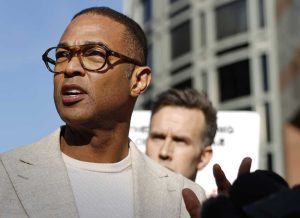
In the unfolding narrative of the Trump administration’s relationship with the Fourth Estate, the arrest of journalist Don Lemon marks a distinct and perilous turning point. While previous eras have seen the press managed, spun, or even physically intimidated, the Justice Department’s actions in Minnesota signal a novel legal strategy: the reconfiguration of standard journalistic practices—asking questions, observing events, and broadcasting footage—into federal conspiracy crimes. By invoking the Ku Klux Klan Act of 1871 to prosecute a reporter for covering a protest, Attorney General Pamela Jo Bondi has effectively challenged the historical boundary between observer and participant, precipitating a conflict between the Department of Justice and the federal judiciary.
The Incident at the Church
The controversy centers on a demonstration inside a church in the Twin Cities, where activists interrupted a service to protest Immigration and Customs Enforcement (ICE). Don Lemon, formerly of CNN, and independent journalist Georgia Fort were present to document the event. According to the government’s own indictment, Lemon interviewed the pastor, observed the congregation’s reaction, and broadcast live footage.
However, federal prosecutors constructed a narrative that criminalized these actions. They charged Lemon and Fort under 18 U.S.C. § 241, known as the Ku Klux Klan Act, and the Freedom of Access to Clinic Entrances (FACE) Act. The government alleged that by asking questions and standing in proximity to the pastor—at one point, the pastor’s hand brushed against Lemon—the journalists were not merely reporting but were active co-conspirators in an operation designed to intimidate congregants and deprive them of their constitutional rights.
The administration’s public response was immediate and visceral. The White House tweeted an image of Lemon alongside an emoji of chains, while the head of the DOJ’s Civil Rights Division retweeted a comparison of Lemon to a Klansman. Attorney General Bondi framed the arrest as accountability for a “coordinated attack on a place of worship”.
Judicial Resistance and Executive Persistence
The prosecution, however, faced immediate and extraordinary resistance from the federal bench in Minnesota. When the DOJ initially sought an arrest warrant, U.S. Magistrate Judge Douglas Miko refused to sign it. In a rare judicial rebuke, Judge Miko crossed out the charges on the warrant, writing “no probable cause” in the margin—a stark dismissal of the government’s legal theory.
Undeterred, the Justice Department attempted to circumvent the magistrate by appealing directly to Chief Judge Patrick Schiltz. This maneuver backfired. Judge Schiltz, a George W. Bush appointee, issued an opinion characterizing the U.S. Attorney’s request as “unheard of.” After surveying judges in the district, some with forty years of tenure, Schiltz noted that none could recall the government asking a district judge to review a magistrate’s denial of an arrest warrant. He concluded that Lemon and his producers had not engaged in any criminal behavior, noting that the worst accusation was that people had yelled things at church members.
Despite these “multiple judicial beatdowns,” prosecutors convened a grand jury—a one-sided proceeding where defense counsel is absent—and successfully secured an indictment. Lemon was subsequently arrested while covering the Grammy Awards in Los Angeles, and Georgia Fort livestreamed federal agents arriving at her home to arrest her in front of her children.
Historical Echoes and the Redefinition of Reporting
The legal theory underpinning the Lemon indictment represents a dramatic inversion of historical intent. The KKK Act was designed during Reconstruction to curb racial terror and state-sanctioned violence, yet it is now being deployed against journalists documenting political dissent. This repurposing of civil rights law to target the press has chilling historical resonance.
The current atmosphere recalls the Sedition Act of 1798, which criminalized speech critical of the government, and the Espionage Act prosecutions of the early 20th century. Furthermore, the physical targeting of reporters at protests evokes the 1970 death of Ruben Salazar, a prominent Latino journalist killed by a tear gas projectile fired by sheriff’s deputies while covering the Chicano Moratorium against the Vietnam War. Like Lemon, Salazar had been warned by authorities about the “impact” of his reporting on the community.
However, the specific mechanism of the Lemon prosecution—recasting “proximity” and “questioning” as “physical obstruction” and “force”—is a modern innovation. Prosecutors argued that Lemon’s reporting “promoted the message” of the protest, thereby making him a participant. As legal observers noted, if proximity and refusal to leave a public space immediately can be interpreted as physical obstruction under federal law, then “even the most routine protest coverage could be criminalized whenever authorities don’t like the underlying message”.
The Fracture of Public Reality
The prosecution of Don Lemon also highlights the fragmentation of American political reality. Media coverage of the arrest split sharply along ideological lines. Outlets on the left framed the arrest as an authoritarian crackdown on a journalist critical of the President. Centrist outlets focused on the “brutality” of the protests. Right-wing sources, meanwhile, implied that Lemon had committed a crime against Christianity by covering the disruption of a service, framing him as morally, if not legally, guilty.
Conclusion
The arrest of Don Lemon serves as a barometer for the state of civil liberties in this era. By ignoring the findings of federal judges and utilizing grand juries to bypass judicial oversight, the Justice Department has signaled a willingness to use the “full rigor” of federal statutes to police newsgathering. As with the prosecutions of political figures and the deportation of student protesters for their speech, the administration’s strategy relies on the “chilling effect”—the fear that asking a question or filming a scene could result in federal conspiracy charges. The Lemon case establishes a precedent where the act of witnessing political conflict is treated as legally indistinguishable from participating in it.