

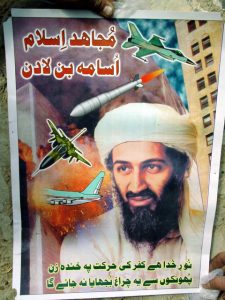
The “planes operation,” which culminated in the devastating events of September 11, 2001, was the most destructive international terrorist attack in modern history. Conceived as a grandiose scheme by the terrorist entrepreneur Khalid Sheikh Mohammed (KSM) in 1996, the operation initially envisioned hijacking ten commercial airliners to strike targets on both coasts. KSM sought to target the United States economy, specifically focusing on New York as the economic capital and California as an additional priority. Furthermore, KSM specifically pushed to destroy the World Trade Center towers because his nephew, Ramzi Yousef, had failed to bring them down during the 1993 garage bombing. Although Usama bin Ladin was initially skeptical of the plan’s massive scale and complexity, he eventually embraced the concept in late 1998 or early 1999. Bin Ladin and his military commander, Mohammed Atef, scaled the operation down to a more manageable size, selecting a finalized list of highly symbolic economic and political targets: the World Trade Center, the Pentagon, the White House, and the U.S. Capitol. The strategic logic of the operation went beyond merely inflicting mass casualties; Bin Ladin aimed to retaliate against the United States for its global “empire of bases” and to provoke a military counter-response that would draw U.S. forces into an exhausting, destabilizing Middle Eastern quagmire.
To execute this plan, al Qaeda spent nearly two years and between $400,000 and $500,000 preparing its operatives, utilizing ordinary financial transactions and wire transfers that easily bypassed U.S. detection systems. The recruitment and training of the tactical teams reflected a deliberate division of labor. Al Qaeda recruited four Western-educated, English-fluent students living in Hamburg, Germany—Mohamed Atta, Marwan al-Shehhi, Ziad Jarrah, and Ramzi Binalshibh—who possessed the technical and cultural familiarity required to operate undetected in the West. While Binalshibh was ultimately unable to obtain a U.S. visa due to immigration suspicions in Germany, the other three successfully entered the United States to undergo flight training. They were joined by Hani Hanjour, a Saudi who had previously obtained a commercial pilot’s license in Arizona and was designated by KSM as the plot’s most experienced pilot to attack the Pentagon.
To assist these pilots, Bin Ladin and Atef personally selected the “muscle hijackers” tasked with storming the cockpits and subduing passengers. The vast majority of these muscle hijackers (15 of the 19 total attackers) were young Saudi Arabians, chosen primarily because they comprised the largest portion of recruits in the Afghan training camps and could secure U.S. visas far more easily than Yemeni or other Arab volunteers. A twentieth candidate, Mohamed al Kahtani, was sent to round out the team for United Airlines Flight 93 but was turned away at Orlando International Airport in August 2001 by a suspicious immigration inspector. Despite facing last-minute strategic dissent from the Taliban leader Mullah Omar, who lacked the authority to stop al Qaeda’s external operations, Bin Ladin ordered the attack to proceed. By the third week of August, the final date was set, and the hijackers booked their tickets using coded language where “architecture” stood for the World Trade Center, “arts” for the Pentagon, “law” for the Capitol, and “politics” for the White House.
On the morning of Tuesday, September 11, 2001, the nineteen hijackers boarded four transcontinental flights, turning the heavily fueled aircraft into guided missiles. At 8:46:40 AM, American Airlines Flight 11, piloted by Mohamed Atta, crashed directly into the North Tower of the World Trade Center, instantly killing everyone on board and trapping hundreds on the upper floors. Minutes later, at 9:03:11 AM, United Airlines Flight 175 struck the South Tower. Meanwhile, President George W. Bush was visiting Emma E. Booker Elementary School in Sarasota, Florida, where his Chief of Staff, Andrew Card, whispered the news of the second strike during a reading lesson, prompting the president to remain in the classroom for five additional minutes to avoid spreading panic. As the crisis intensified, American Airlines Flight 77 advanced its throttles to maximum power and dove into the Pentagon at 9:37:46 AM, inflicting catastrophic damage on the military headquarters. The final aircraft, United Airlines Flight 93, took off late from Newark with only thirty-seven passengers on board. After learning of the World Trade Center attacks via airphone calls, the passengers voted to launch a counterattack, storming the cockpit and forcing the hijackers to crash the plane into an empty field in Shanksville, Pennsylvania, at 10:03:11 AM. In doing so, these unarmed, heroic citizens sacrificed their lives to protect either the U.S. Capitol or the White House from destruction.
The terrible swiftness of the attacks exposed severe systemic failures within the Federal Aviation Administration (FAA) and the North American Aerospace Defense Command (NORAD). Civil aviation rules operated on the outdated, decades-old “Common Strategy” which taught flight crews to accommodate hijacker demands and assume that “suicide wasn’t in the game plan”. Furthermore, the military’s air defense protocols assumed that threats would originate outside the United States, leaving NORAD with only seven alert sites nationwide and no prepared domestic shootdown procedures. On the morning of September 11, communications broke down completely; for example, the FAA mistakenly informed air defenders at 9:21 AM that Flight 11 was still airborne and heading south toward Washington, prompting military jets to chase a phantom aircraft while Flight 77 approached the Pentagon virtually unmonitored. Ultimately, the planes operation claimed nearly three thousand civilian lives, shattering the nation’s sense of geographical invulnerability and launching a global “war on terror” that profoundly reshaped the landscape of American executive power, domestic surveillance, and foreign intervention.