

In the immediate aftermath of the September 11, 2001 terrorist attacks, the United States government dramatically pivoted its national security apparatus to wage an unconventional, global “war on terror”. Desperate to gather actionable intelligence and prevent subsequent attacks, the George W. Bush administration actively embraced what Vice President Dick Cheney famously termed “the dark side”. Among the most legally controversial and morally fraught elements of this covert campaign was the Central Intelligence Agency’s (CIA) systematic execution of “extraordinary renditions”.
This practice involved the extrajudicial kidnapping of suspected terrorists and al-Qaeda members and their subsequent transfer to the custody of foreign security services in countries with well-documented records of brutal human rights abuses. The explicit objective of this pipeline was to outsource the interrogation and physical torture of captives to foreign proxies, thereby shielding American personnel from direct domestic legal culpability. As a CIA official bluntly summarized the system’s clinical cynicism: “We don’t kick the shit out of them. We send them to other countries so they can kick the shit out of them”.
The Treaty Framework and the Legal Violations of Rendition
The practice of extraordinary rendition was designed as a deliberate maneuver to circumvent strict domestic and international legal barriers. Under both United States statutory law and binding international treaties, torture is unequivocally prohibited. Specifically, Article 3 of the United Nations Convention Against Torture—to which the United States is a formal signatory—declares without exception that no state party shall expel, return, or extradite any individual to another nation where there are substantial grounds for believing they would be in danger of being subjected to torture.
By systematically kidnapping individuals and flying them to regimes notorious for state-sanctioned violence—most notably Egypt, Jordan, Morocco, Syria, and Uzbekistan—the extraordinary rendition program operated in flagrant, direct violation of these international treaty commitments. Suspects were swept up globally and placed into a highly secretive aviation pipeline. Using a private, covert air fleet, the CIA transported more than a hundred, and potentially thousands, of detainees to these foreign countries. Once in foreign custody, these prisoners were subjected to horrific physical abuses away from any semblance of judicial oversight or Red Cross access. As one prominent victim of the rendition system remarked after his eventual release: “They are outsourcing torture because they know it is illegal”.
The Executive Authorization of March 13, 2002
To insulate the executive branch and CIA operatives from potential prosecution under federal laws—such as the War Crimes Act of 1996—the Bush administration turned to the Justice Department’s Office of Legal Counsel (OLC) to construct a defensive legal shield. On March 13, 2002, the OLC delivered a definitive, highly classified memorandum that officially sanctioned and upheld the legality of extraordinary renditions. The memorandum concluded that, notwithstanding explicit statutory prohibitions and binding treaty requirements, “the President has plenary constitutional authority, as the Commander in Chief, to transfer such individuals who are captured and held outside the United States to the control of another country”.
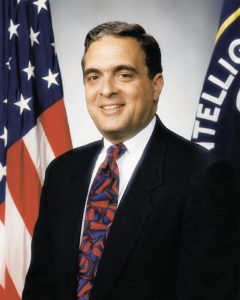
This legal opinion provided the administration with the absolute internal reassurance it desired. Believing themselves protected by this expansive doctrine of executive supremacy, senior officials proceeded to authorize massive, off-the-books operations. President Bush gave a general, systematic sanction to extraordinary renditions and enhanced interrogation techniques. Although top national security figures, including CIA Director George Tenet and Vice President Cheney, occasionally shielded the President from the most graphic, granular details of the abuses, the entire program ultimately rested upon this unified foundation of executive authorization.
Human Collateral and the Erosion of Accountability
The systemic outsourcing of torture inevitably produced devastating human and institutional failures. Lacking due process, standard rules of evidence, or judicial verification, the CIA’s rendition dragnet swept up numerous innocent individuals based on faulty or highly compromised intelligence. Some detainees were subjected to months of brutal torture simply because of false confessions that had been previously extracted from other tortured captives. These individuals were ultimately released without ever being formally charged with a crime, leaving behind a legacy of broken lives and unredressed grievances.
Beyond the immediate human toll, the extraordinary rendition program severely compromised the ethical foundations of American foreign policy. By institutionalizing a global network of secret abductions and outsourced violence, the program directly subverted the rule of law and fundamentally contradicted the core tenet of American exceptionalism—the historic belief that the United States must adhere to a higher ethical and legal standard than its adversaries.
The Post-Presidency Reckoning
The expansive legal theories constructed to justify extraordinary renditions ultimately failed to withstand serious judicial and historical scrutiny. As the Bush presidency was winding down, the Office of Legal Counsel was forced to systematically dismantle its own wartime jurisprudence. On January 15, 2009, the OLC issued a formal memorandum for the files that explicitly rejected and withdrew the landmark March 13, 2002 memorandum, along with eight other highly controversial legal opinions issued between 2001 and 2003.
The OLC’s final review specifically took issue with the assertion that “the power to dispose of the liberty of individuals captured and brought under the control of the United States armed forces during military operations remains in the hands of the President alone”. Although President Barack Obama’s subsequent administration officially ended the use of “dark” interrogation methods, closed the CIA’s black sites, and released the infamous “torture memos” to the public, the administration ultimately refused to prosecute the high-level officials who designed and authorized the program, choosing a policy of “reflection, not retribution”. Ultimately, the legacy of the March 13, 2002 OLC memorandum remains a dark, permanent warning in American history, illustrating how easily constitutional checks, international treaties, and basic human rights can be subverted under the banner of executive wartime necessity.