

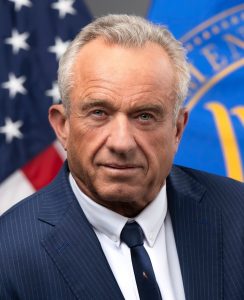
The Mass Termination and Reconstitution of ACIP
The intersection of executive authority and administrative law becomes highly contentious when political leadership alters the composition of independent scientific bodies to drive ideological policy shifts. Under Health and Human Services (HHS) Secretary Robert F. Kennedy Jr., all 17 formerly seated career members of the Centers for Disease Control and Prevention’s (CDC) Advisory Committee on Immunization Practices (ACIP) were terminated en masse. These career experts, who had undergone rigorous vetting to ensure scientific competency and prevent financial conflicts of interest, were replaced by a smaller panel of appointees, many of whom held non-consensus or anti-vaccine views. Led by figures such as panel chair Robert Malone and co-chair Martin Kulldorff, the reconstituted advisory board moved swiftly to challenge established national immunization schedules and re-examine long-standing vaccine recommendations without relying on peer-reviewed scientific consensus.
Administrative Procedure and Judicial Challenges
This administrative overhaul enabled sweeping shifts in federal immunization policy, triggering immediate legal resistance from major medical organizations. The American Academy of Pediatrics, alongside a broader coalition of physicians and public health groups, filed federal lawsuits against Secretary Kennedy. The plaintiffs alleged that HHS violated federal law and the Administrative Procedure Act (APA) by unilaterally altering national COVID-19 vaccine recommendations and children’s immunization guidance without supporting scientific evidence. Under established administrative law principles, agencies are legally required to engage in reasoned decision-making, adhere to statutory procedures, and base policy changes on empirical evidence rather than ideological directives. Federal judicial reviews of these administrative actions underscored that the executive branch lacks statutory authority to unilaterally dismantle agency structures or ignore procedural mandates established by Congress.
Legal and Public Health Consequences
The legal and public health consequences of replacing career scientific advisory panels with politically aligned appointees extend far beyond specific regulatory disputes. By replacing independent experts with non-consensus appointees, the executive branch exposes its regulatory determinations to judicial invalidation under the APA for being arbitrary, capricious, and procedurally defective. From a public health perspective, the politicization of independent scientific advisory bodies dismantles decades of institutional expertise, fosters widespread public confusion, and degrades compliance with evidence-based medical standards. Furthermore, undermining the integrity of federal regulatory approvals weakens global trust in U.S. public health institutions, threatening international immunization initiatives and exposing populations both domestically and worldwide to preventable disease outbreaks.