

The constitutional mandate of the Department of Justice (DOJ) to investigate foreign interference in American elections relies fundamentally on the structural independence of its investigators and Special Counsel teams. However, when investigative leads implicate top executive leadership, the administrative friction between career intelligence officers and political appointees at Main Justice can be weaponized to suppress sensitive inquiries. The handling of a high-stakes counterintelligence probe into alleged illicit foreign campaign contributions during the 2016 presidential election illustrates how political appointee oversight can systematically constrain Special Counsel inquiries, exposing national security governance to foreign financial influence.
The Evidentiary Predicate: The $10 Million Cairo Cash Withdrawal
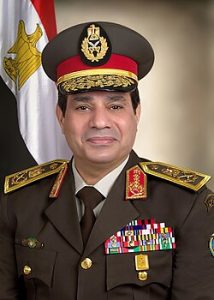
During the final weeks of the 2016 United States presidential election, intelligence agencies received information from a credible informant alleging that Egyptian President Abdel Fattah el-Sisi intended to funnel $10 million to Donald Trump’s campaign. At that critical juncture in the race, the Trump campaign was facing severe financial strain and struggling to cover promised advertising buys. Suddenly, the candidate injected $10 million of his own capital into the campaign—a sudden self-funding contribution that matched both the timeline and exact dollar figure indicated by U.S. intelligence.
Subsequent investigative work by Special Counsel Robert Mueller’s team uncovered a striking physical evidentiary predicate confirming the financial transaction in Egypt. Investigators verified that an account controlled by the Egyptian secret service at a National Bank of Egypt branch near the Cairo airport had executed a $10 million cash withdrawal. The withdrawal consisted entirely of $100 bills packed into two heavy bags weighing approximately 200 pounds, exhausting nearly the entirety of the bank’s available U.S. currency reserves. Despite this extraordinary physical corroboration matching the intelligence report, investigators encountered immediate internal hesitancy to examine the candidate’s personal banking records directly.
Institutional Obstruction and Appointee Suppression
As the inquiry moved from the Special Counsel’s office back into the broader Justice Department, political appointees at Main Justice systematically delayed necessary investigative steps. Career line prosecutors and federal agents sought to issue subpoenas for bank records and pursue financial tracing to determine whether the Cairo cash had flowed into American political coffers. However, political leadership continuously questioned whether a sufficient “predicate” existed to justify subpoenaing financial records involving a sitting president.
By withholding authorization for subpoenas and imposing administrative friction, supervisory political appointees allowed the time-sensitive counterintelligence probe to languish inside the Department. This internal suppression reached a chilling climax during a high-level briefing with an incoming political appointee serving as Acting U.S. Attorney for the District of Columbia. Upon being briefed on the $10 million Egyptian secret service withdrawal and the accompanying intelligence, the appointee pointedly asked career investigators, “Who outside this room knows about this investigation?”. Shortly thereafter, the Justice Department allowed the investigation to die a quiet administrative death without resolving the central national security question.
Systemic Vulnerabilities in National Security Governance
The suppression of the Egyptian contribution probe highlights a profound structural flaw in the architecture of federal law enforcement: Special Counsel inquiries and career counterintelligence units remain vulnerable to gatekeeping by political appointees whose primary allegiance may lie with the executive branch. When Main Justice leadership refuses to authorize bank subpoenas or restricts investigative scope under the guise of discretionary oversight, it creates an impenetrable shield around executive leadership.
The broader governance consequences (“So What?”) are severe:
- Neutered Counterintelligence Protection: By shutting down financial tracing before bank records can be verified, political appointees signal to foreign intelligence services that clandestine financial interventions in U.S. elections can be carried out with impunity if directed at favored political figures.
- Erosion of Equal Justice: The stark contrast between the aggressive prosecution of lower-level offenses and the deliberate stalling of foreign corruption leads involving executive figures undermines the foundational norm of equal justice under law.
- Foreign Leverage and Compromise: Allowing unvetted foreign financial transactions to remain unexamined leaves the presidency susceptible to covert foreign leverage, directly undermining national security and diplomatic independence in foreign policy decision-making.
Ultimately, the failure to fully investigate the Cairo airport cash withdrawal demonstrates how supervisory oversight within the Department of Justice can be exploited to neuter Special Counsel probes, leaving American democratic processes exposed to unvetted, illicit foreign financial influence.