

The Shadow of Crossfire Hurricane and Administrative Paralysis
The operational integrity of federal law enforcement depends on the capacity of career investigators to assess national security threats without fear of political reprisal. However, when law enforcement agencies undergo acute institutional trauma resulting from politically sensitive investigations, the resulting organizational scar tissue can induce a state of administrative paralysis. In the years preceding the January 6, 2021 attack on the United States Capitol, the Federal Bureau of Investigation (FBI) operated under the lingering shadow of previous high-profile political inquiries—most notably Operation Crossfire Hurricane, the counterintelligence investigation into Russian election interference and political campaign associates. The severe political backlash, public denigrations from executive leadership, high-level personnel firings, and relentless congressional scrutiny that followed Crossfire Hurricane generated a pervasive culture of risk aversion throughout the Bureau’s senior ranks. Internal law enforcement communications captured this systemic fear, vividly describing career personnel as operational captives who were forced into administrative hesitation while “stepping over the bodies of Crossfire Hurricane.”
Pre-January 6th Intelligence and the Failure of Preemptive Action
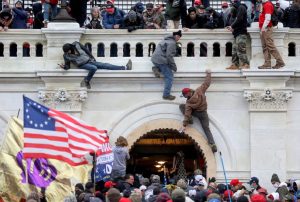
This institutional trauma manifested as a dangerous operational failure in the weeks leading up to the January 6 Capitol attack. Federal law enforcement and intelligence bodies received a mountain of explicit domestic terrorism warnings detailing armed groups logistically coordinating to disrupt the joint session of Congress. Intelligence streams from field offices, open-source monitoring, and private citizen tips identified specific plans by far-right militia groups, including the Proud Boys, Oath Keepers, and Three Percenters, to convert a political rally into a coordinated assault on federal infrastructure:
- Tactical and Logistics Intelligence: Intelligence reports, including a prominent Situational Information Report from the FBI’s Norfolk Field Office on January 5, 2021, alerted leadership that online threads were calling for “war” at the Capitol, featuring perimeter maps, calls to bring firearms, and discussions of establishing armed quick reaction forces across the Potomac River in Virginia.
- Targeting Democratic Infrastructure: Online communications across platforms such as [suspicious link removed] and Parler outlined explicit plans to “occupy federal buildings,” infiltrate tunnel systems beneath the Capitol complex, and target lawmakers to halt the Electoral College vote certification.
Despite the unambiguous nature of these pre-operational indicators, agency leadership repeatedly hesitated to deploy preemptive investigative measures or issue formal, high-level joint intelligence assessments. Rather than treating these indicators as actionable domestic terrorism threats requiring aggressive operational posture, federal leadership categorized much of the rhetoric as protected First Amendment speech or uncoordinated bravado, leaving line officers and Capitol defenders unprepared for the impending assault.
Executive Retaliation and the Mechanics of Self-Censorship
The disconnect between available threat intelligence and operational readiness was rooted in the psychology of agency self-censorship. During periods of intense political polarization, executive threats to fire agency directors, purge career leadership, or publicly delegitimize law enforcement generate an existential crisis for bureaucratic institutions. Fearing that proactive intelligence gathering against domestic political movements would be weaponized by political figures as evidence of partisan bias or “deep state” weaponization, agency leaders systematically raised the evidentiary bar required to initiate proactive domestic terrorism investigations.
This climate of administrative intimidation altered the risk calculations of senior officials:
- Prioritizing Institutional Preservation: Career leaders prioritized shielding their agencies from political controversy over taking assertive, anticipatory measures against politically aligned domestic extremists.
- Defensive Governance Norms: Fear of career destruction and executive retaliation led officials to default to narrow, reactive law enforcement models rather than robust counterterrorism frameworks.
- Bureaucratic Inertia: The perceived personal and political costs of raising alarms regarding domestic political violence created a chilling effect, stalling intelligence sharing across federal, state, and local jurisdictions.
Institutional Trauma and National Security Governance
When institutional trauma induces administrative paralysis within federal law enforcement agencies, the operational readiness and threat-response capabilities of the state are severely compromised. By allowing past partisan inquiries and fear of political retaliation to dictate the threshold for domestic threat mitigation, intelligence agencies create catastrophic blind spots in national security governance.
The institutional hesitation observed prior to January 6 demonstrates that fear of political reprisal can neuter the nation’s primary investigative bodies just as effectively as a lack of intelligence. When career law enforcement personnel become operational captives paralyzed by the specter of political career destruction, federal intelligence agencies lose their capacity to defend constitutional processes, leaving democratic institutions dangerously exposed to domestic political violence and insurrectionary threats.