

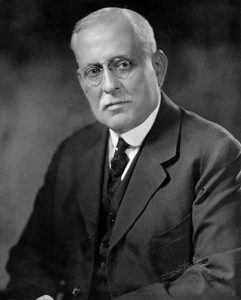
At the height of the 1920s boom, Samuel Insull was one of the most powerful and celebrated business leaders in the United States, sitting atop a $3 billion utility empire that provided approximately one-eighth of all the electric power in the nation. His complex network of companies, which included Commonwealth Edison, Peoples Gas, and Middle West Utilities, had succeeded in delivering cheap, democratized electricity to millions of small consumers across thirty-two states. However, Insull’s corporate structure relied heavily on a stacked pyramid of holding companies that hid a dangerous leverage ratio. This highly leveraged financial model collapsed into receivership in April 1932 during the Great Depression, leaving thousands of investors holding worthless paper and wiping out the savings of countless middle-class shareholders.
Amidst the resulting public outrage and the bare city coffers of Chicago, the newly elected Roosevelt administration made Insull a prime target, seeking to prosecute him to justify the economic and moral programs of the New Deal. As pressure mounted for a criminal trial, Insull was summarily removed from control of his companies and quietly fled to Europe, eventually choosing to seek refuge in Athens, Greece. Insull chose Athens specifically because Greece did not have an active extradition treaty with the United States, believing that any trial in America under the highly charged, hostile political atmosphere of the New Deal would be political and inherently unfair.
Two Tons of Photostats: The Federal Mail Fraud Case
While Insull resided in Greece, federal prosecutors in Chicago worked relentlessly to build a massive criminal case against him. Utilizing the relatively new technology of the photostat, the Justice Department compiled a mountain of evidence that ultimately weighed more than two tons. The federal authorities sought to indict Insull for mail fraud, charging that he had utilized the U.S. postal system to distribute stock prospectuses containing fraudulent promises of profits to unsuspecting investors.
Simultaneously, the State Department launched an aggressive diplomatic campaign, heavily pressuring the Greek government to expel the fugitive utilities magnate and deliver him to American custody. The Greek government found itself in an agonizing political dilemma, torn between the intense demands of Washington and a domestic audience that did not want Greece to appear entirely under the American thumb. To prolong his stay, Insull’s legal and medical advisors successfully secured multiple delays and postponements by demonstrating that their client was in extremely poor health, suffering from severe diabetes. While papers in the United States sensationalized the story of Greek police guarding the invalid’s door, the American consulate kept a continuous, watchful eye on his apartment building from a balcony situated only a block away.
The Tramp Steamer Escape and the Congressional Dragnet
The diplomatic standoff reached a crisis point in March 1934. Under immense American pressure, the Greek government officially ordered Insull to leave the country within forty-eight hours. Although Insull managed to win a brief medical stay, he suddenly vanished on March 15, escaping his apartment through a back exit and successfully evading the Greek police. This escape triggered an immediate national embarrassment and a subsequent cabinet crisis in Athens.
Within days, reports emerged that the septuagenarian fugitive had boarded the Maiotis, a tramp steamer heading toward Egypt. The State Department acted with extraordinary speed to prevent Insull from finding another safe haven. They immediately petitioned Senate Majority Leader Joseph Robinson to introduce special emergency legislation that would empower U.S. agents to arrest and seize Insull in any foreign country where the United States exercised extraterritorial jurisdiction, including Egypt. The bill was rushed through Congress without debate and signed into law by President Roosevelt on March 23, 1934.
The Capture in Istanbul and the Voyage of the Exilona
While the Maiotis made its way across the Mediterranean, both the Greek authorities and American agents temporarily lost track of the vessel, prompting intense public speculation. In Alexandria, Egypt, excited crowds scanned the horizon for a glimpse of the tramp steamer, with the New York Times reporting that no individual had been so eagerly awaited since Mahatma Gandhi’s passage of the Suez Canal. Within a few days, Greek officials established wire contact with the vessel’s owners, and the Maiotis subsequently docked in Istanbul, Turkey, to pick up essential provisions, including potatoes, macaroni, and salad.
Capitalizing on this harbor stop, the State Department demanded that Turkish authorities immediately arrest the fugitive. Unlike the hesitant Greeks, the Turkish police complied instantly, arresting Insull, subjecting him to a mock trial, and officially handing him over to the United States. Insull was placed in U.S. State Department custody and boarded the ship Exilona to begin the long journey back to America.
During the transatlantic crossing, the aged utilities magnate commiserated with his State Department escort, arguing that everything he had done in Chicago was completely honest at the time and that the federal government was unfairly imposing retroactive moral and legal standards on past business decisions. He also revealed that his fellow target, Andrew Mellon, had written to him in deep sympathy.
The Climax: Prison, Trial, and the Verdict of Chicago
On May 8, 1934, Insull arrived in the United States and was immediately transferred to the Cook County Jail in Chicago, where a crowd of over three thousand people gathered to watch the fallen titan enter. Because of his failing health, he was housed in the prison’s hospital ward. In October 1934, Insull’s highly anticipated trial commenced in Chicago, lasting six grueling weeks.
The Justice Department’s prosecutors marshaled eighty-three witnesses to prove that Insull had criminally defrauded his shareholders through deceptive accounting and holding company structures. However, the case proved highly complex, and the prosecutors struggled to make the intricate, detailed issues of accounting and disclosure clear to the jury. On November 1, Insull took the witness stand and delivered a captivating defense. He recounted his classic American success story, starting as a poor British immigrant who rose to become Thomas Edison’s personal secretary, and eventually built the modern electrical grid of Chicago. He demonstrated to the jury that he had not profited from the crash, but had instead lost his entire personal fortune and had even poured his own money into the business to save it.
The jury was so thoroughly convinced of his innocence that they unanimously voted for acquittal, lingering in the jury room for two hours merely for form’s sake so they would not be accused of being bribed. Although Insull was subsequently acquitted in a Washington, D.C. embezzlement trial and had a third federal proceeding directed in his favor, his business empire was completely destroyed. He returned to Paris, where he lived thriftily and quietly until he suffered a fatal heart attack in a subway station in July 1938.