

The Infiltration of Force into Diplomacy: Operation Epic Fury
On February 28, 2026, the United States launched “Operation Epic Fury,” a massive, joint military assault with Israeli forces—codenamed “Operation Roaring Lion” by the Israeli Defense Forces—targeting Iranian military installations, government centers, and nuclear facilities. The strikes were initiated without explicit congressional war authorization, a formal declaration of war, or a prior armed attack against the United States. Most critically, this rapid military escalation commenced at a moment when U.S. and Iranian envoys were actively conducting indirect diplomatic negotiations in Oman regarding Iran’s nuclear program. The sudden transition from diplomatic bargaining to major air and naval combat operations highlighted an extreme exercise of unilateral presidential authority, bypassing domestic constitutional mechanisms and international legal norms.
Shifting Rationales and the Failure of Preemptive Justifications
In the immediate aftermath of the strikes, the executive branch presented a series of evolving and often contradictory legal and strategic rationales. Officials initially argued that Operation Epic Fury was required to eliminate “imminent threats” to American forces and allies, degrade Iran’s ballistic missile infrastructure, and prevent the development of a nuclear weapon. However, these justifications were swiftly expanded to include the securing of regional oil resources and explicit calls for the overthrow of the Iranian government. The assertion of an imminent national security emergency was directly challenged by international bodies; the International Atomic Energy Agency (IAEA) noted that there was no empirical evidence of an active, structured nuclear weapons program in Iran prior to the attack. Under customary international law and Article 51 of the UN Charter, self-defense requires demonstrating a threat that is instant, overwhelming, and leaves no choice of means and no moment for deliberation. Launching a broad military campaign while diplomatic channels in Oman remained open fundamentally fails this strict legal standard, transforming a claim of anticipatory self-defense into an unlawful act of aggression.
Subverting the War Powers Resolution and Article II Constraints
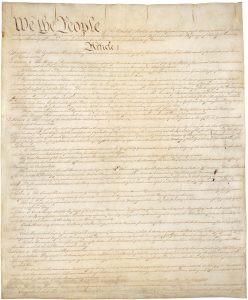
From a domestic constitutional perspective, the initiation of major combat operations against a sovereign state directly undermines the framework established by the Framers and reinforced by the War Powers Resolution of 1973. Under Article I, Section 8 of the U.S. Constitution, the power to declare war and allocate military funding is vested exclusively in Congress to ensure that decisions involving national blood and treasure reflect the broad consent of the populace. The War Powers Resolution explicitly mandates that executive command of armed forces into hostilities is lawful only pursuant to a declaration of war, specific statutory authorization, or a national emergency created by an attack upon the United States or its armed forces. To circumvent these statutory boundaries, presidential administrations have historically relied on Department of Justice Office of Legal Counsel (OLC) opinions asserting inherent Article II Commander-in-Chief power for “limited” military actions that do not rise to “war in the constitutional sense”. However, OLC precedents explicitly acknowledge that sustained engagements seeking regime change or involving high risks of prolonged hostilities constitute war, thereby legally requiring prior congressional approval. By unilaterally committing American forces to an expansive regional conflict without legislative authorization, the executive branch usurped congressional prerogative and stripped the legislative branch of its constitutional role.
Systemic Collateral and the Breakdown of the International Legal Order
The unilateral execution of Operation Epic Fury carried profound ramifications for the global treaty architecture governing the use of force. United Nations Secretary-General António Guterres, alongside over one hundred international law scholars, condemned the unprovoked strikes as a violation of Article 2(4) of the UN Charter, which strictly forbids the threat or use of force against the territorial integrity or political independence of any sovereign state. By asserting an unrestrained executive authority to initiate major combat operations at will, the administration set a precedent that erodes international humanitarian law, degrades the authority of the UN Security Council, and signals to foreign states that diplomatic agreements offer no shield against unilateral military intervention. Ultimately, the initiation of the 2026 Iran War demonstrates how unchecked presidential war-making dismantles constitutional checks and balances at home while destabilizing the foundational rules of global order abroad.