
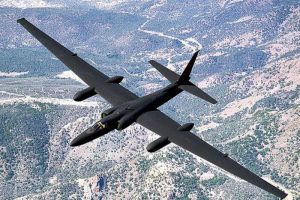
In the early years of the Cold War, the United States faced an acute deficit of reliable intelligence from within the closed society of the Soviet Union. To pierce this veil of secrecy, President Dwight D. Eisenhower signed a historic directive on November 24, 1954, authorizing the Central Intelligence Agency (CIA) and the Pentagon to split the $35 million cost to construct thirty high-altitude, long-range reconnaissance aircraft. Developed under the oversight of Richard Bissell, a key program officer who would become a central architect of early CIA covert strategy, the U-2 spy plane was designed to fly at unprecedented altitudes of up to 74,000 feet, far beyond the reach of contemporary Soviet interceptors and air defenses. From its inception, the program was shrouded in absolute secrecy, hidden not only from the public but from much of the federal government itself to preserve the delicate requirements of international sovereignty and plausible deniability.
The U-2 quickly proved to be an indispensable strategic asset, redefining the boundaries of aerial surveillance. In 1956, its overflights of the Middle East provided the Eisenhower administration with critical, early intelligence regarding the Suez Canal crisis, exposing clandestine French shipments of Mystere fighter jets to Israel and revealing the tripartite plot before hostilities erupted. Domestically, the U-2 played an even more vital role in dismantling the politically charged “missile gap” narrative. Throughout the late 1950s, Democrats and hawkish commentators repeatedly charged that Eisenhower’s fiscal discipline had allowed the Soviet Union to pull ahead in intercontinental ballistic missile (ICBM) production. However, high-resolution photographs captured by the U-2 over Soviet territory proved that the missile gap was a phantasm; the United States actually fielded substantially more ICBMs and strategic bombers than the Soviets had even produced. Because proving this superiority required publicly admitting that the U.S. was violating Soviet airspace, Eisenhower kept the U-2’s intelligence closely guarded, quietly resisting domestic pressure for military expansion.
The U-2’s aura of invulnerability shattered on May 1, 1960, on the eve of a highly anticipated peace summit in Paris between Eisenhower and Soviet Premier Nikita Khrushchev. Despite warnings that a flight during this sensitive diplomatic window carried immense risks, Eisenhower authorized a U-2 mission piloted by Francis Gary Powers. Powers took off from a secret CIA airfield near Peshawar, Pakistan, on a trajectory to overfly strategic Soviet installations. Deep inside Soviet territory, near Yekaterinburg, a Soviet SA-2 surface-to-air missile detonated near the aircraft, tearing off its wings and sending Powers tumbling to Earth. Powers was carrying a suicide pin coated with the deadly paralytic toxin saxitoxin, hidden inside a silver dollar—a custom gadget fabricated by Sidney Gottlieb and Fort Detrick scientists—but he chose not to use it. Believing the pilot and plane were entirely destroyed, the U.S. government released a fabricated cover story claiming the aircraft was merely a weather plane that had strayed off course over Turkey. Khrushchev subsequently blew up this deception in Washington’s face, parading Powers, the intact spy film, and the recovered wreckage before the Supreme Soviet. The ensuing diplomatic fallout completely shattered the Paris peace summit, destroyed hopes for a comprehensive nuclear test ban, and forced Eisenhower to publicly take responsibility for the espionage campaign.
The global reach of the U-2 program extended to other key strategic outposts, such as the Marine Air Control Squadron One (MACS-1) based at Atsugi, Japan, which served as a major operational base for the spy flights. It was here that a young Marine radar operator named Lee Harvey Oswald monitored the wind speeds of U-2 flights at 90,000 feet. Following Oswald’s subsequent defection to the Soviet Union, high-ranking KGB officers like Yuriy Nosenko insisted that Oswald possessed no valuable technical details that could have contributed to the May 1960 downing, as the Soviets had already tracked the plane’s speed and altitude for years.
Two years after the Powers incident, the U-2 program would face its ultimate historical test in the waters of the Caribbean. In mid-1962, U.S. intelligence reported a massive influx of Soviet military equipment, personnel, and SA-2 anti-aircraft missiles into Cuba. However, high-altitude U-2 overflights were temporarily restricted or suspended in September due to mounting fears that Soviet SA-2 batteries would shoot down a U-2, igniting a dangerous international crisis while delicate negotiations over Berlin were pending. Distrustful of the administration’s caution, CIA Director John McCone and congressional Republicans like Senator Kenneth Keating aggressively lobbied for direct overflights. On October 9, Kennedy approved a U-2 mission, which took advantage of clear weather on October 14 to photograph western Cuba. The six-minute flight captured 928 highly detailed photographs that provided the first conclusive visual proof of Soviet medium-range ballistic missile (MRBM) sites under construction at San Cristobal and intermediate-range (IRBM) pads at Guanajay. These photographs became the central intelligence foundation for the Executive Committee of the National Security Council (ExCom) as it navigated the hair-trigger standoff of the Cuban Missile Crisis. The U-2 program paid a tragic price during the climax of the crisis on October 27, 1962, when a U-2 spy plane was shot down by a Soviet SAM over Cuba, killing its pilot and nearly tipping the superpowers over the precipice into a thermonuclear war.
For modern historians, the U-2 Reconnaissance Program represents a foundational milestone in the rise of the surveillance state and the militarization of space. By transforming global warfare from a battle over geographic territory into a highly localized conflict centered on strategic points and targets, the U-2 established the operational blueprints for modern satellite and drone reconnaissance. It proved that in the nuclear age, the possession of precise, high-altitude photographic intelligence could serve as both a destabilizing catalyst for diplomatic crises and a vital tool to prevent catastrophic miscalculation between competing superpowers.
🛰️ I can synthesize a chronological timeline of the U-2 Reconnaissance Program’s major overflights, pilot missions, and geopolitical flashpoints.