

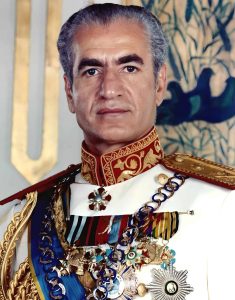
Following the dismantling of Iran’s fledgling democracy in the mid-twentieth century, which ushered in a period of prolonged political instability, members of oppositional parties and the press were systematically rounded up or driven underground. With the active and direct encouragement of the Central Intelligence Agency (CIA), the Shah of Iran unleashed a series of repressive secret police organizations, beginning with the Second Bureau and culminating in 1957 with the establishment of the infamous SAVAK (Sazman-e Ettela’at va Amniyat-e Keshvar). The United States formally supported the Shah’s brutally repressive regime for twenty-six years, during which American intelligence played a central role in helping to train the operatives of this new security service.
The Early Years: Systematized Terror and the Suppression of the Left
In the early years of the regime’s consolidation, the communist Tudeh party bore the primary brunt of this state-sponsored crackdown. With direct CIA assistance, the Shah’s U.S.-trained security forces successfully tracked down over four thousand party members between 1953 and 1957. Detainees swept up in this dragnet were routinely subjected to primitive and highly brutal torture methods, which included severe whippings, beatings, the smashing of chairs on their heads, and the physical breaking of their fingers.
Interrogators also utilized a particularly gruesome suspension technique known as the qapani, in which victims were hung from hooks. During this initial post-coup era, at least eleven individuals died directly under torture—mostly succumbing to brain hemorrhages—while dozens of others were executed as the state consolidated its absolute authority.
The 1970s: Feared Passivity and the Year of Liberalization
By the 1970s, SAVAK had established itself as a deeply feared domestic police agency, keeping the Iranian population in a state of passivity, fear, and political compliance. From 1971 to 1978, the agency was directly responsible for the deaths of somewhere between three hundred and four hundred Iranian dissidents, who were either killed outright or died while in detention. In June 1977, inspectors from the International Red Cross reported that they had counted 3,087 political prisoners held within the country.
While these numbers underscored a grim human rights record, some contemporary observers argued that certain accounts in the Western press had over-sensationalized the scale of the violence. Martin Woollacott, a Guardian journalist residing in Iran during the 1970s, recalled that the agency was highly effective at instilling compliance with a “minimum of violence,” suggesting that the popular depiction of SAVAK as uniquely bloodthirsty did not entirely hold up to close, objective scrutiny. Nevertheless, the psychological terror of the organization remained absolute.
In response to growing domestic and international pressure, the Shah initiated a marginal liberalization of his regime in early 1976. He appointed a number of technocrats to his cabinet, freed a portion of political prisoners, and declared that 1977 would officially be the “year of liberalization”. This policy shift was heavily advocated by one of the Shah’s closest advisors, General Hussein Fardust, a prominent critic of SAVAK who successfully convinced the monarch that the intense political repression of previous years had ultimately backfired. During this period, the CIA reported that the human rights environment was showing signs of improvement, noting that arrests had been largely restricted to government opponents who actively advocated for the violent overthrow of the regime or were suspected of terrorist actions.
The Calculus of “Blowback”
Despite these late-stage attempts at reform, the long history of state-sanctioned violence had already left an indelible mark on the Iranian consciousness. For the vast majority of the Iranian populace, the decades of brutal repression and the prominent U.S. role in training SAVAK were palpable, deeply enraging historical realities. This legacy of grievance ultimately served as the primary, central motivation for the popular attack on the United States Embassy in Tehran in 1979.
In stark contrast, the American public, which had been kept entirely in the dark regarding the United States’ decades-long sponsorship of the Shah’s security apparatus, viewed the television images of screaming mobs as an inexplicable and unprovoked eruption of hatred. The dramatic fallout of the revolution stands as a classic historical example of “blowback”—a term coined by the CIA to describe the hostile, unintended, and often volatile consequences of covert overseas operations that are kept secret from the domestic public.