

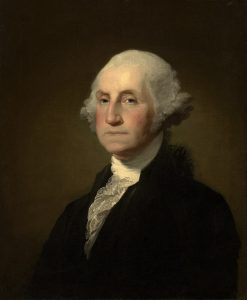
The historical memory of George Washington has been so thoroughly sanded down by veneration that he has become an impossibly stiff and inflexible figure, composed of too much marble to be quite human. Yet, to understand the current crisis of American democracy—marked by the rise of an imperial presidency, the erosion of institutional forbearance, and a violent refusal to accept the peaceful transfer of power—we must look closely at the man who first defined the American executive. Washington’s true genius did not lie in flawless military victories or soaring intellectual brilliance, but in his supreme, almost unnatural self-restraint. At a time when modern political leaders exploit division and actively dismantle democratic guardrails, Washington’s life serves as a masterclass in how to accumulate power precisely by proving one’s willingness to surrender it.
The Architecture of Character and Forbearance Unlike the highly educated founders who surrounded him—such as Thomas Jefferson, Alexander Hamilton, or John Adams—Washington never attended college, a deficit that left him with a lifelong sense of intellectual inadequacy. To compensate, he relentlessly constructed his own character. As a youth, he copied out 110 maxims from The Rules of Civility, training himself to project a cool, pragmatic, and highly controlled demeanor.
Beneath this carefully crafted facade, however, Washington possessed a volatile, colossal temper. Thomas Jefferson noted that Washington’s temper was “naturally high-toned,” and that if it ever broke its bonds, “he was most tremendous in wrath”. Washington’s greatness was rooted in his lifelong, desperate struggle to master these ungovernable passions. He deliberately chose to be a man of few words, recognizing that in politics, silence is a potent tool. As John Adams wryly observed, Washington possessed the “gift of silence” and understood that a leader exerts more power by withholding opinions than by loudly expressing them.
This psychological self-control translated directly into his political behavior. As the first president, Washington knew he was walking on “untrodden ground” and that every action he took would establish a precedent for the future. Rather than interpreting his executive authority as absolute, he exercised profound institutional forbearance. He utilized his veto power only twice in eight years, refusing to encroach on the domain of Congress. Unlike modern executives who demand absolute loyalty and subservient courtiers, Washington surrounded himself with brilliant, headstrong rivals like Hamilton and Jefferson, creating a culture where he could “deliberate maturely” before executing decisions promptly.
The Cincinnatus Ideal and the Surrender of Power The greatest threat to a newborn republic is the military dictator—the demagogue who leverages popularity and military might to establish a tyranny. Alexander Hamilton warned in 1792 of the specific danger of a man “unprincipled in private life… bold in his temper… despotic in his ordinary demeanour” who would flatter the zealots of the day to “ride the storm and direct the whirlwind”.
Washington was the antithesis of this authoritarian archetype. His most revolutionary act was his voluntary surrender of power. After eight and a half grueling years commanding the Continental Army, Washington stood alone at the pinnacle of power. Throughout history, victorious generals routinely parlayed their military fame into political dictatorships. Instead, Washington resigned his military commission in 1783 and returned to his farm, embodying the Roman ideal of Cincinnatus. King George III, utterly astonished by this selfless act, remarked that if Washington truly retired, “he will be the greatest man in the world”.
This commitment to the peaceful transfer of power is the absolute heartbeat of the American Republic. When Washington later accepted the presidency—a job he dreaded so deeply he compared his journey to New York to a “culprit who is going to the place of his execution”—he again voluntarily stepped down after two terms. This established an unwritten norm of presidential term limits that held firm until 1940, protecting the nation from hereditary monarchies and lifelong presidencies. When modern politicians attempt to overturn election results or joke about serving a third term, they are directly attacking the foundational precedent that Washington sacrificed his own ambitions to build.
The Warning Against Hyperpartisanship As he prepared to leave office, Washington delivered his Farewell Address, a document that reads today like a terrifyingly accurate prophecy. Sickened by the rise of early political factions and the toxic press, Washington warned his fellow citizens against the poison of hyperpartisanship. He urged Americans to remember that the “name of AMERICAN… must always exalt the just pride of patriotism, more than any appellation derived from local discriminations”.
Washington recognized that intense political tribalism would ultimately lead to “riot and insurrection” and leave the nation vulnerable to foreign interference. He feared that a populist demagogue might eventually exploit the weakness of a divided government to establish a dictatorship. In our current era of extreme polarization—where algorithms amplify suspicion, foreign entities interfere in elections, and a partisan mob was summoned to violently storm the Capitol on January 6th—Washington’s warnings have materialized into our daily reality.
The Paradox of Slavery and National Memory To truly apply historical perspective to the present, we cannot simply mythologize the founders; we must confront their profound contradictions. Today, as authoritarian movements attempt to erase uncomfortable truths from classrooms and rewrite history through initiatives like the 1776 Commission, Washington’s record on slavery demands honest scrutiny.
Despite fighting a war for human liberty, Washington’s wealth and status were built entirely on the forced labor of enslaved Black Americans. As a slave master, he could be exceptionally harsh, extracting labor through the threat of violence and breaking up families when he deemed it economically necessary. During his presidency, he secretly utilized the Fugitive Slave Act to hunt down runaways from Mount Vernon, including his talented chef Hercules and a woman named Ona Judge. He expressly ordered his agents to capture them quietly to avoid public embarrassment in the northern press.
Yet, unlike many of his Southern contemporaries, Washington’s conscience was deeply troubled by the hypocrisy of the American experiment. The fatigue of wringing profits from an enslaved workforce, combined with his exposure to Revolutionary ideals, caused him to privately detest the institution of slavery. By the end of his life, he devised plans to rent out his farms to emancipate his slaves, noting that it was an “imperious necessity” to liberate a species of property he held “very repugnantly to my own feelings”.
Conclusion George Washington was a man of intense contradictions: a slaveholder who envisioned emancipation, an aristocrat who birthed a republic, and an ambitious man who achieved ultimate power by consistently giving it away. His legacy demonstrates that democracy does not survive on autopilot. It relies entirely on the unwritten norms of institutional forbearance, the restraint of executive power, and leaders who prioritize the stability of the republic over their own political survival. As America navigates a moment of profound democratic vulnerability, Washington’s life serves as a stark reminder that the republic was designed to survive only if its leaders possess the character to uphold it.