

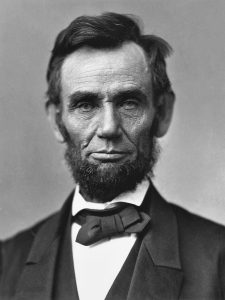
To understand the profound structural tensions of the modern American presidency—the limitless expansion of executive power during national emergencies, the clash between civil liberties and national security, the intense management of public opinion, and the agonizingly slow evolution of racial justice—one must look past the marble monuments to the reality of the sixteenth president. Abraham Lincoln is universally venerated as the Savior of the Union and the Great Emancipator, yet the historical Lincoln was far more complex than the mythological demigod. He was a masterful, highly calculating politician who aggressively expanded the powers of his office and navigated extreme racial and political polarization by elevating pragmatism over ideological purity.
The Assertion of Executive Authority and “One War at a Time” When Lincoln took office in March 1861, he inherited a disintegrating republic and a crippled federal government. At the time, his leadership qualities were largely unknown, leading ambitious members of his own cabinet to attempt to usurp his authority. On April 1, 1861, Secretary of State William Seward sent Lincoln a memorandum proposing a “foreign war panacea”. Seward brazenly suggested that the administration lacked a domestic or foreign policy and advised Lincoln to deliberately provoke a war with Spain and France in order to reunite the fractured North and South against a common enemy.
Where a weaker executive might have succumbed to an experienced statesman’s maneuvering, Lincoln instantly established his dominance. He drafted a courteous but curt reply rejecting the scheme, informing Seward that if a policy needed to be directed, “I must do it”. Lincoln instituted a pragmatic foreign policy doctrine that he strictly adhered to throughout the Civil War: “One War at a Time”. He recognized that the republic could not survive a simultaneous conflict with a European superpower, maintaining this disciplined restraint even when the British Empire appeared to be on the verge of recognizing the Confederacy.
The Commander-in-Chief and Civil Liberties As the modern public debates the extent to which a president can bypass Congress or the courts in the name of “national security,” Lincoln’s wartime actions provide the ultimate historical precedent. To keep the government from collapsing, Lincoln stretched the executive war powers of the Constitution to unprecedented limits.
Facing an armed insurrection not only in the South but among Southern sympathizers in the North, Lincoln unilaterally suspended the writ of habeas corpus, allowing the government to imprison its critics without formal charges and without trial. When Chief Justice Roger Taney issued an opinion in Ex parte Merryman demanding the release of an imprisoned civilian, Lincoln simply ignored the Chief Justice’s order, demonstrating that a president in a time of supreme crisis could and would defy the Supreme Court to preserve the state. While Lincoln firmly believed that he had to temporarily violate a part of the Constitution in order to save the whole, his actions proved that the American executive possesses terrifying, almost dictatorial authority when acting under the mantle of Commander-in-Chief.
The Pragmatic Emancipator and the Reality of Race Perhaps the most misunderstood aspect of Lincoln’s legacy, and the most relevant to today’s ongoing struggles with systemic racism, is his record on emancipation and racial equality. Lincoln was not an abolitionist crusader who launched the Civil War to free the slaves; his primary, overriding obsession was the preservation of the Union.
Prior to his presidency, Lincoln had openly catered to the virulent racism of his white electorate. During the 1858 debates with Stephen A. Douglas, he explicitly stated that he was not in favor of “bringing about in any way the social and political equality of the black and white races,” nor of making them voters or jurors. Furthermore, for much of his early presidency, Lincoln actively advocated for the “colonization” or deportation of Black Americans. In August 1862, he summoned a delegation of free Black leaders to the White House and bluntly told them that the presence of Black people was a suffering to whites, just as slavery was a suffering to Blacks. “It is better for us both, therefore, to be separated,” he declared, proposing they leave the country they had helped build to settle in Central America.
When Lincoln finally issued the Emancipation Proclamation, it was not initially a humanitarian decree, but a calculated “military necessity”. He famously explained his pragmatic approach in a public letter to the impatient journalist Horace Greeley in August 1862: “My paramount object in this struggle is to save the Union, and is not either to save or to destroy slavery. If I could save the Union without freeing any slave I would do it, and if I could save it by freeing all the slaves I would do it”. By issuing the Proclamation under his authority as Commander-in-Chief, Lincoln stripped the Confederacy of its labor force and permitted Black men to join the Union army, effectively playing what he called his “last trump card” to win the war.
As the great abolitionist Frederick Douglass later observed in a brilliant, unsparing eulogy, Lincoln “was preeminently the white man’s president,” who was “ready and willing at any time during the first years of his administration to deny, postpone, and sacrifice the rights of humanity in the colored people to promote the welfare of the white people of this country”.
The Master of Public Opinion Lincoln also provides a masterclass in how a president navigates a divided electorate. Unlike modern leaders who retreat into echo chambers, Lincoln relied on what he called “public-opinion baths”. He left his doors open to an exhausting stream of ordinary citizens, office seekers, and petitioners, recognizing that isolating himself in the White House would sever his connection to the masses who elected him. He largely ignored the toxic, hyper-partisan press of his day, refusing to be provoked by relentless newspaper attacks.
Instead, he spoke directly to the public through masterfully timed letters and speeches. At Gettysburg, he elevated the bloody, grinding war from a mere constitutional dispute into a sacred struggle to prove to the world that “popular government is not an absurdity”. He conceptually redefined the United States, promising that the war would deliver a “new birth of freedom” that finally aligned the nation with the egalitarian promises of the Declaration of Independence.
Evolution and Forbearance The true greatness of Abraham Lincoln lies in his capacity to evolve and his absolute commitment to democratic elections. By the end of his life, his views on race had significantly shifted. Moved by the valor of Black soldiers and the intellect of men like Frederick Douglass, Lincoln abandoned colonization and gave his final public speech advocating for partial Black enfranchisement—a radical stance that ultimately cost him his life.
Moreover, even when he believed he would lose the 1864 election to a candidate who would negotiate a peace by preserving slavery, Lincoln refused to cancel the election or retract the Emancipation Proclamation. He signed a blind memorandum pledging to cooperate with his successor to save the Union, proving his ultimate allegiance was to the democratic process, not his own grip on power.
Conclusion Abraham Lincoln’s presidency demonstrates that national salvation often requires ruthless pragmatism, the willingness to stretch executive power to its absolute limits, and the patience to wait for the public mind to ripen. He was a deeply complex leader who reflected the prejudices of his era but possessed the rare capacity to outgrow them. For modern Americans navigating intense polarization, institutional failure, and battles over civil rights, Lincoln stands as a reminder that the republic is preserved not by flawless saints, but by leaders who possess the moral flexibility to adapt, the political genius to manage competing factions, and the iron will to ensure that government of the people, by the people, for the people shall not perish from the earth.