

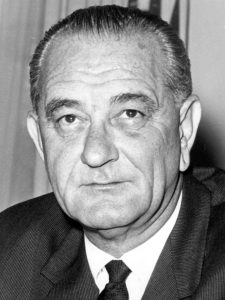
To understand the defining fault lines of contemporary American domestic and foreign policy—the expansion of federal safety-net programs, the enforcement of voting rights and civil rights, the enduring political realignment of the American South, the catastrophic dangers of executive secrecy, and the erosion of public trust in government institutions—one must examine the tumultuous presidency of Lyndon Baines Johnson. As the thirty-sixth chief executive, Johnson was a figure of titanic contradictions. He was a legislative genius of boundless ambition and profound personal insecurities, a crude political dealmaker who authored the most sweeping civil rights and anti-poverty legislation since the New Deal, and an ardent reformer whose presidency was ultimately devoured by an unshakeable, undeclared war in Southeast Asia.
The Master of the Senate and the Accidental Succession
Born into hardscrabble poverty in the dry Hill Country of Texas, Johnson developed a lifelong empathy for the underprivileged alongside an insatiable hunger for political power. Rising through the New Deal administration as a protégé of Franklin D. Roosevelt, Johnson won election to the House of Representatives and later the U.S. Senate, where he eventually became the youngest and most formidable Senate Majority Leader in history. In the Senate, Johnson perfected the “LBJ Treatment”—a legendary, coercive style of personal persuasion in which he used his towering six-foot-four frame, intense eye contact, and relentless arm-twisting to corner colleagues and force legislative consensus.
After reluctantly accepting the vice presidency under John F. Kennedy to balance the 1960 Democratic ticket, Johnson spent nearly three years isolated and underutilized in the shadow of the New Frontier. That twilight ended abruptly on November 22, 1963, when Kennedy was assassinated in Dallas. Sworn in aboard Air Force One beside a grief-stricken Jacqueline Kennedy, Johnson grasped that his legitimacy depended on projecting absolute national continuity.
Addressing a joint session of Congress five days later, Johnson delivered a moving address that transformed Kennedy’s memory into a legislative engine. Invoking JFK’s inaugural command “Let us begin,” Johnson declared, “Let us continue,” urging lawmakers to honor the fallen president by passing the stalled civil rights and tax reduction bills. By weaponizing national grief, Johnson broke a decades-old legislative deadlock in Washington.
The Great Society and the Transformation of Civil Rights
Following a landslide victory over conservative Republican Barry Goldwater in 1864—a campaign in which he won 61 percent of the popular vote—Johnson possessed an unprecedented mandate and massive Democratic majorities in Congress. He mobilized these resources to launch what he termed the “Great Society,” an ambitious domestic vision aimed at achieving an end to poverty and racial injustice.
Over an extraordinary three-year burst of legislative activity, Johnson pushed through groundbreaking reforms that fundamentally remade American governance. His administration established Medicare and Medicaid to guarantee health coverage for the elderly and low-income citizens, fulfilling a dream deferred since Harry Truman. He created Head Start, passed the Elementary and Secondary Education Act, enacted the Higher Education Act, created the Department of Housing and Urban Development, and launched the War on Poverty through the Economic Opportunity Act.
Concurrently, Johnson engineered a constitutional revolution in civil rights. Overcoming a 54-day Southern filibuster in the Senate, he signed the landmark Civil Rights Act of 1964, outlawing racial segregation in public accommodations and employment. When violence erupted against peaceful voting rights marchers in Selma, Alabama, in 1965, Johnson delivered a historic televised address to a joint session of Congress. In a moment of electrifying moral leadership, the Southern president adopted the anthem of the civil rights movement, declaring, “We shall overcome”. Months later, he signed the Voting Rights Act of 1965, placing federal registrars in the South to eliminate literacy tests and disenfranchisement.
Yet, Johnson understood the deep political costs of these moral victories. Upon signing the Civil Rights Act, he prophetically told aides that Democrats had likely “delivered the South to the Republican Party for a long time to come”. The passage of these laws initiated a seismic, multi-decade political realignment, driving Southern white conservatives out of the Democratic Party and laying the groundwork for the modern conservative coalition, even as it enfranchised millions of Black voters.
The Gulf of Tonkin, “Guns and Butter,” and the Credibility Gap
While Johnson dreamed of building a Great Society at home, his presidency was steadily devoured by foreign conflict. Bound to the Cold War doctrine of containment and haunted by the political fallout Harry Truman suffered after the “loss of China” to communism in 1949, Johnson was terrified of being remembered as the president who allowed Southeast Asia to fall.
In August 1964, following reported skirmishes between North Vietnamese torpedo boats and U.S. destroyers in the Gulf of Tonkin, Johnson secured congressional passage of the Gulf of Tonkin Resolution. Passed with virtually no opposition, the resolution functioned as a “blank check,” authorizing the president to take all necessary measures to repel armed attacks without seeking a formal declaration of war.
By early 1965, facing the imminent collapse of the South Vietnamese government, Johnson authorized Operation Rolling Thunder—a sustained bombing campaign against North Vietnam—and committed the first U.S. ground combat troops to Asia. Over the next three years, Johnson dramatically Americanized the war, expanding the troop presence from 23,000 advisers to over 500,000 soldiers.
Determined to prevent a bitter congressional debate over Vietnam that might derail funding for his beloved Great Society programs, Johnson chose a disastrous path of secrecy and incrementalism. He refused to call up military reserves, failed to prepare the public for a prolonged conflict, and tried to pay for both “guns and butter” without requesting necessary tax increases. This pattern of misleading statements, official optimism, and hidden escalations gave birth to the “Credibility Gap”—a profound disconnect between official White House press reports and the grim realities on the ground. As news broadcasts brought graphic combat footage into American living rooms, public trust in the executive branch shattered.
Tet 1968, the Fracturing of the Republic, and Voluntary Abdication
The crisis reached its breaking point in early 1968. During the Vietnamese Lunar New Year, Communist forces launched the massive Tet Offensive, attacking major cities, provincial capitals, and even the U.S. Embassy in Saigon. Although U.S. forces repelled the attacks militarily, the sheer scope of the offensive exposed official claims of impending victory as an illusion, triggering a decisive shift in public opinion against the war.
Simultaneously, the domestic landscape was fracturing. Massive anti-war protests engulfed college campuses, and race riots burned through dozens of American cities following years of urban frustration. Facing a bitter primary challenge from anti-war Democratic Senators Eugene McCarthy and Robert F. Kennedy, an exhausted, sick, and deeply depressed Johnson recognized that he had become a symbol of national division.
On March 31, 1968, President Johnson delivered a stunning prime-time address to the nation. He announced a unilateral halt to bombing over most of North Vietnam to invite peace negotiations. Then, in a closing statement that shocked the world, Johnson declared: “I shall not seek, and I will not accept, the nomination of my party for another term as your president”.
Conclusion
Lyndon B. Johnson retired to his Texas ranch in January 1969 and died four years later, just one day before the signing of the Paris Peace Accords that ended direct U.S. military involvement in Vietnam. Historians widely view him as a “Flawed Giant” whose presidency produced both monumental legislative achievements and an unimaginable foreign tragedy.
Through his legislative mastery, Johnson created the structural framework of modern social welfare, protected minority voting rights, and expanded educational access. Yet his refusal to engage in transparent public debate over Vietnam exposed the terrifying vulnerabilities of an unconstrained executive, leaving a legacy of institutional skepticism and political polarization that continues to shape American democracy today.