

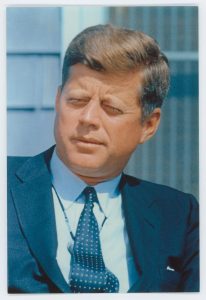
To understand the defining dynamics of modern political leadership—the primacy of televised image and media optics, the management of existential national security crises, the centralized control of executive decision-making, and the dramatic gap between a leader’s polished public persona and private realities—one must examine the thousand-day presidency of John F. Kennedy. As the thirty-fifth president, Kennedy embodied a generational changing of the guard, promising a nation “tempered by war, disciplined by a hard and bitter peace” a new era of active, energetic global leadership. Yet behind the captivating aura of charm, intellect, and youthful promise lay a deeply complex presidency marked by severe Cold War miscalculations, cautious domestic maneuvers, hidden physical suffering, and a masterclass in crisis management that ultimately saved the world from nuclear catastrophe.
The Cultivated Image and the Rhetoric of the New Frontier John F. Kennedy’s rise to the presidency was meticulously crafted through a combination of extraordinary wealth, war heroism, and sophisticated media management. The son of Joseph P. Kennedy, a wealthy ambassador and financier, Jack was catapulted into national prominence during World War II when his motor torpedo boat, PT-109, was rammed and sunk by a Japanese destroyer in the Solomon Islands. Kennedy’s courage in leading his surviving crew to safety made him an instant national war hero, a narrative eagerly amplified by his family and the press. After serving in the House of Representatives and the Senate, Kennedy authored the Pulitzer Prize-winning Profiles in Courage and positioned himself as the spokesman for a new, activist generation of Americans.
In 1960, Kennedy secured the Democratic nomination and faced Vice President Richard Nixon in one of the closest presidential elections in American history. The campaign proved to be a watershed moment for modern politics, marked by the first televised presidential debates. Viewers who watched on television perceived the youthful, composed Kennedy as the victor, whereas radio listeners thought the experienced Nixon had won, highlighting the rising, decisive power of visual optics in American elections. Furthermore, by directly confronting anti-Catholic prejudice, Kennedy shattered a long-standing religious barrier to the White House, asserting his absolute independence from church authority.
In his soaring 1961 Inaugural Address, Kennedy called upon citizens to “ask not what your country can do for you—ask what you can do for your country,” framing public service as a noble national duty. Under his signature concept of the “New Frontier,” Kennedy challenged the country to conquer new realms of science, space, and human potential. He established the Peace Corps to send skilled volunteers abroad and boldly committed the nation to landing a man on the moon before the end of the decade, transforming the space race into a defining symbol of American technological supremacy.
Cold War Crucible and Crisis Management Despite his inspiring domestic rhetoric, foreign policy dominated Kennedy’s presidency from his first days in office. Operated by a team of ambitious, highly confident advisers dubbed “the best and the brightest,” the administration embraced an ad hoc, highly reactive style of “crisis management”. This impulsive activism led directly to one of the most embarrassing failures in American history: the April 1961 Bay of Pigs invasion. Inheriting a clandestine CIA plan to overthrow Fidel Castro using anti-Castro Cuban exiles, Kennedy approved the landing without fully challenging the intelligence agency’s flawed assumptions. The invasion collapsed in disaster, severely damaging American prestige and convincing Soviet Premier Nikita Khrushchev that the young American president was inexperienced and weak.
Khrushchev attempted to exploit this perceived weakness during a tense summit in Vienna two months later, issuing renewed threats over the divided city of Berlin. When the East German regime erected the Berlin Wall in August 1961 to halt a massive brain drain of refugees escaping to the West, Kennedy opted against military retaliation, privately remarking that “a wall is a hell of a lot better than a war”. Instead, he used the concrete barrier as a powerful symbol of communist oppression, later delivering his famous “Ich bin ein Berliner” address before cheering crowds in West Berlin.
The geopolitical tensions culminated in October 1962 with the Cuban Missile Crisis, the most dangerous moment of the nuclear age. When U.S. reconnaissance flights revealed that the Soviet Union was installing nuclear missiles in Cuba just ninety miles from American shores, Kennedy faced intense pressure from his Joint Chiefs of Staff to launch immediate airstrikes and a full-scale military invasion. Demonstrating extraordinary personal restraint and skeptical of military groupthink, Kennedy rejected an immediate attack and instead imposed a naval “quarantine” around Cuba while opening clandestine diplomatic channels. Over thirteen agonizing days, as the world hovered on the precipice of nuclear annihilation, Kennedy and Khrushchev negotiated a peaceful resolution. The Soviets agreed to dismantle and remove the missiles in exchange for a public American pledge not to invade Cuba and a secret agreement to remove U.S. Jupiter missiles from Turkey.
Recognizing the terrifying proximity of nuclear war, Kennedy pivoted toward a policy of peaceful coexistence and détente with Moscow. In a historic June 1963 commencement address at American University—his famous “Peace Speech”—Kennedy urged Americans to re-examine their Cold War attitudes, declaring that “our most basic common link is that we all inhabit this small planet”. Weeks later, his administration negotiated the Limited Nuclear Test Ban Treaty with Great Britain and the Soviet Union, prohibiting atmospheric nuclear testing and marking the first major arms control agreement of the Cold War.
Civil Rights, Executive Power, and the Shadow of Vietnam Domestically, Kennedy’s legislative record was frequently stymied by a conservative coalition of Southern Democrats and Republicans who bottled up New Frontier proposals for education, healthcare for the elderly, and economic aid. His relationship with corporate America was similarly strained; when major steel companies broke a price-stabilization agreement in 1962, Kennedy publicly denounced their “utter contempt” for the public interest, deploying federal investigations and economic pressure to force a price rollback.
On civil rights, Kennedy was initially cautious, fearing that aggressive federal action would alienate Southern Democratic committee chairmen whose votes he needed for his broader agenda. However, as Freedom Rides, sit-ins, and grass-roots marches provoked violent resistance across the South, events forced his hand. Kennedy deployed thousands of federal marshals and U.S. Army troops to enforce court-ordered desegregation at the University of Mississippi for James Meredith in 1962 and at the University of Alabama in 1963. In June 1963, following the violent repression of peaceful demonstrators in Birmingham, Alabama, Kennedy delivered a historic nationwide television address declaring civil rights a “moral issue” and calling on Congress to pass comprehensive legislation guaranteeing equal access to public accommodations and voting rights.
In Southeast Asia, Kennedy expanded the U.S. commitment to South Vietnam as a bulwark against regional communist expansion. Adhering to containment doctrine, he increased the number of American military advisers from several hundred to over sixteen thousand and authorized specialized counterinsurgency units like the Green Berets. Although scholars continue to debate whether Kennedy would have escalated or withdrawn American forces during a second term, his actions firmly deepened the United States’ military entanglements in the region.
The Hidden Realities and the Enduring Myth Throughout his presidency, Kennedy maintained a carefully guarded secret: he suffered from agonizing physical ailments, including Addison’s disease, severe chronic back pain, colitis, and urinary tract problems. To remain functional, he relied on a daily regimen of heavy medications, steroids, painkillers, and hormonal injections, which he and his doctors aggressively concealed from the public. Simultaneously, Kennedy engaged in reckless, compulsive philandering, relying on an informal press etiquette of the era that treated a president’s private life as off-limits.
On November 22, 1963, while riding in an open-top motorcade through Dealey Plaza in Dallas, Texas, John F. Kennedy was assassinated by Lee Harvey Oswald. The tragic, sudden end to his young life shocked the nation and the world, leaving an indelible scar on the collective American psyche. In the days following his funeral, his widow, Jacqueline Kennedy, gave an interview in which she invoked the Broadway musical Camelot to describe her husband’s administration, forever cementing the romanticized myth of a brief, shining moment of American idealism.
John F. Kennedy’s presidency remains a compelling study in the realities of modern executive leadership. He demonstrated the immense power of television to rally national spirit, the necessity of cool-headed skepticism when military advisers press for war, and the capacity of a leader to adapt and mature under extreme pressure. While his truncated presidency left many of his initiatives unfinished, his handling of the nuclear precipice, his eventual embrace of the civil rights crusade, and his vision of global service continue to define the possibilities and perils of American presidential power.