
The 1953 coup d’état in Iran, code-named Operation Ajax, stands as a watershed moment in the history of modern diplomacy, demonstrating the devastating consequences of covert foreign intervention. Devised as a joint clandestine campaign by the Central Intelligence Agency (CIA) and the British Secret Intelligence Service (SIS/MI6), the operation successfully dismantled Iran’s fledgling, democratically elected government. While celebrated in Washington at the time as a cheap, swift victory that secured Western interests, the coup fundamentally altered Iran’s political trajectory. By replacing a constitutional democracy with an absolute, repressive autocracy, the United States and Great Britain planted the bitter seeds of anti-Western sentiment that eventually erupted in the 1979 Islamic Revolution.
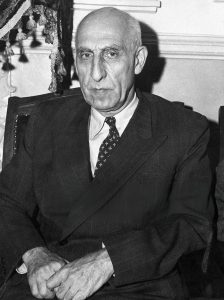
The Catalyst: Oil, Nationalization, and Colonial Exploitation The roots of the 1953 crisis lay in the systematic, colonialist exploitation of Iran’s natural resources. For decades, the nation’s vast oil reserves had been pumped, refined, and marketed by the British-controlled Anglo-Iranian Oil Company (AIOC). Between 1913 and 1951, the AIOC transferred out of Iran an estimated $2.4 billion of $3 billion in gross revenues, while paying the Iranian government a meager 10 percent of its profits. In 1951, under the leadership of the weepy but highly formidable Prime Minister Mohammad Mossadegh, the Iranian parliament voted to nationalize the oil industry. Mossadegh, an aristocratic and fervent nationalist educated in France and Switzerland, sought to reclaim his nation’s sovereignty and protect its economic rights.
In response, the British government imposed a crippling economic blockade on Iran. When Mossadegh uncovered British espionage efforts to subvert his administration, he ejected the British ambassador and shut down their embassy in Tehran. Deprived of their oil monopoly, the British turned to Washington for assistance, leveraging their legal and financial ties to the prominent Wall Street law firm Sullivan & Cromwell—where the newly appointed Secretary of State John Foster Dulles and CIA Director Allen Dulles had long served as partners.
The Road to Operation Ajax While the Truman administration had shown sympathy toward Mossadegh’s nationalist aspirations, the inauguration of President Dwight D. Eisenhower in January 1953 brought a hardline anti-communist shift to the White House. Eisenhower quickly rebuffed Mossadegh’s appeals for continued financial assistance. Seizing on the administration’s anxieties, the Dulles brothers reframed a colonial dispute over raw materials into an existential Cold War conflict. On March 4, 1953, Allen Dulles presented the National Security Council with alarmist talking points, claiming that Mossadegh’s refusal to compromise would result in a Communist takeover, handing Moscow control of 60 percent of the free world’s oil. In reality, Mossadegh was a dedicated anti-communist who maintained a cautious distance from the Tudeh (Iran’s Communist Party), but Washington’s policymakers chose to view him as a Soviet puppet.
In June 1953, Eisenhower authorized Operation Ajax, a covert scheme brainstormed by the CIA and SIS to overthrow Mossadegh and consolidate the power of the Iranian monarch, Shah Mohammad Reza Pahlavi. The operation was placed in the hands of Kermit “Kim” Roosevelt Jr., the grandson of Theodore Roosevelt, who was sent to Tehran to orchestrate the plot. Operating with an initial budget of $1 million, Roosevelt began organizing an underground resistance network, hiring bands of mercenaries, paying military leaders to betray their country, and funding hostile street gangs. To clear the path for the coup, CIA-backed elements resorted to extreme violence, kidnapping and brutally murdering key Mossadegh loyalists, including the chief of police, General Mahmoud Afshartous, whose mangled corpse was found dumped on a roadside.
The Execution of the Coup The initial phase of the coup faltered when the Shah signed decrees dismissing Mossadegh and replacing him with Fazollah Zahedi, a Nazi sympathizer during World War II. Terrified of a popular backlash, the Shah fled with Queen Soraya to Rome. However, Kim Roosevelt remained in Tehran, exploiting Mossadegh’s trust in the United States to deliver the decisive blow. On August 18, 1953, U.S. Ambassador Loy Henderson met with Mossadegh, fabricating stories of anti-Western mob attacks and threatening to withdraw diplomatic recognition of the government unless order was restored.
Fearing a break with the United States, Mossadegh made his fatal mistake by ordering his police chief to clear his own supporters and nationalist demonstrators from the streets. With the streets cleared of Mossadegh’s defenders, CIA-financed mobs and pro-shah military units took their place. On August 19, rebel forces equipped with U.S.-built Sherman tanks converged on the Prime Minister’s home at 109 Kakh Street. After a fierce firefight, Mossadegh ordered his defenders to cease fire to prevent further bloodshed, escaped over a garden wall, and was subsequently arrested.
The Aftermath: Dictatorship and the Redivision of Oil With the popular Prime Minister deposed, the Shah returned triumphantly from Rome to reclaim his Peacock Throne, greeted by crowds whose enthusiasm had been secured with CIA cash. Conveniently, Allen Dulles had checked into the same luxury Rome hotel, the Excelsior, alongside the Shah on the eve of the coup’s climax. In the aftermath, Eisenhower poured nearly $1 billion of foreign aid into Iran to prop up the Shah’s regime.
In exchange for this massive American support, the Shah quickly denationalized Iran’s oil industry. Under a new consortium agreement, 40 percent of Iran’s oil treasure was handed over to American oil companies, including Gulf, Texaco, Mobil, Standard Oil of New Jersey, and Standard Oil of California. Kim Roosevelt himself eventually cashed in on the coup, leaving the CIA in 1958 to join the management of Gulf Oil and later serving as a highly paid arms consultant representing the Shah.
The Long-Term Legacy: SAVAK and Blowback To maintain his absolute, dictatorial control over a resentful population, the Shah unleashed a brutal domestic security apparatus. Established in 1957 with the direct assistance of the CIA, the notorious secret police force known as SAVAK waged a ruthless campaign of terror to root out dissent. Thousands of political dissidents, intellectuals, and party members were rounded up, imprisoned, and subjected to primitive torture methods—including severe whippings, beatings, and being suspended from hooks (the qapani).
By systematically crushing all secular, liberal, and leftist opposition over the course of twenty-six years, the Shah’s police state inadvertently created a political vacuum. The only oppositional sector that could not be fully dismantled was the religious network centered around the country’s mosques. Consequently, when popular anger finally boiled over in late 1978, the anti-Shah movement was captured and led by the fundamentalist cleric Ayatollah Ruhollah Khomeini, leading directly to the 1979 Revolution.
Operation Ajax represents the quintessential historical example of “blowback”—the unintended, highly destructive consequences of covert operations kept secret from the public. In seeking a quick, cheap solution to secure corporate oil profits and counter an exaggerated Soviet threat, Western policymakers dismantled a vibrant, secular democracy and installed a despot. This intervention ultimately birthed a fiercely anti-American, fundamentalist theocracy in the heart of the Middle East, illustrating that the true cost of imperial gamesmanship is often paid in the long-term coin of global instability.