

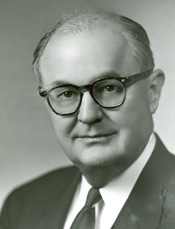
In June 1972, five burglars were arrested inside the offices of the Democratic National Committee at the Watergate complex in Washington, D.C.. While the Nixon administration publicly dismissed the incident as a minor occurrence, Wright Patman, the veteran populist chairman of the House Committee on Banking and Currency, recognized a deeper conspiracy. Having ascended to the chairmanship in 1963, Patman had spent decades battling Wall Street and corporate monopolies. When other prominent Democrats hesitated to challenge the White House on the eve of the 1972 presidential election, Patman boldly mobilized his Banking Committee staff, making him the very first congressional representative to launch an official investigation into Watergate.
Patman’s immediate entry into the Watergate controversy was triggered by a highly suspicious financial anomaly. His investigators discovered that a sum of $114,000, drawn from a Mexican bank, had been funneled directly into the Miami bank account of Bernard Barker, one of the arrested Watergate burglars. Convinced that this illicit money trail would lead straight to the Oval Office, Patman determined to expose the financial underpinnings of the Nixon establishment. In the closing weeks of the 1972 campaign, Patman drew up a list of forty high-profile witnesses to be called before his committee. On his own authority, he directed his committee staff to interview Maurice Stans, the finance chairman of the Committee for the Re-election of the President (CREEP).
The prospect of a public congressional inquiry into CREEP’s finances threw the Nixon administration into a state of severe panic. To neutralize Patman’s probe, the White House launched an aggressive, clandestine campaign to sabotage the House Banking Committee. John Dean, the President’s White House counsel, later revealed that Nixon’s staff systematically pressured committee members of both parties to deny Patman the necessary subpoena power. Dean even discussed with Nixon’s congressional liaison, Bill Timmons, the possibility of blackmailing reluctant committee members by threatening to expose their own questionable campaign contributions. At the center of this defensive blockade was House Minority Leader Gerald Ford, who, acting under direct instigation from the White House, actively lobbied committee members to block the investigation. Within the committee itself, partisan allies like Republican Representative Garry Brown attempted to shield CREEP by arguing that Patman’s hearings would violate the legal rights of the indicted burglars.
The legislative struggle culminated on October 3, 1972, when Patman sought a formal committee vote to grant him subpoena power, which would compel the Nixon administration to surrender classified documents and produce witnesses. The White House’s lobbying campaign proved devastatingly effective. While the committee’s Republican contingent voted as a unified bloc to oppose the measure, six Democrats broke ranks and voted against their own chairman. Deprived of his own party’s unified support, Patman’s request for subpoena power was defeated, bringing the House Banking Committee’s active inquiry to an abrupt halt.
Though the White House successfully stifled Patman’s immediate probe, the Banking Committee’s early efforts laid the indispensable foundation for Nixon’s eventual downfall. Blocked from issuing subpoenas, Patman quietly turned over his compiled investigative files to Senator Sam Ervin, whose Senate Select Committee subsequently broke the Watergate scandal wide open. Speaker of the House Carl Albert later reflected that Patman’s early initiative had initiated the President’s downward spiral, forcing Nixon to live in “constant torture” from the moment the Banking Committee first began tracing the money. Patman’s short-lived 1972 dragnet ultimately demonstrated the early, systemic corruption of the Nixon establishment and set in motion the historic constitutional reckoning that led to the first presidential resignation in American history.