
To comprehend the modern geopolitical landscape of Latin America, the long history of U.S. intervention in the Western Hemisphere, the expansion of the national security state, and the systemic erosion of democratic institutions in the name of corporate interest, one must examine the devastating legacy of Operation PBSUCCESS. Executed by the Central Intelligence Agency (CIA) in June 1954, this covert operation successfully overthrew the democratically elected government of Guatemalan President Jacobo Árbenz Guzmán. While celebrated in Washington at the time as a cheap, swift victory against Soviet expansionism, the coup dismantled the most democratic government Guatemala had ever possessed, replacing it with decades of military dictatorship, systemic torture, and a civil war that claimed a quarter of a million lives.
The Guatemalan Spring and the Confrontation with “El Pulpo”
Guatemala’s democratic experiment began with a popular revolution in 1944 that overthrew the brutal dictatorship of Jorge Ubico, under whose regime peasant workers had been roped together like animals and forced into debt slavery on foreign-owned plantations. This “Guatemalan Spring” led to the nation’s first free elections, and in 1951, Jacobo Árbenz Guzmán took office as the second democratically elected president. Árbenz, a left-of-center Socialist, presided over a highly democratic congress where only four of the fifty-six seats were held by Communists. Determined to modernize his impoverished country and liberate its population from feudalism, Árbenz championed progressive, New Deal–style reforms, including universal suffrage, social security, and the right of labor to organize unions.
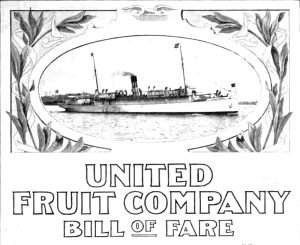
The core of Árbenz’s reform agenda was Decree 900, a sweeping agrarian reform bill enacted in June 1952. The law sought to redistribute uncultivated land to landless peasant families, offering fair compensation to landowners based on the value the properties had historically declared on their tax assessments. This directly challenged the hegemony of the United Fruit Company (locally known as El Pulpo, or “the Octopus”), a massive U.S. conglomerate that ran Guatemala’s railways, operated its only Atlantic port, controlled its telephone system, paid virtually no taxes, and owned 42 percent of the nation’s land.
Under Decree 900, the Guatemalan government expropriated 234,000 acres of uncultivated land owned by United Fruit, offering financial compensation that the company rejected as “unacceptable” because it exposed how United Fruit had systematically undervalued its property for years to evade taxes.
The Red Scare and United Fruit’s Washington Connections
Fearing the loss of its lucrative monopoly, United Fruit mobilized its immense political influence in Washington. By 1952, the Truman administration, infected by the domestic Red Scare, ludicrously declared Guatemala a “Russian-controlled dictatorship”. In March 1953, the highly classified National Security Council directive NSC-144 warned of a radical, nationalistic trend in Latin America, asserting that it was essential for U.S. national security to “arrest” mass-backed populism in the region.
The drive to overthrow Árbenz was fueled by an extraordinary network of conflicts of interest within the Eisenhower administration. Secretary of State John Foster Dulles and CIA Director Allen Dulles had both been prominent partners at Sullivan & Cromwell, the Wall Street law firm that represented United Fruit. Furthermore, Undersecretary of State Walter Bedell Smith—Eisenhower’s wartime chief of staff—was actively seeking an executive position with United Fruit and later joined its board of directors, while World Bank President John J. McCloy was also a company director.
Less than a year after Eisenhower took office, the administration authorized Operation Success (Operation PBSUCCESS), placing the secret operation under the exclusive control of the CIA.
The Covert Mechanics of PBSUCCESS
The operation was planned by senior CIA officials, with Richard Bissell serving as the chief strategist alongside Tracy Barnes, Howard Hunt, David Phillips, and David Morales. To maintain “plausible deniability,” the CIA recruited Carlos Castillo Armas, a disgruntled former Guatemalan colonel who was living in exile as a furniture salesman in Honduras. Castillo Armas was paid to lead a fake “popular uprising”. The CIA assembled and trained a mercenary force of roughly 140 men at secret military bases in Honduras and Nicaragua.
To build a public pretext for intervention, the Eisenhower administration isolated Guatemala, blocking it from purchasing military equipment from the West. When Árbenz was forced to buy a shipment of munitions from Czechoslovakia in 1954, John Foster Dulles declared that Guatemala had initiated a “reign of terror”. In reality, the Czech weapons turned out to be virtually unusable and obsolete. Although John Foster Dulles privately conceded to Latin American ambassadors in May 1954 that he had no evidence linking Guatemala to Moscow, he insisted that “such a tie must exist” to justify the impending coup.
On June 18, 1954, Castillo Armas launched the invasion. He rode in a battered station wagon only six miles across the border into Guatemala and remained there, while the actual military operations were executed by U.S. pilots flying WWII-vintage fighter-bombers, who terrorized Guatemala City with sporadic bombing raids and dropped leaflets over the capital.
When the invasion initially faltered on the ground, Nicaraguan dictator Anastasio Somoza offered to supply modern fighter-bombers to Castillo Armas. Eisenhower approved the deal after Allen Dulles warned that Castillo Armas’s chances were otherwise “about zero”. To complete the deception, the CIA utilized a powerful 50,000-watt radio transmitter on Swan Island to jam Guatemalan government broadcasts and run a sophisticated psychological warfare campaign. The radio station sowed panic by reporting fictitious, massive rebel military advances.
Unwilling to plunge his country into a bloody civil war, and recognizing that his own military leadership had been successfully subverted and bought off by the CIA—with one commander paid $60,000 to surrender his troops—President Árbenz resigned on June 27, 1954. The CIA jammed his farewell radio address as he went into exile.
Assassination Manuals and Media Manipulation
The full duplicity of Operation PBSUCCESS was fiercely guarded by the U.S. government. Declassified documents later revealed that the CIA had compiled a formal “disposal list” of at least fifty-eight key Guatemalan leaders targeted for “elimination” before the coup even began. The agency drafted a chilling nineteen-page instructional guide, “A Study of Assassination,” which detailed the most efficient ways to murder political targets, recommending blunt instruments like hammers, axes, or kitchen knives to sever the spinal cord, advising that “persons who are morally squeamish should not attempt it”.
To shape public perception, the CIA actively manipulated the press. Major newspapers, including the New York Times, ran sanitizing, CIA-directed stories portraying the invasion as a successful “popular uprising” by Guatemalan patriots. New York Times publisher Arthur Hays Sulzberger accommodated Allen Dulles by keeping investigative foreign correspondent Sydney Gruson out of Guatemala and assuring the CIA director that future coverage would be screened with extreme care.
The Reign of Terror and Historical Aftermath
On July 3, 1954, Carlos Castillo Armas arrived in Guatemala City aboard a U.S. government aircraft, accompanied by U.S. Ambassador John Peurifoy, who proudly paraded through the capital sporting a pistol in his holster. John Foster Dulles declared to the world: “Now the future of Guatemala lies at the disposal of the Guatemalan people themselves”.
In reality, the future was immediately stolen from them. Castillo Armas’s military junta canceled the agrarian reforms, returned the expropriated land to United Fruit, outlawed labor unions, suspended political parties, eliminated the secret ballot, and disenfranchised three-quarters of the Guatemalan population by restricting the vote to the literate.
With the CIA’s active encouragement, the new regime began “cleaning” the country. Utilizing seized Árbenz government documents, the CIA helped assemble a lista negra (blacklist) of seventy thousand “subversives”—amounting to 10 percent of the adult population. Suspected reformers, labor organizers, and peasant activists were rounded up and placed under the control of José Bernabé Linares, the notorious chief of the Guardia Judicial, who extracted confessions using electric-shock baths and steel skullcaps.
In the countryside, the violence was savage. In Tiquisate, soldiers rounded up and machine-gunned up to one thousand peasant workers from United Fruit plantations, burying them in open trenches. It was the beginning of a forty-year holocaust. By the time the civil war and military repression finally ran their course, over 250,000 Guatemalans had been slaughtered in a country whose population was less than four million when the CIA intervened. Castillo Armas himself was assassinated by a palace guard in 1957.
For the United States, Operation PBSUCCESS established a highly dangerous and seductive historical precedent. The seemingly “stainless,” cheap victory in Guatemala convinced Eisenhower, the Dulles brothers, and the CIA that covert action was a viable, low-cost tool to protect corporate capitalist interests under the cover of the Cold War. By treating indigenous movements for land reform and social justice as international Communist conspiracies, the United States planted the seeds that directly sprouted into the disastrous Bay of Pigs invasion and the catastrophic military escalation of the Vietnam War.