

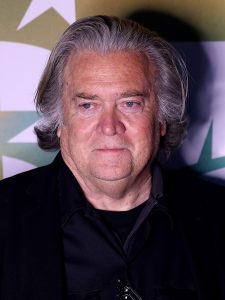
In the tense weeks following the 2020 presidential election, senior advisers and outside allies of President Donald Trump formulated a highly coordinated, multi-layered political and legal campaign designed to block the certification of the Electoral College results on January 6, 2021. Promoted heavily by former White House chief strategist Steve Bannon and Peter Navarro, the Director of the White House Office of Trade and Manufacturing Policy, this strategic operation was named the “Green Bay Sweep”. Drawing its name from a brutally effective power running play popularized in the National Football League during the 1960s, the political version of the sweep was designed to systematically exploit alleged election irregularities to pressure Vice President Mike Pence into unilaterally delaying or blocking the certification of Joe Biden’s victory. Through a combination of media blitzes, targeted state-level pressure, and aggressive constitutional theories, the architects of the sweep sought to execute a historic intervention that would ultimately preserve Trump’s presidency.
The operational division of labor behind the Green Bay Sweep relied on a close partnership between Bannon and Navarro, who sought to maximize their respective administrative and media platforms. In In Trump Time: A Journal of America’s Plague Year, Navarro documented that his primary responsibility was to compile exhaustive dossiers detailing “fraud and myriad election irregularities” across key battleground states. These compiled findings served as the factual foundation—what Steve Bannon termed the “receipts”—for their public and private arguments. Bannon’s role was to strategize how to leverage this information to construct a powerful public narrative and apply maximum political pressure on the key actors in Washington. Within this strategic architecture, Bannon and Navarro envisioned Vice President Mike Pence as the “quarterback” of the operation. In his capacity as President of the Senate, Pence was expected to utilize his presiding role during the joint session of Congress to act on the “receipts” and disrupt the standard, ministerial counting of electoral votes.
The strategists of the Green Bay Sweep envisioned two primary endgame scenarios to achieve their ultimate goal of overturning the election results. The first, most direct strategy was to convince Vice President Pence to unilaterally reject the certified Electoral College slates of several states won by Joe Biden, such as Arizona, Georgia, and Pennsylvania, based on the presence of uncertified, fake Republican elector slates that the campaign had organized. Pence would then declare that Donald Trump had won a majority of the remaining, “lawfully slated” electors, instantly securing a second term. The second, more politically palatable strategy involved Pence “returning” or remanding the electoral votes of the contested swing states back to their respective state legislatures for a ten-day period of investigation. By delaying the certification, the sweep’s planners aimed to trigger a contingent election under the Twelfth Amendment. In a contingent election, the presidency would be decided by the House of Representatives, where each state delegation receives a single vote. Because Republicans held a decisive 27-to-22 majority of state congressional delegations, Trump’s strategists calculated that this path would guarantee his re-election.
The primary mechanism for mobilizing public support and applying pressure on the Vice President was Steve Bannon’s highly popular podcast, War Room: Pandemic. In early January 2021, the podcast became a relentless platform for criticizing Pence’s perceived hesitation. During a January 2 broadcast, attorney John Eastman appeared on Bannon’s show to argue that the 12th Amendment granted the Vice President dispositive, unilateral authority to decide which slates of electors to count. Bannon insisted that Pence was an “actual decisionmaker” rather than a ceremonial figure, while Eastman publicly questioned the “courage and the spine” of the Vice President to carry out the plan. On January 5, the public pressure reached a fever pitch as Bannon and co-host Raheem Kassam openly berated Pence, urging their listeners to “Light Pence Up” and calling on the Trump team to “run the play”. Peter Navarro privately shared this intense fixation, viewing January 6 as a momentous constitutional crossroads and comparing Pence to Brutus, the assassin of Julius Caesar, in his warnings about potential executive betrayal.
Despite the relentless public campaign and intense personal pressure from President Trump—who called Pence a “wimp” and the “p-word” during a heated telephone call on the morning of January 6—the Green Bay Sweep ultimately shattered against the Vice President’s adherence to the law. Pence and his legal advisers, led by counsel Greg Jacob, had meticulously researched the constitutional history of the joint session, concluding that the Vice President possessed no unilateral authority to decide the validity of electoral votes. Just minutes before the joint session convened, Pence released a “Dear Colleague” letter making his position public, stating that his role was “largely ceremonial” and that his oath to support and defend the Constitution constrained him from claiming the unilateral power to determine which votes should be counted. Although the announcement of Pence’s refusal provoked immense fury among the crowd assembled at the Ellipse, leading directly to a violent mob storming the Capitol and chanting “Hang Mike Pence,” the institution held. Once the Capitol was re-secured by law enforcement, Pence returned to the Senate dais and completed his constitutional duty, officially certifying Joe Biden as the forty-sixth President of the United States.