

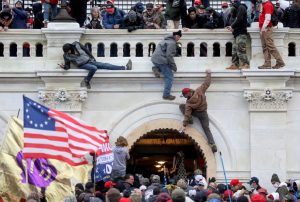
To comprehend the institutional and intelligence breakdowns that preceded the violent assault on the United States Capitol on January 6, 2021, one must examine the Federal Bureau of Investigation’s internal system for tracking domestic threats. Following President Donald Trump’s December 19, 2020, tweet summoning supporters to Washington, D.C., for a “wild” protest, federal and local law enforcement witnessed a massive, unprecedented spike in violent online rhetoric. Recognizing the growing potential for civil unrest, the FBI established a centralized tracking protocol on December 27, 2020, to collect and archive intelligence specifically related to the upcoming congressional certification of the Electoral College results. Under the internal threat label “CERTUNREST2021” (frequently referred to as “CERTUNREST”), the Bureau directed all fifty-six of its field offices across the nation to upload and tag incoming threat information, forming a centralized repository of pre-operational intelligence. Yet, despite accumulating a staggering volume of highly specific warnings, the Bureau failed to integrate these clues, leaving the nation’s security apparatus dangerously unprepared for the storm that was gathering.
Under the “CERTUNREST2021” framework, field offices logged several dozen “Guardians”—the FBI’s formal designation for threat cases—that explicitly referenced plans to target the U.S. Capitol or commit acts of violence on January 6. This aggregated intelligence documented an alarming, coordinated plan among various far-right extremist groups, including the Proud Boys, the Oath Keepers, and Three Percenter militias, who were actively moving away from traditional counter-protester clashes and aligning toward a single, common target: Congress itself. Tipsters warned of online flyers advocating for an “Operation Occupy the Capitol” that depicted the Capitol building being torn in two, alongside hashtags like #WeAreTheStorm and #1776Rebel. The system also captured tips regarding thedonald.win, a highly popular pro-Trump message board where senior Trump campaign advisors bragged about getting the political base “fired up”. On this site, users openly debated construction plans for a hangman’s gallows on the Capitol lawn, talked of bringing handcuffs and zip-ties, and circulated detailed maps of the Capitol’s underground tunnel systems to block fleeing lawmakers.
Despite the constant influx of these red flags, the structural architecture of the FBI’s monitoring effort suffered from a fatal delay in analytical synthesis. While individual field offices uploaded data to the “CERTUNREST2021” database, “unified monitoring” of these items in the aggregate did not formally commence until January 5, 2021—the absolute eve of the joint session. This meant that for over a week, highly alarming threat streams remained fragmented and unanalyzed as a collective, cohesive threat. This lack of centralized, timely synthesis severely limited the Bureau’s ability to recognize the “blended ideology” and pre-operational coordination occurring across multiple social media platforms.
The climax of this fragmented intelligence gathering occurred on January 5, 2021, when the FBI Norfolk Field Office issued a highly urgent Situational Information Report (SIR). This report cited a specific online thread where extremists warned: “Be ready to fight. Congress needs to hear glass breaking, doors being kicked in, and blood… being spilled. Go there ready for war”. Simultaneously, the “CERTUNREST2021” system flagged warnings that the Oath Keepers were amassing high-powered weapons just across the Potomac River in Virginia, establishing heavily equipped “Quick Reaction Forces” (QRFs) at hotels in Ballston and Vienna to await “calls for help”.
Yet, because “unified monitoring” had been delayed, the Bureau failed to translate this mountain of raw data into a formal, actionable joint intelligence assessment or threat bulletin with the Department of Homeland Security (DHS). This failure to prioritize, synthesize, and act upon the aggregated intelligence had catastrophic consequences on the ground. Capitol Police leadership was left completely on a back foot, operating under the mistaken assumption that January 6 would resemble prior, relatively peaceful “Million MAGA March” protests. USCP Chief Steven Sund drove to work on January 6 believing his security posture was sound, having received no formal written warnings from his federal partners regarding a coordinated, armed siege. Frontline, rank-and-file officers were kept entirely in the dark, receiving no warnings or emergency briefings. When the violent mob finally descended on the Capitol, savage physical clashes erupted, resulting in injuries to at least 174 police officers and seven deaths. In the bitter aftermath, a stunning 92 percent of the Capitol Police union voted “no confidence” in their leadership, citing the disastrous failure to inform or equip them.
For the modern reader, the legacy of the ‘CERTUNREST2021’ tracking system serves as a sobering lesson in the limits of passive surveillance and the critical necessity of proactive, synthesized analysis. The tragedy of January 6 was not a failure of information collection; the FBI successfully detected the planning, weapons amassing, and tactical targets of the insurrectionists. Instead, it was a profound failure to connect the dots in a timely, unified manner, combined with an institutional reluctance to take online threats seriously, dismissing them as mere “First Amendment protected speech” or harmless internet bravado. Ultimately, ‘CERTUNREST2021’ stands as a vital historical warning that a national security apparatus, no matter how technologically sophisticated, remains useless if it lacks the analytical imagination and coordination to act on the clear dangers archived within its own systems.